Category: Psychology

  • Why Does my Dog Follow Me to the Bathroom: The Vulnerability Theory of the Pack

    Why Does my Dog Follow Me to the Bathroom: The Vulnerability Theory of the Pack

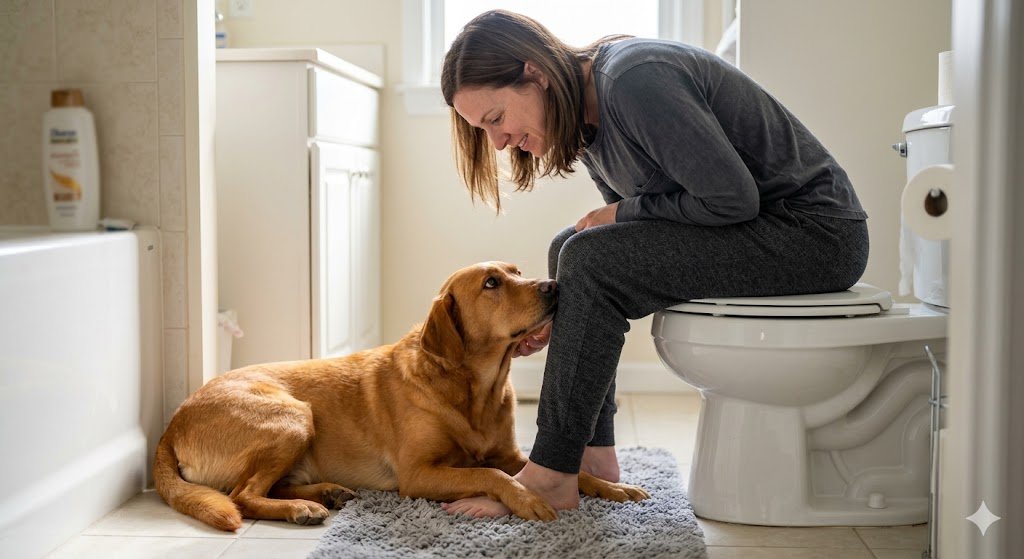
    The Bathroom Bodyguard (Why does my dog follow me to the bathroom )

    It is a universal experience for dog owners: you retreat to the bathroom for a few moments of privacy, only to find a wet nose nudging the door open or a pair of paws sliding under the gap. If you manage to close the door fully, you might hear a worried whine or the steady “thump” of a body leaning against the wood. If you leave it ajar, your dog likely sits with their back to you, staring intensely at the hallway.

    While we joke about having a “stage-five clinger,” this behavior isn’t actually about a lack of boundaries. In the canine world, your bathroom time isn’t a private break—it’s a high-stakes security event.

    The “Bathroom Sentry” Explained: Dogs guard the bathroom door due to Social Vulnerability Theory. In a pack structure, animals are at their most defenseless against predators while relieving themselves. By following you into the bathroom or standing watch at the door, your dog is acting as a sentinel, protecting a “pack member” during what they instinctively perceive as a moment of extreme physical risk.

    The “Toilet Vulnerability” Instinct

    To understand why your dog feels the need to be your bodyguard, we have to look at the survival mechanics of wild canids. Whether it’s a wolf in the tundra or a fox in the woods, the act of “going to the bathroom” is a dangerous necessity.

    Ancestral Safety and the “Crouch”

    In the wild, a dog in a squatting or “crouch” position is physically compromised. They cannot easily fight back, their field of vision is often lowered, and they cannot immediate bolt at full speed. This makes them an easy target for ambush predators. To counter this risk, pack members often take turns acting as lookouts for one another.

    The Sentinel Role

    When you enter the bathroom, your dog’s ancient hardwiring kicks in. They see you entering a small, enclosed space and preparing to be “vulnerable.” Their instinctual response is to provide 360-degree security.

    • Facing the Door: Notice that many dogs don’t actually look at you; they look away from you toward the entrance. They are monitoring the “line of approach” to ensure no “predators” (or the vacuum cleaner) can surprise you.
    • Physical Contact: If they lean against your legs, they are providing tactile reassurance, letting you know the “sentry” is on duty so you can finish your business in peace.

    The “Den” Logic

    In a domestic home, the bathroom is often perceived as a small, intimate “sub-den.” Because you are stationary, the dog views this as a prime opportunity for social grooming and bonding. They aren’t just protecting you; they are reinforcing the pack bond through shared presence in a safe, enclosed space.

    The “Velcro Dog” vs. The Guardian

    It is important to distinguish whether your dog is following you out of a sense of duty or a sense of panic. While the behaviors look similar, the underlying psychological state is very different. Understanding this distinction helps you determine if your dog is a “loyal protector” or a “worried dependent.”

    Attachment Theory: Protection or Anxiety?

    • The Guardian (Sentinel): A dog acting as a protector is usually calm. They might lie across the doorway or sit facing the hall. Their ears are alert, but their body isn’t trembling. They are there because they want to watch your back.
    • The Velcro Dog (Anxiety): If your dog is scratching frantically at the door, whining, or showing signs of distress the moment the latch clicks, this is likely Separation Anxiety. In this case, the closed door represents a loss of their “Security Base,” triggering a fear response rather than a protective one.

    The “Closed Door” Barrier

    To a dog, a closed door is a sensory “blackout.” They cannot see the threat, and more importantly, they cannot see you. If they can’t verify your safety, their instinctual alarm bells go off. By keeping the door ajar, you “close the loop” on their vulnerability theory, allowing them to fulfill their role as a lookout without the stress of being separated from the pack.

    Sensory Overload: Why the Bathroom?

    Beyond the survival instinct, the bathroom is a uniquely fascinating place for a dog’s primary sense: their nose. While we see a room for hygiene, they see a high-density information center.

    The Scent Profile and Pack Bonding

    Bathrooms are concentrated scent hubs. Steam from a shower or the humidity of the room carries your unique pheromones and scent molecules more effectively than dry air. For a dog, being in the bathroom with you is an intimate “Scent-Sharing” experience. By sitting in your “aroma” while you are stationary, they are reinforcing their chemical bond with you.

    The “Captured” Audience

    Your dog is a master of opportunity. They know that when you are in the bathroom, you aren’t moving, you aren’t on your laptop (usually), and you aren’t distracted by chores. You are a “captured audience.” Many dogs take advantage of this “low-activity” zone to demand “check-in” pets or to perform “allogrooming” (social licking), knowing they have your undivided attention.

    Plumbing and Curiosity

    The sound of running water, the gurgle of pipes, and the flushing of a toilet are all significant acoustic events. For some dogs, the bathroom is a place of curiosity where “magic water” appears and disappears. They may “guard” the door simply because they want to monitor the source of these strange, loud noises to ensure they aren’t a threat to the den.

    Breed-Specific Sentries

    While all dogs have a pack instinct, some breeds are biologically “pre-wired” to take their bathroom duty more seriously than others. If you own a dog from a working or herding lineage, you aren’t just looking at a pet—you’re looking at a professional security guard.

    The “Velcro” Herders

    Breeds like German Shepherds, Border Collies, and Australian Shepherds were bred to keep a close eye on their “flock.” To these dogs, you are the sheep that keeps wandering into a small, dangerous room. They follow you to ensure the “herd” stays together and no one gets lost in the plumbing.

    The Livestock Guardians

    Breeds such as Great Pyrenees or Mastiffs have a “perimeter” mindset. They don’t necessarily need to be touching you; instead, they will often lie down exactly halfway between you and the nearest exit. They are marking a boundary, signaling to the rest of the house that the “inner sanctum” is currently occupied and protected.

    Setting Boundaries Without Breaking Trust

    It is a compliment that your dog wants to protect you, but it can become a logistical nightmare—especially if you have a small bathroom or a dog that scratches at the door. You can honor their instinct while reclaiming your personal space.

    Create a “Guard Post”

    Instead of letting your dog crowd your feet, give them a “job” that keeps them out of the splash zone. Place a small mat or rug just outside the bathroom door and train the “Place” command. This allows the dog to fulfill their sentinel duty by “guarding the entrance” without being physically under your sink.

    Desensitization Exercises

    If your dog panics when the door shuts, they need to learn that the bathroom isn’t a “portal to another dimension.” Spend time walking in, closing the door for three seconds, and walking back out with a treat. Slowly increase the time until the dog realizes that your “vulnerability” in the bathroom always ends with your safe return.

    Strategic Distraction

    If you need a completely “dog-free” shower, provide a high-value distraction before you enter the bathroom. A frozen lick mat or a puzzle toy in another room can engage their “foraging brain,” which is often powerful enough to override their “sentinel brain” for 15–20 minutes.

    Safety First: If your dog becomes aggressive, growling or snapping at other family members who approach the bathroom door while you are inside, this has moved from “protection” to “Resource Guarding.” This requires professional intervention from a veterinary behaviorist to ensure your “bodyguard” doesn’t become a liability.

    Common Questions (FAQ)

    Why does my dog stare at me while I’m on the toilet?

    In the dog world, prolonged eye contact can be a challenge, but in this specific context, it is a “lock-on” for safety. Your dog is looking at you to read your facial expressions and body language for signs of distress. If you look relaxed, they feel relaxed. It is their way of saying, “I’m here, I’m watching, and you’re safe.”

    Do they think I’m in danger from the water or shower?

    Often, yes. The loud, rushing sound of a shower can be intimidating to a dog’s sensitive hearing. Since many dogs find bath time stressful, they may assume you are also in a “threatening” situation. Their presence at the door is an act of solidarity—they are staying close in case you need to be “rescued” from the rain-room.

    Why do they always try to bring a toy into the bathroom?

    This is a classic “appeasement” or “distraction” behavior. If they perceive you are in a vulnerable state, they might bring a toy to offer you comfort or to “distract” any potential predators with a high-value item. It’s the canine equivalent of bringing a magazine to a friend in a waiting room.

    Why does my dog wait outside the door even if they can’t see me?

    This is the “Den Guarding” instinct. Even without visual contact, your dog knows you are behind that door. By lying across the threshold, they become a physical barrier. Any intruder would have to step over (or through) them to get to you.

    Dr. Emily’s Final Take

    While we might crave a few minutes of total solitude, your dog’s bathroom “duty” is one of the most selfless expressions of the domestic bond. In their mind, they are putting themselves in the line of fire to protect their most important pack member. They aren’t trying to be “creepy” or “clingy”—they are being a guardian.

    Understanding the Vulnerability Theory allows us to see this quirk not as a nuisance, but as a deep-seated gesture of love and loyalty. At Dog Vet Expert, we encourage owners to view these moments as a testament to the security your dog feels in your pack. As long as the behavior remains calm and non-aggressive, let your “bathroom bodyguard” do their job—it’s a small price to pay for a lifetime of protection.

    🕵️ The Bathroom Bodyguard

    Does your dog track your every move in the bathroom? This intense observation is the same curiosity that leads them to watch you in the shower. Discover the sentinel psychology behind why dogs stare when you’re most vulnerable.

    Read: Why Dogs Stare in the Shower →

    🤝 Proximity and the “Lean”

    Following you is about protection; leaning on you is about connection. Learn why your dog uses their body weight to provide tactile reassurance the moment you finally sit down.

    Learn: Why Your Dog Leans on You →

    Reference

    Applied Animal Behaviour Science for research on sentinel behavior in group-living carnivores.
  • Why my dog listens to my partner but not me?

    Why my dog listens to my partner but not me?

    The Love vs. Logic Divide

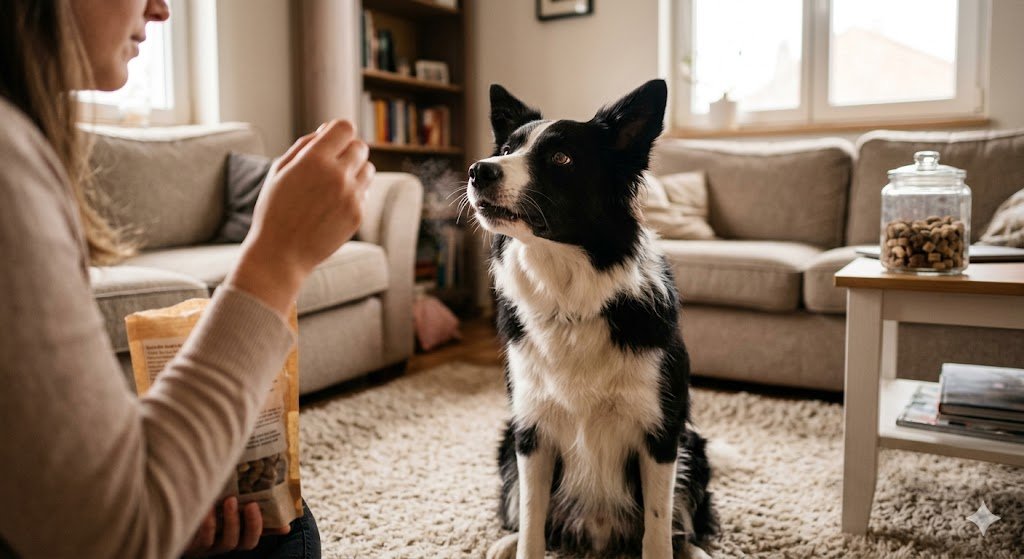
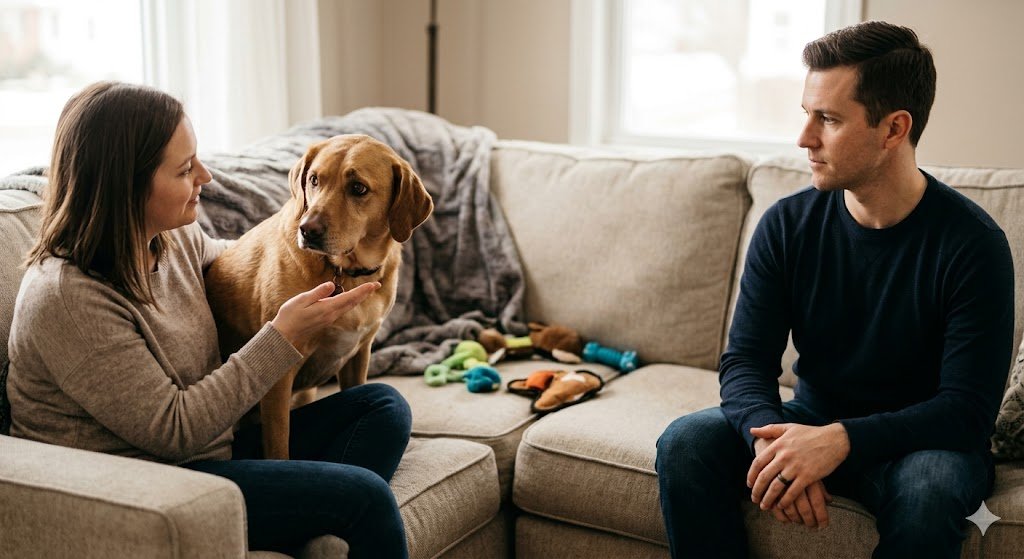
    Why my dog listens to my partner but not me- It is one of the most frustrating experiences a dog parent can have. You are the one who handles the “heavy lifting”—the vet visits, the 6:00 AM walks, and the meticulously measured meals. Yet, when your partner walks into the room and gives a single, quiet command, your dog snaps to attention like a soldier. Meanwhile, when you ask for a “Sit,” your dog looks at you with soulful eyes and continues exactly what they were doing.

    This “Selective Hearing” can feel like a personal slight, but in the world of canine psychology, it is rarely about who the dog “loves” more. In fact, the person the dog listens to most is often not the person they cuddle with most.

    The “Secondary Favorite” Meaning (NLP Snapshot): A dog’s tendency to obey one person over another is driven by Communication Clarity and the Reliability Quotient. Dogs categorize humans into functional roles: the “Nurturer”(source of affection and comfort) and the “Executive” (source of clear, unwavering boundaries). If you find yourself in the “Secondary Favorite” position for commands, it often means your dog views your relationship as purely social rather than operational.

    The Psychology of the “Executive” Figure

    To understand why your dog “snaps to” for your partner, we have to look at how dogs process information. Canines are masters of associative learning—they don’t listen to words so much as they predict outcomes based on signals.

    The Clarity Coefficient

    The “Executive” in the house usually has a high Clarity Coefficient. This means they use fewer words and more consistent body language. While a “Nurturer” might say, “Hey buddy, can you sit down for me please? Come on, sit,” the Executive simply says, “Sit,” once. To a dog, the latter is a clear, high-contrast signal. The former is “white noise” that the dog has learned to tune out.

    Energy and Assertiveness

    Dogs are evolutionarily tuned to follow calm, assertive energy. If one partner project a “soft” or pleading energy, the dog may interpret this as a lack of leadership. It’s not that the dog is being defiant; it’s that they don’t feel the “weight” of the command. They view your request as an invitation to a negotiation rather than a directed task.

    The Follow-Through Factor

    This is the most critical element of the Executive figure. If your partner issues a command, they likely wait and ensure the dog completes it before moving on. This creates a 100% Reliability Rate. If you allow your dog to ignore a command because they look “too cute” or you’re in a hurry, you are teaching the dog that your commands are optional. In the dog’s mind, listening to you is a choice; listening to the Executive is a rule.

    The “Nurturer” Trap: When Love Blurs the Lines

    It feels like a betrayal: you are the person the dog runs to when they are scared, the one they spoon with on the sofa, and the one they greet with the most “wiggletails.” Yet, this deep emotional bond is exactly why they might not listen to you. In canine social structures, there is a distinct difference between a Security Base and a Directional Leader.

    Emotional Attunement vs. Operational Obedience

    If you are the “Nurturer,” your dog feels a high level of Psychological Safety with you. This is a beautiful thing—it means your bond is unconditional. However, because the dog feels so secure, they also feel safe enough to “test” you. They don’t fear a loss of resources or a change in your affection if they ignore a “Down” command. To them, you are the “Safe Harbor,” not the “Captain.”

    The Reward Inconsistency

    Nurturers often fall into the “Just Because” trap. You might give treats, belly rubs, or table scraps simply because the dog looks cute. While this builds a loving relationship, it lowers the Value of the Transaction. If the dog gets the “paycheck” (your attention) without having to “work” (obeying a command), they lose the incentive to perform when asked.

    Decoding “Selective Hearing” (The Science)

    Why does the dog respond to one voice and tune out the other? It isn’t just about who is “the boss”; it’s about how the canine ear and brain process acoustic information.

    Tone, Pitch, and Cadence

    Research in canine ethology shows that dogs respond more effectively to short, descending frequencies for commands.

    • The Executive Tone: Usually involves a deeper, steadied pitch with a “falling” inflection at the end. This mimics the low-frequency growl used by mother dogs to correct puppies.
    • The Nurturer Tone: Often higher-pitched and “sing-songy” (upward inflections). While this is great for praise and bonding, it can sound like “play” or “uncertainty” to a dog, making the command feel like a suggestion rather than a requirement.

    The “White Noise” Effect

    If you talk to your dog throughout the day—narrating your chores or asking them questions—they eventually learn to categorize your voice as background music. This is called Habituation. When you finally do give a serious command, your voice doesn’t “pop” out of the background noise. The partner who speaks to the dog less frequently (or only for specific interactions) has a voice that carries more “novelty” and weight.

    The Follow-Through Factor

    Science shows that dogs are masters of Probability Mapping. * Person A (Executive): 95% chance I have to sit if they say it.

    • Person B (Nurturer): 40% chance I have to sit; 60% chance I can keep sniffing this rug.

    The dog isn’t being stubborn; they are being a mathematician. They are simply choosing the path of least resistance based on your historical follow-through.

    Can a Dog Have Two “Masters”?

    The short answer is yes, but it requires a strategic shift in how the household operates. In canine psychology, a dog doesn’t necessarily need one “Alpha”; they need a predictable environment. If the “Executive” and the “Nurturer” are out of sync, the dog becomes a “situational listener”—someone who obeys depending on who is holding the leash.

    Dual-Authority Households

    To achieve equal authority, both partners must adopt a Unified Communication Protocol. This means using the exact same verbal cues, hand signals, and—most importantly—the same “pass/fail” criteria for a command. If one person allows a “sloppy sit” (butt half off the ground) and the other demands a “square sit,” the dog will always choose the person with the lower standards.

    The Handover Strategy

    One of the most effective ways to balance the scales is for the “Executive” to step back. If the dog only listens to your partner, your partner should temporarily stop being the one who gives treats or dinner. By shifting the High-Value Resources to the “Secondary Favorite,” the dog is forced to re-evaluate who holds the keys to the kingdom.

    From “Second Choice” to “Equal Authority”

    Changing a dog’s perception of you doesn’t happen during a long walk; it happens in the tiny, high-stakes moments of daily life. You can reset the hierarchy by moving from “negotiator” to “leader” through these three steps.

    The 5-Minute Drill

    Perform short, high-intensity training bursts where only you give commands. During these five minutes, you must be 100% consistent. If you say “Sit” and the dog ignores you, do not repeat yourself. Wait them out or calmly lure them into the position. The goal is to prove to the dog that your “Reliability Quotient” has just gone up.

    The “Value Shift”

    For one week, you should be the only one who provides “Life Rewards”—opening the door for a walk, putting the food bowl down, or throwing the ball. However, the dog must “pay” for these rewards with a command (e.g., sitting before the door opens). This teaches the dog that you are the Gatekeeper of Fun, not just a source of free snuggles.

    Consistency Over Intensity

    You don’t need to be loud or “tough.” You just need to be unavoidable. If you ask for a behavior, ensure it happens every single time.

    Safety First: If your dog’s refusal to listen stems from fear, cowering, or aggression toward one specific family member, please consult a professional veterinary behaviorist immediately. This may indicate a breakdown in trust or a history of negative reinforcement that needs expert repair.

    Common Questions (FAQ)

    Does my dog love my partner more than me?

    Almost certainly not. In fact, if the dog ignores your commands but cuddles with you constantly, they likely feel a deeper sense of unconditional security with you. They see your partner as a “manager” and you as their “best friend.” While the lack of obedience is frustrating, it is actually a backhanded compliment to the safety they feel in your presence.

    Why does my dog only listen to me when I have a treat?

    This is the “Bribery vs. Motivation” trap. If you show the treat before giving the command, you aren’t training; you’re negotiating. The dog is deciding if the snack is worth the effort. To fix this, keep treats hidden in a pocket or on a high shelf. Only produce the reward after the dog has successfully completed the task.

    Can I fix this if my dog is already an adult?

    Absolutely. Dogs are masters of adapting to new social data. By shifting your “Follow-Through Factor” and becoming more consistent with your tone and rewards today, you can change a five-year-old dog’s perception of your authority within weeks. Their brain remains plastic and ready to learn “The New Rules” at any age.

    Dr. Emily’s Final Take

    From a veterinary perspective, a household with split authority can actually be a source of stress for a dog. Canines crave predictability. When they receive mixed signals—one person being firm and the other being a “soft touch”—the dog’s mental load increases as they try to navigate two different sets of rules.

    By moving from the “Secondary Favorite” to an “Equal Authority,” you aren’t just making your life easier; you are making your dog’s life better. A dog that knows exactly what is expected of them, regardless of who is speaking, is a calmer, more confident, and less anxious companion. At Dog Vet Expert, we believe that the best bond is built on a foundation of both deep love and mutual respect.

    ⭐ Love vs. Leadership

    Is your partner the ‘Executive’ or just the ‘Favorite’? Discover the subtle biological reasons why dogs choose one primary anchor for affection and another for instruction.

    Read: How Dogs Choose Their Favorite Person →

    🔒 The Trust Factor

    Obedience and trust go hand-in-hand. If your dog doesn’t listen, they may not yet view you as the ‘Safe Harbor’ in the storm. Learn how to bridge the trust gap with visitors and family alike.

    Learn: Why Your Dog Trusts You but Not Visitors →

    Reference

    ACVB for professional insights on household behavioral dynamics.

  • Why do dogs bury treats in blankets? Ancient Instincts in Modern Homes

    Why do dogs bury treats in blankets? Ancient Instincts in Modern Homes

    The Living Room Excavation (Why do dogs bury treats in blankets )

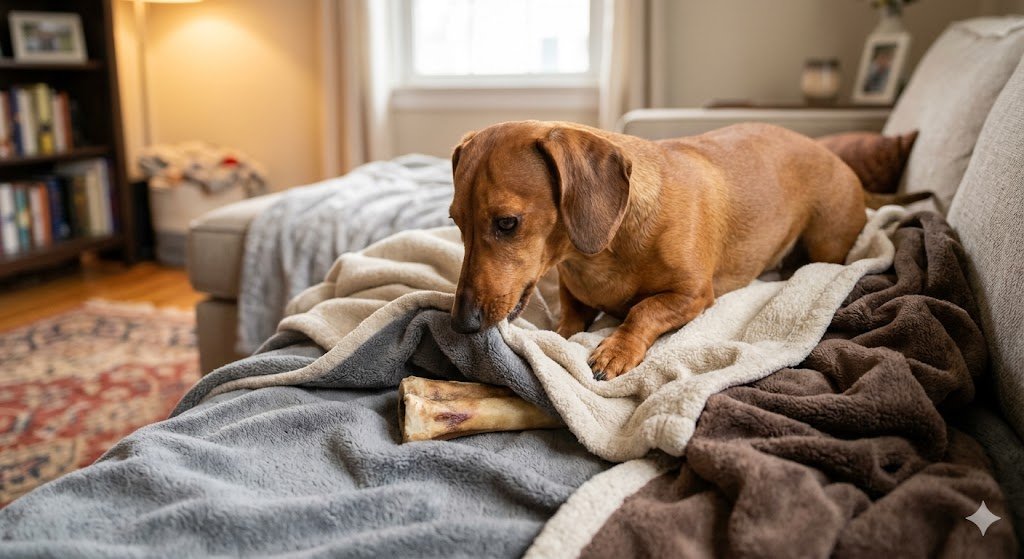
    It’s a scene every dog owner knows: you offer your dog a high-value dental chew or a special biscuit, and instead of eating it, they carry it frantically from room to room. Eventually, they settle on a pile of laundry or a corner of the sofa and begin a series of rhythmic, invisible digging motions. They “push” the air with their nose, seemingly convinced they are covering their prize with earth.

    While this looks like a comedic performance, it is actually one of the most deep-seated survival mechanisms in the canine brain. In a modern apartment, your dog isn’t just being “quirky”—they are opening a biological savings account.

    The “Blanket Burial” Meaning (NLP Snapshot): Dogs bury treats in blankets due to food caching, an ancestral survival instinct. This behavior, technically known as “hoarding” or “surplus killing” logic, allows canines to preserve resources for times of scarcity. In a domestic setting, blankets and pillows act as a substrate substitute for loose soil, providing the psychological satisfaction of “hiding” a high-value asset.

    The Biology of the “Food Cache”

    To understand the living room excavation, we have to look at the wild ancestors of the domestic dog. Wolves, foxes, and coyotes are “opportunistic feeders.” In the wild, food is never a guarantee, and a large kill often provides more meat than a single animal can consume in one sitting.

    Ancestral Refrigeration

    Wild canids discovered thousands of years ago that burying meat in the cool, dark earth acts as a primitive refrigerator.

    • Scent Masking: Burying a carcass prevents the scent from traveling on the wind, protecting the meal from larger scavengers like bears or rival packs.
    • Preservation: The soil provides a consistent, cool temperature that slows down decomposition.

    The “Larder” Mentality

    This instinct is so powerful that it persists even in dogs that have never missed a meal. When you give your dog a “high-value” treat—something they don’t get every day—their brain triggers an emergency protocol: “This is too good to lose; I must save this for later.” This is why they rarely bury their standard kibble, but will spend twenty minutes hiding a pig’s ear or a marrow bone.

    Substrate Preference

    In your home, blankets, cushions, and laundry are the closest match to the loose topsoil of the forest floor. They are pliable, easy to move with a muzzle, and provide immediate visual confirmation that the object is “gone.” When your dog “buries” a treat in your bed, they are treating your duvet as the ultimate, high-security vault.

    Decoding the “Nose Shovel” (Visual Cues)

    If you watch closely, you’ll notice a distinct mechanical difference between how a dog digs a hole in the backyard versus how they “bury” a treat in your blankets. While outdoor digging is a high-energy, claw-heavy activity, the indoor burial is a much more delicate, specialized process.

    The Muzzle-Push Technique

    Instead of using their paws to cover the treat—which might snag on fabric or damage the prize—dogs use their snouts as a biological shovel. This is an instinctual behavior known as “rooting.” They use the top of their muzzle to sweep imaginary dirt (or real fabric) over the treat.

    The Friction Burn Risk

    In their frantic effort to “seal” the cache, some dogs can be surprisingly forceful with their movements. On rougher fabrics like carpets or heavy rugs, this can lead to “carpet nose”—a red, raw friction burn on the bridge of the snout. If you see your dog doing this, it’s a sign that their instinctual drive is overriding their physical comfort.

    Why Your Bed or Sofa? Selecting the “Den”

    It isn’t a coincidence that dogs often choose the master bed or the main living room sofa as their preferred burial ground. From a canine perspective, these locations offer the highest level of security for two very specific reasons.

    Scent Security: The “Human Shield”

    In the wild, a cache is only as safe as its camouflage. In your home, your bed and your laundry are saturated with your unique scent. By burying a treat in your pillows or unwashed clothes, the dog is effectively “masking” the smell of the treat with the smell of the pack leader. To a scavenger (or a rival pet), the treat becomes much harder to pinpoint when it’s wrapped in the powerful scent of the human “sentry.”

    Soft Substrates and “Den” Logic

    Blankets and sofa cushions are the modern equivalent of loose, aerated topsoil. They are easy to manipulate and provide immediate “visual erasure” of the treat. Furthermore, dogs view the areas where the family spends the most time as the “heart of the den.” In their mind, the safest place to store their wealth is right under your nose—literally.

    The “Visible” Burial

    Occasionally, you’ll see a dog “bury” a treat in the middle of a hardwood floor, going through all the motions of pushing dirt over it even though nothing is moving. This is proof of how hardwired the instinct is; the dog is following a mental script so powerful that they don’t even realize the “soil” (the blanket) is missing.

    When “Hiding” Becomes “Hoarding”

    While burying a biscuit is usually a harmless and even charming behavior, it can sometimes cross the line from a fun instinct into a symptom of underlying stress. In the world of canine ethology, we look for the transition from “saving for later” to “anxious accumulation.”

    The Multi-Pet Pressure

    In households with multiple dogs or curious cats, the drive to bury treats often intensifies. If a dog feels their “assets” are constantly under threat of being stolen, the act of burying becomes more frantic. They aren’t just saving the treat; they are hiding it from a specific rival.

    Environmental Stress and Anxiety

    Sometimes, excessive burying is a sign that a dog feels insecure in their environment. If a dog is constantly “caching” their daily meals—not just high-value treats—it may indicate that they don’t feel settled. This is common in rescue dogs who have experienced true food scarcity in the past; their brain is stuck in “survival mode,” unable to trust that the next meal is guaranteed.

    Safety First: If your dog growls, snaps, or shows extreme muscle tension when you approach their “hidden” treat, please consult a local professional behaviorist or veterinarian immediately. This may indicate resource guarding, which can escalate into defensive aggression if the dog feels their “savings account” is being robbed.

    How to Manage the “Indoor Digger”

    You don’t necessarily need to stop your dog from burying treats, but you can manage the behavior to protect your home and your dog’s health.

    The “Give and Eat” Rule

    If you are giving your dog perishable treats (like fresh meat, cheese, or wet chews), burying can become a hygiene issue. In these cases, use the “Give and Eat” rule: only offer these treats in a closed crate or during a supervised training session where the dog is encouraged to eat them immediately.

    Provide a “Safe Digging Zone”

    If your dog is a dedicated hider, give them a specific “caching blanket.” Choose a thick, durable fleece that is “theirs.” When they receive a treat, guide them to their blanket. This satisfies their instinctual need to hide the item while keeping your expensive sofa cushions and bed linens free of hidden (and potentially smelly) surprises.

    Increase Mental Enrichment

    Often, the drive to cache is triggered by a lack of mental “work.” Try using interactive puzzle toys or snuffle mats. These tools flip the script: instead of the dog hiding the food, they have to find it. This satisfies the “foraging” part of their brain and often reduces the urge to hoard treats elsewhere in the house.

    Common Questions (FAQ)

    Why does my dog “bury” their bowl of kibble?

    This is a fascinating example of “vacuum behavior”—an instinctual action performed even when the physical environment doesn’t support it. If your dog nudges the air around their food bowl or tries to “cover” it with a nearby rug, they are signaling that they are full but want to protect the remaining “kill” from others. It is a massive compliment to your cooking; they think the kibble is too good to leave exposed!

    Do they ever actually go back and eat what they buried?

    Yes, but their “map” is based on a mix of memory and scent. In the wild, canids have an incredible spatial memory for their caches. In your home, your dog might forget a dry biscuit hidden deep in the sofa until the scent catches them weeks later. However, if they are constantly burying and never retrieving, it might be more about the act of “winning” the treat than the hunger for it.

    Is it okay to “steal” the treat once they hide it?

    Try to avoid “robbing the bank.” If your dog watches you remove a treat they just spent ten minutes carefully hiding, it can create distrust and lead to resource guarding. If you must remove a perishable treat for hygiene reasons, wait until the dog is out of the room or “trade” them for a different, immediate reward so they don’t feel a sense of loss.

    Dr. Emily’s Final Take

    From a veterinary perspective, “blanket burying” is a wonderful window into your dog’s ancestral soul. It is a harmless, prehistoric behavior that proves our dogs are still deeply connected to their roots as forest-dwelling survivors. As long as the behavior doesn’t escalate into guarding or “carpet nose” injuries, it should be celebrated as a sign of a healthy, instinct-driven mind.

    By providing your dog with a “designated digging blanket,” you aren’t just saving your furniture; you are giving them the agency to manage their “wealth.” A dog that can successfully hide a treasure is a dog that feels a sense of control and security in their environment. At Dog Vet Expert, we believe that a happy home is one where a dog’s ancient instincts have a safe place to play.

    🐾 Digging for Safety

    The drive to ‘bury’ a treat in blankets is identical to the nesting instinct. Discover why dogs dig and circle their beds before sleeping to create a secure, hidden sanctuary.

    Read: Why Dogs Dig Their Beds →

    🤨 Rivalry and Resources

    Is your dog burying treats to save them, or to keep them away from a rival pet? Learn the difference between healthy caching and signs of canine jealousy and resource guarding.

    Learn: Do Dogs Feel Jealousy? →

    Reference

    Link to ScienceDirect for research on hoarding and caching in domestic carnivores.

  • Why Does my Dog Mouth my Hand Instead of Biting: The Social Nibble Explained

    Why Does my Dog Mouth my Hand Instead of Biting: The Social Nibble Explained

    The “Soft Mouth” Mystery (Why does my dog mouth my hand )

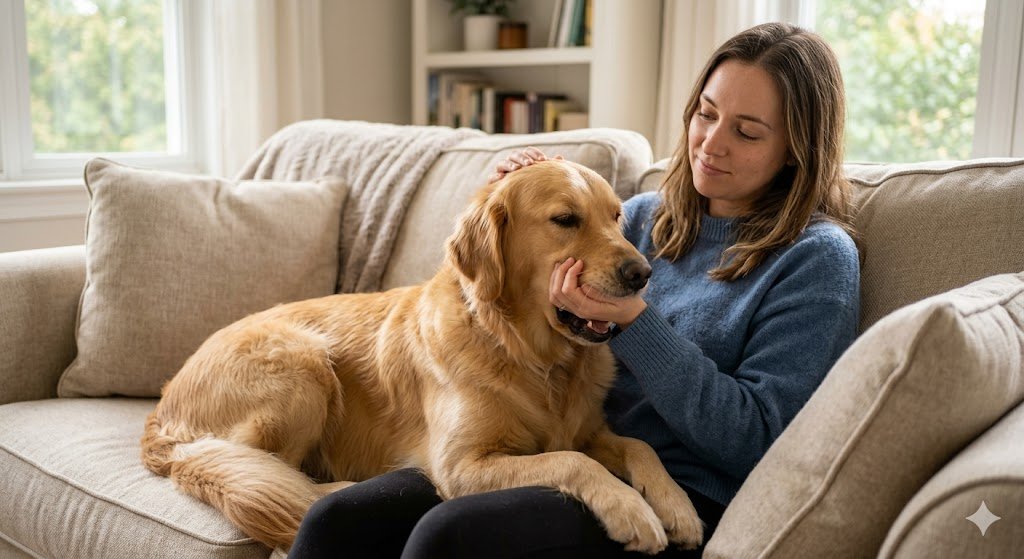
    You’re sitting on the couch, quietly petting your dog, when suddenly they lean in and gently take your hand or wrist into their mouth. Your heart might skip a beat—after all, in the human world, teeth on skin usually means trouble. But your dog isn’t growling, their body is relaxed, and the pressure is so light it’s almost non-existent. They are just… holding you.

    This behavior, often referred to as “mouthing” or the “Social Nibble,” is one of the most misunderstood forms of canine communication. While it involves teeth, it is the polar opposite of a bite. It is a nuanced, tactile gesture that dates back thousands of years to the very origins of the wolf-human bond.

    The “Social Nibble” Explained (NLP Snapshot): Dog mouthing is a form of tactile communication used to signal trust, affection, and social security. Rooted in allogrooming (social grooming) and early puppyhood development, a “soft mouth” indicates that a dog has mastered bite inhibition and is using their mouth as a sensory tool to maintain a physical connection with a trusted member of their “pack.”

    From Littermates to You: The Origin of the Nibble

    To understand why your dog mouths your hand today, we have to look at their first few weeks of life. The mouth is a dog’s primary way of interacting with the world, acting much like a human’s hands and fingers.

    Bite Inhibition 101

    In the litter, puppies play-fight constantly. If a puppy bites a sibling too hard, the sibling yelps and stops playing. This “feedback loop” teaches the puppy Bite Inhibition—the ability to control the strength of their jaw. When your adult dog mouths your hand gently, they are demonstrating this lifelong skill. They are choosing to use “Level 0” pressure, which is a significant sign of cognitive control and respect for your physical boundaries.

    The Allogrooming Instinct

    In wild canine groups, members engage in allogrooming. They use their small front incisors to gently nibble at each other’s fur to remove parasites and debris. This behavior, often called “cobbing” or “flea-biting,” isn’t just about hygiene; it’s a social glue that lowers the heart rate of both dogs involved. When your dog nibbles your thumb or the edge of your hand, they are attempting to “groom” you, treating you as an intimate family member.

    Sensory Exploration

    Puppies also mouth objects to learn about their texture, taste, and density. Even as adults, some dogs remain “orally fixated.” Mouthing your hand allows them to gather sensory data about where you’ve been, what you’ve touched, and even your current chemical state through your skin. It is their way of “feeling” your presence in the most literal sense possible.

    Decoding the “Social Nibble” vs. A Warning Nip

    For many owners, the feel of teeth on skin triggers an immediate “danger” response. However, a social nibble and a warning nip are at opposite ends of the behavioral spectrum. Understanding the subtle cues of canine ethology allows you to distinguish between a sign of love and a sign of stress.

    The “Slack Jaw” vs. The “Rigid Snap”

    In a true social mouth, the jaw muscles are loose. Your dog isn’t “clamping” down; they are simply resting their teeth against you. In contrast, a warning nip is preceded by a stiffening of the jaw and a “muzzle puckering” where the lips are drawn forward.

    Eye Contact: Soft vs. Hard

    • Social Eyes: When your dog is mouthing you affectionately, their eyes will appear “soft,” often squinting or blinking slowly. This indicates they are in a parasympathetic (relaxed) state.
    • The “Whale Eye”: If a dog is about to nip out of fear or defense, you will see the whites of their eyes (whale eye) and a fixed, hard stare.

    The “Retriever Drive”

    If you own a Golden Retriever, Labrador, or Cocker Spaniel, mouthing is often a genetic “hold.” These breeds were developed to carry delicate game in their mouths without damaging it (a “soft mouth”). To them, holding your wrist or hand is the highest form of carry—it’s as if they are holding onto their most prized possession.

    Why Your Hand? The Scent-Taste Connection

    Have you ever wondered why dogs specifically target your hands for the social nibble? It isn’t just because they are the easiest part of your body to reach; your hands are a chemical library for your dog.

    The Pheromone Exchange

    Human hands contain a high concentration of sweat glands and sebaceous glands. By mouthing your hand, dogs use their Jacobson’s Organ (the vomeronasal organ located in the roof of the mouth) to “taste-smell” your pheromones. This allows them to detect your stress levels, your health, and even where you have been earlier in the day. It is an intimate sensory “check-in.”

    The “Salt” Factor and Sensory Input

    Beyond the deep psychological connection, there is a simple sensory pleasure. Human skin often has a thin layer of salt from perspiration. While it sounds unappealing to us, this salty flavor provides an interesting sensory experience for a dog. Combined with the tactile sensation of your skin, the act of mouthing provides a complex “sensory bouquet” that keeps them engaged and grounded.

    Grounding and Self-Soothing

    For many high-energy dogs, mouthing serves as a self-soothing mechanism. Much like a human might squeeze a stress ball, a dog will mouth a trusted person’s hand to release endorphins. If your dog mouths you the moment you come home from work, they are likely using you as a “grounding tool” to lower their own excitement levels and find their emotional center.

    The Science of the “Calm Down” Mouth

    For many dogs, particularly those with high “oral drive,” having something in their mouth isn’t just a choice—it’s a biological necessity for relaxation. This is why you often see a dog run to grab a toy the moment you walk through the door; if a toy isn’t available, your hand becomes the substitute.

    Sensory Input and Endorphins

    When a dog mouths gently, it triggers the release of endorphins and dopamine in their brain. This is a rhythmic, self-soothing behavior similar to how a human might use a “fidget spinner” or a chewable sensory tool. The pressure on their gums provides a specific type of tactile feedback that helps regulate their nervous system.

    Drive Redirection

    In states of high arousal—such as when you return home after a long day—a dog’s energy can become overwhelming. They want to jump, bark, and zoom, but they know they must stay calm. By mouthing your hand, they redirect that physical energy into a controlled, quiet action. It acts as an “emotional ground wire,” bleeding off excess excitement so they don’t escalate into disruptive behaviors.

    When Mouthing Becomes a Problem

    While the “social nibble” is a beautiful sign of trust, it is important for owners to monitor the intensity of the behavior. Because dogs communicate through their mouths, a shift in pressure can signal a shift in their emotional state.

    The Excitement Escalation

    If a dog gets “over-aroused” during play, their bite inhibition can slip. What started as a soft hold can turn into a painful pinch. This isn’t usually aggression; it’s a loss of emotional control. As an owner, your job is to “pause” the interaction the moment the pressure increases, teaching the dog that the “social” part of the nibble ends when the pain begins.

    The Red Flags of Redirection

    If your dog is mouthing you while pacing, whining, or looking frantically for an exit, the behavior has shifted from “affection” to “anxiety-driven displacement.” In these cases, the dog is using you as a pacifier because they are overwhelmed by their environment.

    Safety First: If your dog’s mouthing is accompanied by a stiff body, growling, or if they are applying painful pressure, please consult a local professional behaviorist or veterinarian immediately. This may be a sign of redirected aggression or a lack of bite inhibition that requires expert intervention.

    Common Questions (FAQ)

    Why does my dog nibble my clothes instead of my skin?

    This is often considered a “polite” version of the social nibble. Some dogs learn that humans are sensitive to teeth on skin, so they redirect their grooming instinct toward your sleeves or pant legs. It carries the same sentimental value as mouthing your hand—they are trying to “clean” and bond with you through fabric.

    Is it okay to let my dog mouth my hand?

    As long as the pressure is non-existent and the dog is relaxed, it is a healthy form of bonding. However, you should always be able to ask your dog to “leave it” or “out.” If the dog refuses to let go or gets “hooky” with their teeth, you should set a boundary to ensure you remain the one in control of the interaction.

    Why do Golden Retrievers mouth more than other breeds?

    Retrievers have been selectively bred for centuries to have a “Soft Mouth”—the ability to carry a bird for miles without leaving a single mark on it. This genetic predisposition makes them naturally “mouth-oriented.” For a Retriever, the mouth is their primary tool for showing affection and offering “gifts.”

    My dog nibbles me with just their front teeth. Is that a bite?

    No, this is specifically called “Cobbing” or “Flea-biting.” It is a grooming behavior. In a dog pack, this is a sign of high-level friendship. They are essentially telling you, “You are part of my inner circle, and I’m taking care of you.”

    Dr. Emily’s Final Take

    From a clinical and behavioral perspective, mouthing is one of the most intimate gestures a dog can offer. When a dog puts your hand in their mouth, they are placing their most powerful weapon against your skin and choosing to use zero force. It is a profound demonstration of Bite Inhibition and emotional maturity.

    If your dog is a “social nibbler,” don’t fear the teeth. Instead, observe the context. If the eyes are soft and the tail is a slow, rhythmic wag, you are witnessing a deep, ancestral form of love. At Dog Vet Expert, we believe that understanding these tactile signals is the key to moving past the “owner” mindset and into a true, lifelong partnership with your dog.

    🐾 Tactile Demands

    Does your dog follow a social nibble with a rhythmic paw tap? Both are ‘proximity seekers’ used to initiate play. Learn the psychology behind why your dog uses their paws to grab your attention.

    Read: Why Dogs Tap You With Their Paw →

    🌬️ Beyond the Teeth: The Huff

    Mouthing is a tactile signal, but a ‘huff’ is the auditory equivalent. Discover how dogs use soft exhales to communicate excitement or impatience without ever letting out a bark.

    Learn: Why Dogs Huff at You →

    Reference

    IAABC (International Association of Animal Behavior Consultants) regarding bite inhibition and social play.

  • Why Does my Dog Huff at me Understanding the “Huff” and “Sigh”

    Why Does my Dog Huff at me Understanding the “Huff” and “Sigh”

    The “Punctuation” of Canine Speech

    Why does my dog huff at me- You’ve just told your dog they can’t have a second treat, or perhaps you’ve informed them that the walk is over. In response, they drop their head and let out a heavy, dramatic exhale that sounds suspiciously like a teenager being told to clean their room.

    While it’s easy to label this as “sass,” in the world of canine communication, it’s much more than an attitude problem. These exhales—the short, sharp huff and the long, flowing sigh—serve as the “punctuation marks” of dog language. They aren’t just air moving through a snout; they are sophisticated signals that help your dog manage their own internal emotions and communicate their social state to you.

    The “Huff and Sigh” Meaning (NLP Snapshot): A dog’s huff or sigh is a vocal transition signal used to bridge the gap between two emotional states. A “huff” is an active expression of thwarted desire or mild frustration, often used when a dog is still hoping for a specific outcome. A “sigh” represents physiological decompression or emotional closure, signaling that the dog has accepted the situation and is “resetting” their nervous system.

    The Anatomy of a “Huff” (Active Frustration)

    If your dog lets out a “huff” when you say “No,” they are essentially giving you a piece of their mind without breaking the rules of the house. From an ethological perspective, a huff is often considered a “micro-bark.”

    The Suppressed Protest

    In the ancestral pack, a full bark was a high-energy alert. In a domestic setting, many dogs learn that barking at their owners is “impolite” or results in a negative correction. The huff is the compromise. It is a sharp, breathy sound that carries the rhythmic intent of a bark but without the vocal cord engagement.

    The Context of “No”

    When you deny a request, the huff is an expression of thwarted drive. The dog still wants the ball, the food, or the attention, and the huff is their way of acknowledging the boundary while still physically vibrating with the energy of “wanting.” It is the sound of a dog who is active, alert, and mildly exasperated.

    Identifying the Body Language

    A huff is rarely a solo act. When your dog huffs at you, you will typically notice:

    • Forward-facing ears: Signaling that their attention is still locked on the goal.
    • Intense eye contact: They are checking to see if their “protest breath” will make you reconsider.
    • Tense facial muscles: Particularly around the muzzle, where the air is being forced out.

    Understanding the huff is the first step in recognizing that your dog is trying to regulate their own frustration. They aren’t being “bad”—they are simply “venting.”

    The Deep “Sigh” (The Great Reset)

    If the huff is the sound of an argument, the sigh is the sound of a surrender. When a dog lets out a long, heavy sigh after being told “No,” they are undergoing a process known as physiological decompression. This is a critical transition in canine psychology where the dog moves from a state of “high arousal” to “low arousal.”

    The Emotional Finish Line

    Unlike the huff, which signals that the dog is still hoping for a change of heart, the sigh indicates that the dog has accepted the outcome. It is the “Great Reset” of their nervous system. By forcing a large volume of air out of their lungs, the dog physically relaxes their ribcage and diaphragm, which sends a signal to the brain to lower the heart rate.

    Eye Position: The Key to Interpretation

    To truly decode a sigh, you must look at your dog’s eyes. In ethology, the state of the eyes during an exhale tells you the “flavor” of the emotion:

    • Sigh with Half-Closed Eyes: This is a sign of true contentment and trust. The dog has accepted that “playtime is over” and is now ready to nap.
    • Sigh with Wide Open Eyes: This is often a sign of disappointment or “resigned boredom.” The dog has accepted the “No,” but they aren’t necessarily happy about it. They are still monitoring the room for a better opportunity.

    Decoding the Sound: A Comparative Table (Why does my dog huff at me )

    To help you distinguish between these two vocalizations at a glance, use this comparative guide. This helps owners move past anthropomorphism (giving dogs human traits) and into true behavioral analysis.

    Sound FeatureThe “Huff” (Active)The “Sigh” (Passive)
    DurationShort, sharp, and burst-like.Long, slow, and flowing.
    GoalTo protest or request a change.To settle or end an interaction.
    Nervous SystemSympathetic (Fight/Flight/Fidget).Parasympathetic (Rest/Digest).
    Muzzle ShapeOften “pursed” or tense.Completely relaxed/floppy.
    The Meaning“I’m still waiting for that treat!”“Fine, I guess I’ll just sleep then.”

    Export to Sheets

    The “Huff-Whimper” Hybrid

    Occasionally, you may hear a huff that bleeds into a tiny whimper. This is a high-intensity signal of conflict. The dog is struggling between their desire to obey your “No” and their intense drive to get what they want. If you hear this, it is often a sign that your dog needs a “redirection” game (like a snuffle mat) to help them transition into a calmer state.

    Why Humans Misinterpret the “Drama”

    It is incredibly common for owners to describe their dog as “sassy” or “dramatic” when they huff or sigh. This is a classic example of anthropomorphism—attributing human personality traits like defiance or sarcasm to our pets. While it certainly feels like your dog is giving you “attitude,” the truth is much more positive.

    A Sign of Emotional Regulation

    When your dog huffs or sighs in response to a “No,” they are actually practicing emotional regulation. Instead of escalating into barking, jumping, or destructive behavior to get what they want, they are using their breath to process their feelings. It is the canine equivalent of a human taking a “stress breath” before moving on with their day.

    The Bond Indicator

    In the world of ethology, a dog that huffs or sighs at you is showing a high level of social trust. It means they feel safe enough in your presence to express their internal state without fear of a harsh correction. This “dialogue” is a sign of a high-functioning social bond; your dog knows you are the pack leader, but they also know they have a “voice” in the household.

    Behavior vs. Health: When it’s Not Communication

    As a dog parent, it is vital to distinguish between a “psychological” huff and a “physiological” breathing issue. While most huffs are behavioral, certain respiratory sounds can mimic communication but actually require medical attention.

    Respiratory Alerts

    If the exhaling sound is frequent, occurs without a social trigger (like you saying “No”), or sounds “wet” or “labored,” it may not be a sigh.

    • Reverse Sneezing: A common, non-emergency sound that can be mistaken for a frustrated huff.
    • Brachycephalic Challenges: Breeds with flat faces (like Pugs or French Bulldogs) often make huffing sounds simply because of their airway structure.

    Safety First: If your dog’s huffing is accompanied by coughing, wheezing, or a blueish tint to the gums, please consult a local professional veterinarian immediately, as this may indicate a respiratory or cardiac issue rather than a behavioral signal.

    The Difference in Effort

    A behavioral sigh is effortless. The dog’s body slumps and the air flows out naturally. If you notice your dog’s chest or stomach muscles working hard to push the air out (abdominal breathing), this is a medical red flag, not a “sassy” sigh. Always observe the context: if they sigh because you stopped petting them, it’s likely psychological. If they sigh while resting and seem to struggle, call the vet.

    Common Questions (FAQ)

    Why does my dog huff at me when I’m on the phone?

    This is a classic “demand signal.” Your dog perceives that your attention—a high-value resource—has shifted away from them and toward a plastic device. The huff is a low-stakes way of saying, “I’m still here, and I’m bored.” It is an attempt to initiate an interaction without the “rudeness” of a bark.

    Do dogs sigh when they are sad?

    Dogs don’t experience “sadness” with the same narrative complexity as humans (they don’t dwell on the past or worry about the future). However, they do experience disappointment. A sigh after a “No” is a physiological relief of that disappointment. They aren’t depressed; they are simply processing the fact that their immediate goal wasn’t met.

    Why does my dog huff right before we go for a walk?

    This is known as anticipatory excitement. In this context, the huff isn’t about frustration; it’s about “contained energy.” Your dog is so excited that they are literally bursting with air, and the huff is a way to vent some of that pressure so they can stay (relatively) calm while you put on their leash.

    My dog sighs and then stares at me. What does that mean?

    If a sigh is followed by an intense stare, your dog is in a “negotiation phase.” They have physically reset their body, but they are still mentally checking to see if your “No” is final. If you remain consistent, they will eventually look away or go to sleep.

    Dr. Emily’s Final Take

    From a veterinary and behavioral standpoint, learning to “hear” the difference between a huff and a sigh is like gaining a secret window into your dog’s emotional health. These vocalizations are proof of your dog’s cognitive complexity—they show that your pet is capable of processing disappointment and choosing a peaceful “exhale” over a disruptive “outburst.”

    When you acknowledge these sounds as communication rather than “sass,” you strengthen the trust between you. By giving your dog the space to “vent” their frustration, you are fostering a more confident, emotionally stable companion. At Dog Vet Expert, we encourage you to listen closely; sometimes, the most important things your dog has to say are said without a single bark.

    🐾 The Proximity Seeker

    Does your dog follow a frustrated ‘huff’ with a gentle paw tap? Both are tactical ways dogs ask for attention without breaking the ‘no barking’ rules of the house. Learn the science behind the tap.

    Read: Why Dogs Tap You With Their Paw →

    🦷 The Social Nibble

    Huffing is a ‘breath’ protest, but mouthing is a ‘tactile’ protest. Discover why dogs use a soft, toothless hold to communicate frustration or a deep-seated need for connection.

    Learn: Why Dogs Mouth Your Hand →

    Reference

    Reference the American College of Veterinary Behaviorists for further reading on canine vocal signals.

  • Why does my dog sleep near me: Why Your Dog Chooses One Family Member to Sleep Near

    Why does my dog sleep near me: Why Your Dog Chooses One Family Member to Sleep Near

    The Nocturnal Vote of Confidence

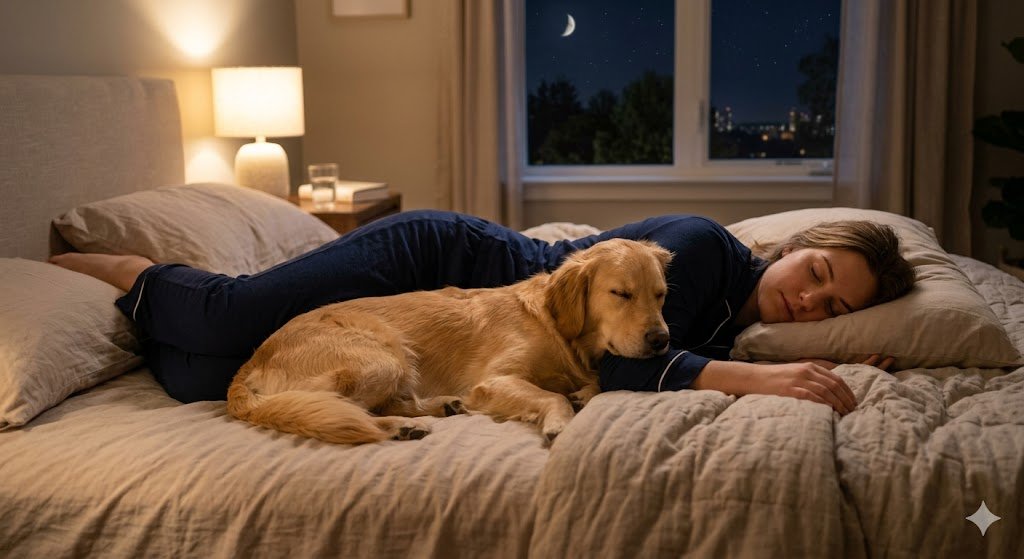
    Why does my dog sleep near me- While your dog might happily chase a ball for anyone in the family or accept treats from every guest, bedtime is the moment they cast their most honest “vote.” In the canine world, sleep is a state of total vulnerability. By choosing to settle down next to one specific person, your dog isn’t just seeking a cozy spot; they are making a profound biological statement about who they trust most to keep them safe.

    The “Best Friend” Choice (NLP Snapshot): Dogs select a sleeping partner based on a combination of social safety, scent-security, and thermal regulation. They gravitate toward the individual who serves as their “secure base”—the person whose presence physically lowers their heart rate and allows them to enter deep, restorative sleep cycles.

    The Ancestral “Den” Instinct

    To understand why your dog picks a specific side of the bed or a specific person, we have to look back at their evolutionary roots. In the wild, sleeping was the most dangerous time for a pack. To survive, ancestors developed a “denning instinct” that remains hardwired into your dog’s DNA today.

    The Guard Post Theory

    When your dog chooses to sleep near you, they are essentially forming a defensive perimeter. By leaning against you or sleeping at your feet, they are using their body to monitor your movements and the environment simultaneously. If you move, they know; if a stranger approaches, they are the first to alert the “pack leader.”

    The “Back-to-Back” Connection

    You may notice your dog often sleeps with their back pressed firmly against yours. This is a classic defensive posture seen in wild canids. By sleeping back-to-back, a pair eliminates “blind spots,” ensuring that 360 degrees of the environment are monitored. In a modern home, this translates to a high-level bond where the dog feels they are “covering your six” while you cover theirs.

    Vulnerability and Trust

    Unlike humans, who might sleep in separate rooms for comfort, a dog’s instinct tells them that there is safety in numbers. Choosing a sleeping partner is a sign that they view that person as the most capable “sentry.” If your dog chooses you, they aren’t just snuggling—they are trusting you with their life while they dream.

    The Science of the “Secure Base”

    In canine psychology, the concept of a “Secure Base” is borrowed from human attachment theory. It describes a relationship where the presence of a specific individual provides a sense of safety that allows the subject to explore the world—or in this case, the world of dreams—without fear.

    Attachment Theory and the “Strange Situation”

    Researchers often use a modified version of the Ainsworth Strange Situation Test to study the bond between dogs and humans. These tests consistently show that dogs have a “primary attachment figure.” Much like a child with a parent, a dog’s physiology changes when they are near this person. Their breathing stabilizes, and their muscle tension drops, which is a prerequisite for entering REM (Rapid Eye Movement) sleep.

    The Oxytocin Loop

    When a dog sleeps near their chosen person, their brain releases Oxytocin, often called the “cuddle hormone.” This chemical reaction doesn’t just feel good; it actively suppresses Cortisol, the hormone responsible for stress and hyper-vigilance.

    Scientific Citation: A 2024 study published in the journal ‘Animals’ demonstrated that dogs spend significantly more time in deep, restorative sleep when their primary attachment figure is physically present in the room, compared to sleeping alone or with a stranger.

    Decoding the “Favorite” Criteria (Why does my dog sleep near me )

    You might be the one who provides the food, but your dog might still choose your partner or child to sleep near. This can be frustrating, but it isn’t a slight against your bond. Instead, dogs use a specific set of “internal metrics” to choose their nocturnal partner.

    The Consistency Factor

    Dogs are creatures of routine. They often gravitate toward the person with the most predictable energy. If one person tosses and turns or wakes up frequently, a dog seeking deep rest will choose the “quieter” sleeper. They want a partner who represents stability during the eight hours of darkness.

    The Scent Profile: “Safety Smells Like You”

    A dog’s sense of smell is 10,000 to 100,000 times more acute than ours. To a dog, a person’s scent is a literal map of their emotions and health. They often choose to sleep near the person whose scent profile is most associated with comfort and safety. This is why many dogs prefer sleeping on a specific side of the bed or on a piece of discarded clothing—they are “bathing” in the scent of their secure base.

    The Thermal Variable: Physics vs. Affection

    Sometimes, the choice is purely functional.

    • Small or Thin-Coated Breeds: (like Chihuahuas or Greyhounds) often seek out the “human radiator”—the person in the family who radiates the most body heat.
    • Double-Coated Breeds: (like Huskies or Golden Retrievers) might actually move away from a warm sleeper toward a partner who keeps the room cooler or sleeps near a window.

    The High-Value Bond

    Finally, dogs often choose the person they feel most “attuned” to. This isn’t necessarily the person who plays the most, but the person who best reads their subtle body language throughout the day. This social attunement creates a level of trust that makes that person the ultimate “Best Friend” for the night.

    Behavior vs. Anxiety: When to Step In

    While choosing a favorite sleeping partner is a natural part of canine social bonding, it is important to distinguish between healthy affection and behavioral “over-attachment.” In the world of ethology, we look for the line where a preference becomes a compulsion.

    Normal Attachment vs. Hyper-Attachment

    It is perfectly normal for a dog to follow you from room to room and settle by your side at night. This is a sign of a strong bond. However, if a dog cannot settle or sleep unless they are physically touching you—or if they show signs of extreme distress when separated—this may lean into what is commonly known as “Velcro Dog” behavior.

    Understanding Resource Guarding

    Sometimes, a dog’s choice to sleep near one person isn’t just about love; it’s about “possession.” If your dog perceives you as a high-value resource, they may try to protect that resource from others.

    Safety First: If your dog shows signs of resource guarding (such as growling, baring teeth, or snapping) when another family member or pet approaches the bed, please consult a local professional behaviorist or veterinarian immediately. These behaviors require expert intervention to ensure the safety of everyone in the household.

    Common Questions (FAQ)

    Why does my dog sleep at my feet instead of near my head?

    In the ancestral “den” hierarchy, the feet are the most strategic location. By sleeping at your feet, the dog is positioned to monitor the entrance and exit of the room. They are acting as a “buffer” between the sleeper and any potential threats coming through the door. It also allows them to feel your movement the moment you sit up, ensuring they aren’t left behind.

    Does letting my dog sleep with me ruin their training?

    There is a common myth that allowing a dog on the bed leads to “dominance” issues. Modern canine science has largely debunked this. Dominance is about access to resources, not who has the softest pillow. As long as your dog is well-behaved and respects boundaries (like getting off the bed when asked), sharing a sleeping space usually strengthens the human-canine bond rather than harming it.

    Can a dog’s “favorite” sleeping partner change?

    Absolutely. Dogs are highly adaptive. If a new person enters the household, if a family member’s work schedule changes, or if someone starts providing more “calm energy” during the day, a dog may shift their nocturnal allegiance. These shifts are often a reflection of who currently represents the most stable “secure base” in their daily life.

    Why does my dog “dig” at the blankets before lying down near me?

    This is a nesting instinct. In the wild, dogs would paw at the ground to clear away debris, move cold soil to reach warmer earth, or check for pests. When they do this on your duvet, they are simply “preparing the den” to ensure it’s perfectly safe and comfortable for both of you.

    Dr. Emily’s Final Take

    From a veterinary perspective, the bond shared between a dog and their “chosen” sleeper is one of the most significant indicators of a dog’s psychological well-being. Quality sleep is just as vital for dogs as it is for humans; it is during these deep rest cycles that their brains process learning, regulate emotions, and repair physical tissue.

    When a dog finds a person who provides that “secure base,” they aren’t just looking for a warm body—they are looking for a partner that allows their nervous system to fully decompress. A dog that sleeps soundly is generally a dog with lower anxiety and a stronger immune system. If you are that person for your dog, cherish it. It is the ultimate compliment to your calm energy and the safety you provide.

    Conclusion: The Silent Bond

    The “Best Friend” test isn’t about who buys the most toys or who goes on the longest runs. It is a quiet, nightly ritual that reveals the deepest layers of canine trust. Whether your dog is a “velcro” snuggler or a sentry at your feet, their choice to stay near you during the night is a testament to the strength of your human-canine bond.

    By understanding the ancestral instincts and the modern psychology behind these choices, we can better appreciate the complex emotional lives of our pets. At Dog Vet Expert, we believe that recognizing these subtle behaviors is the first step toward a healthier, happier life for both you and your dog.

    🤝 Proximity and the “Lean”

    Sleeping near you is about trust, but leaning on you is about tactile reassurance. Discover why dogs use their body weight to synchronize their heart rate with yours during rest.

    Read: Why Dogs Lean on You →

    ⭐ The Ultimate Favorite Person Test

    Bedtime is when dogs cast their most honest vote. Learn the three specific biological markers dogs use to choose their primary attachment figure for the night.

    Learn: How Dogs Choose Their Favorite Person →

    Reference

    “Research at the Cornell University College of Veterinary Medicine suggests that a dog’s attachment style is closely mirrored by their human partner’s emotional state.”