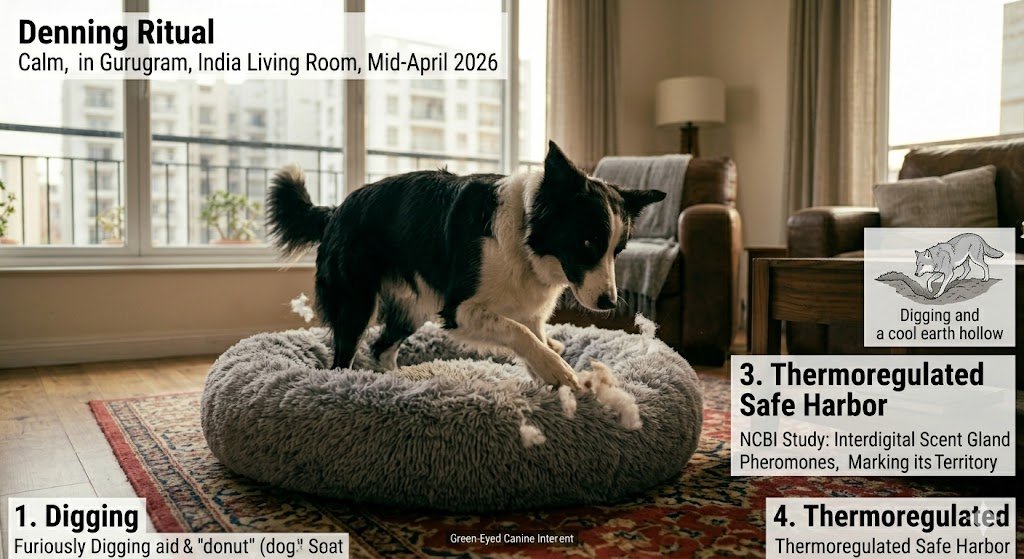
The Pre-Nap Construction Project (why do dogs dig their beds )
Your dog has a perfectly plush, orthopedic bed, yet they spend three minutes furiously scratching the fabric and spinning in circles before finally settling down. To the frustrated owner watching their expensive pet gear get shredded, it looks like the dog is trying to “fix” something that isn’t broken.
In reality, your dog is engaging in a complex, multi-layered survival ritual known as Denning. This behavior is a “hard-wired” instinct that predates domestication. They aren’t just getting comfortable; they are physically and chemically preparing a Safe Harbor for the night. This nightly construction project is a combination of environmental control and ancient self-preservation.
Why Dogs “Dig” Their Beds (NLP Snapshot): Dogs dig their beds due to an instinctual behavior called Denning. This is a combination of Thermoregulation (adjusting temperature), Scent Marking (claiming the space), and Tactile Safety(flushing out pests or debris). By digging, they are attempting to create a “micro-climate” and a protective barrier that signals to their brain it is safe to enter a deep sleep state.
Thermoregulation: The Original Air Conditioning
One of the primary reasons for the “dig” is the search for the perfect temperature. In the wild, dogs don’t have thermostats or cooling mats; they have the earth.
The Wild Origin: Digging for Relief
In nature, the temperature of the soil changes significantly just a few inches below the surface.
- Summer Cooling: In the heat, wolves and wild canids dig into the top layer of dirt to reach the damp, cool earth beneath.
- Winter Insulation: In the cold, they dig “hollows” or snow caves. These pits trap the dog’s body heat, using the earth as a natural insulator to prevent hypothermia.
The Domestic Link
Even though your Gurgaon home is climate-controlled, your dog’s DNA is telling them that “comfort” requires a change in the surface. If you notice your dog digging more frantically as the summer heat sets in, they are likely looking for that “cool soil” feeling. On the flip side, “nesting” in blankets during the winter is their way of trapping heat in a makeshift den. If the digging seems excessive, it may be a sign that their current sleeping surface isn’t breathable enough for their needs.
Scent Marking: The Interdigital Gland Connection
As we explored in our guide to “Post-Poop Kicking,” a dog’s paws are their primary tool for chemical communication. When your dog scratches at their bed, they aren’t just rearranging the stuffing; they are “signing” the furniture.
The Chemistry of Ownership
Between your dog’s toes are specialized interdigital scent glands. These glands release unique pheromones that are triggered by the friction of the scratching motion. By digging into the bed, your dog is:
- Claiming Property: They are telling any other pets in the house, “This is my designated Safe Harbor.”
- Creating a “Scent-Map”: Surrounding themselves with their own scent provides a profound sense of psychological security, making it easier for them to lower their guard and fall asleep.
Safety First: Flushing Out the “Invaders”
In the wild, a pile of leaves, tall grass, or a hollow under a log is rarely empty. For an ancestral dog, lying down without checking the “nest” first was a dangerous gamble.
The “Circle and Scratch” Ritual
You will almost always see digging accompanied by spinning in circles. This dual-action ritual served three critical safety purposes for their ancestors:
- Evicting Pests: The scratching and stomping would flush out snakes, spiders, or stinging insects hidden in the bedding.
- Flattening the Terrain: In tall grass, the circular walking motion flattens the vegetation, creating a smooth surface and a “wall” of grass that acts as a visual barrier.
- Checking for Threats: Spinning 360 degrees allows the dog to scan the entire horizon for predators one last time before they commit to a vulnerable sleeping position.
Even though the only thing “hidden” in their modern bed is perhaps a lost tennis ball, the instinct to clear the area of “invaders” remains a vital part of their nightly routine.
Tactile Comfort: The “Nesting” Instinct
Just like we fluff our pillows or adjust our blankets to find the “sweet spot,” dogs use digging to physically mold their environment. This is the Nesting Instinct in action, and it’s about more than just a soft surface.
Molding the Space
By scratching and pawing at the bed, dogs are shifting the filling to create a physical “lip” or raised edge around their body. This serves two psychological purposes:
- Back Protection: In the wild, having a raised edge against the back prevents a “sneak attack” from behind.
- Joint Support: Digging allows them to create a custom hollow that supports their specific weight distribution, which is particularly important for senior dogs or those with joint stiffness.
The “Donut” Goal
Most dogs are trying to achieve the “Donut” position—curling into a tight ball with their nose tucked near their tail. This position protects their vital organs and preserves body heat. The digging is simply the “construction phase” required to make that tight curl comfortable.
When “Digging” Becomes “Destruction”
While digging is a natural ritual, there is a point where it shifts from a healthy instinct to a behavioral or physical red flag. For owners in high-heat areas like Gurgaon, this distinction is critical.
Boredom vs. Instinct
If your dog is digging at their bed for long periods throughout the day—not just before sleep—they may be suffering from Canine Compulsive Disorder (CCD) or simple boredom. If they are shredding the bed rather than just “arranging” it, they likely need more mental stimulation or a more durable “indestructible” bed.
The Gurgaon Summer Factor
During the intense Haryana summers, frantic digging is often a sign of Heat Stress.
- The Problem: Many plush beds trap heat. If the dog is digging to the bottom of the bed, they are trying to reach the cool floor underneath.
- The Solution: Switch to an elevated cot or a specialized cooling mat during the peak summer months.
Medical Red Flags
[Image highlighting dog joint pain: shifting weight and stiff leaning]
Dr. Emily’s Rule: “If your dog’s digging is accompanied by panting, pacing, or a sudden inability to settle down, it could indicate pain from arthritis or abdominal discomfort. Furthermore, in senior dogs, a sudden ‘obsessive’ change in nesting habits can be an early indicator of Canine Cognitive Dysfunction (dementia).”
Common Questions (FAQ)
Why do they spin in circles too?
This is the “Compass” behavior. Beyond flattening the grass, spinning allows a dog to determine the Wind Direction. In the wild, sleeping with their nose toward the wind allows them to catch the scent of an approaching predator instantly. Even in your bedroom, they are instinctively positioning themselves for the best “early warning” advantage.
Why does my dog dig at the floor or carpet instead?
This is called “Phantom Nesting.” Your dog feels the biological urge to prepare a den, but the surface (hardwood or tile) doesn’t cooperate. They will continue to scratch because the “action” of digging satisfies the instinctual itch in their brain, even if the “result” is a zero-change environment.
Should I stop them from digging?
Unless they are destroying expensive furniture or hurting their nails, No. Digging is a vital emotional release. It signals the transition from “active mode” to “sleep mode.” If you stop them, you may find they become restless or take much longer to actually fall asleep.
Dr. Emily’s Final Take
The nightly bed-digging ritual is a beautiful, dusty link to your dog’s wild roots. It is their way of taking control of their environment, signing their name on their territory, and ensuring a safe, peaceful night. Whether they are adjusting for the Gurgaon heat or just satisfying a million-year-old “Denning” urge, they are doing the work to make your home their Safe Harbor.
At Dog Vet Expert, we say: let them build their nest. A dog that takes the time to dig is a dog that feels secure enough to settle down. As long as their paws are healthy and their bed is breathable, that frantic scratching is just the sound of a dog making themselves at home.
💤 The Ultimate Pack Security
Does your dog finish their “nest-building” only to sleep right at your feet? Discover the deep-rooted psychology behind why dogs choose to sleep so close to their humans.
Read: Why Does My Dog Sleep Near Me? →🐕 Creating a Physical “Safe Harbor”
The same instinct that drives bed-digging also leads to “The Lean.” It’s all about seeking physical boundaries for comfort and security.
Learn: Why Do Dogs Lean on You? →Reference
we reference research into Canine Denning Instincts and how domestic dogs retain ancestral environmental-manipulation behaviors to reduce stress and regulate body temperature.
- Study Title: Environmental Enrichment and Resting Behavior in Domesticated Canines
- Source: Applied Animal Behaviour Science / ScienceDirect.
- Key Finding: The study confirms that “nesting” or “denning” behaviors (digging and circling) are species-typical patterns used to manage thermal comfort and psychological security. Dogs that are prevented from performing these rituals show higher levels of nocturnal restlessness.
- Direct Link: https://www.sciencedirect.com/science/article/abs/pii/016815919390059B