The right amount of food depends entirely on your dog’s caloric needs, which vary by breed, age, and activity level. As a rule of thumb, an average adult dog needs 2 meals a day, with portions adjusted so you can easily feel (but not see) their ribs. Overfeeding is the #1 cause of canine health issues in the US.
Key Takeaways
-
The “Rib Test”: You should be able to feel your dog’s ribs like the knuckles on the back of your hand. If you can’t, they are eating too much.
-
Puppies are Different: Growing puppies need 2-3x the calories of an adult and require 3-4 meals daily.
-
Activity Matters: A working Border Collie needs 20-30% more food than a sleeping Bulldog.
-
Treat Math: Treats should never exceed 10% of their daily calorie limit.
The Vet’s Take: The “Beagle” Stomach
I have a confession: I am a veterinarian, and my own dog, Max (a Beagle-Lab mix), is on a permanent diet.
Max has what I call a “bottomless pit” gene. If I let him, he would eat until he popped. I’ve seen this countless times in my clinic—owners who show me a “scoop” they use for feeding, and it turns out to be a giant movie theater cup. They aren’t trying to harm their dogs; they just love them. But in the dog world, food does not equal love.
Obesity shortens a dog’s life by up to two years. My job—and yours—is to do the math so they stick around longer.
The Science: Calories, Not Just Cups
The feeding guidelines on the back of your kibble bag are calculated for un-neutered, active dogs. Most of our pets are couch potatoes who are spayed/neutered. This means they often need 20-30% less than what the bag says.
Factors That Change the Equation
-
Metabolism (Age):
-
Puppies: Metabolic furnaces. They need fuel to grow bones and organs.
-
Seniors: Metabolic slow-down. They need nutrient-dense food but fewer calories to prevent “old age spread.”
-
-
Breed Genetics:
-
Small breeds (like Chihuahuas) have faster metabolisms and burn calories quickly. Large breeds (like Great Danes) have slower metabolisms per pound.
-
-
The “Neutered” Effect:
-
After spaying/neutering, hormonal changes cause metabolism to drop. You almost always need to reduce portions post-surgery.
-
Cheat Sheet: General Feeding Guidelines
Note: These are estimates based on standard dry kibble (approx. 350-400 kcal/cup). Always check your specific brand’s label.
How to “Fine Tune” the Portion (The Body Condition Score)
Since every dog is different, you need to use your hands, not just a measuring cup. We call this the Body Condition Score (BCS).
The “Hand Test”
-
Make a fist. Feel your knuckles. That is a Too Thin dog.
-
Open your hand flat. Feel the knuckles on your palm. That is a Perfect Weight dog (ribs felt with light pressure).
-
Flip your hand over. Feel the fleshy part of your palm below the thumb. That is an Overweight dog (can’t feel ribs through fat).
The Adjustment:
-
Too Thin? Add 10% more food.
-
Too Heavy? Subtract 10% food.
-
Check again in 2 weeks.
5 Common Feeding Mistakes Owners Make
1. The “Eyeball” Method
“I just pour until it looks right.” This is how a 50lb dog becomes a 70lb dog. Use a real measuring cup.
2. Ignoring the “Hidden” Calories
That dental chew? 100 calories. The cheese wrapper you let them lick? 50 calories. The crust of your toast? 80 calories.
-
Rule: If you give a big treat, take a little kibble out of their dinner bowl to balance it.
3. Switching Food Too Fast
Dogs are creatures of habit. If you switch brands overnight, you will get diarrhea on your rug. Always mix the new food with the old food over 5-7 days.
4. Falling for “Grain-Free” Marketing
Unless your dog has a diagnosed allergy (which is rare—most allergies are to chicken or beef, not corn), grain-free diets have been linked to heart disease (DCM) in some breeds. Stick to science-backed brands.
5. Leaving Food Out All Day (Free-Feeding)
This works for some cats, but rarely for dogs. It makes it impossible to know if your dog is eating normally or skipping meals (a key sign of illness).
Frequently Asked Questions
Q: My dog acts hungry all the time. Should I feed more? A: If their Body Condition Score is good, no. They are lying to you. Use a slow-feeder bowl or add low-calorie fillers like frozen green beans to make them feel fuller without the fat.
Q: Can I feed my dog once a day? A: I don’t recommend it. Feeding once a day can lead to “bilious vomiting syndrome” (puking yellow bile because the stomach is empty) and increases the risk of Bloat in large breeds. Stick to twice a day.
Q: Is wet food better than dry? A: Not necessarily “better,” but different. Wet food is great for hydration and picky eaters, but it’s expensive. Dry kibble is good for dental health (mechanical scraping) and budget. Mixing them is often the sweet spot.
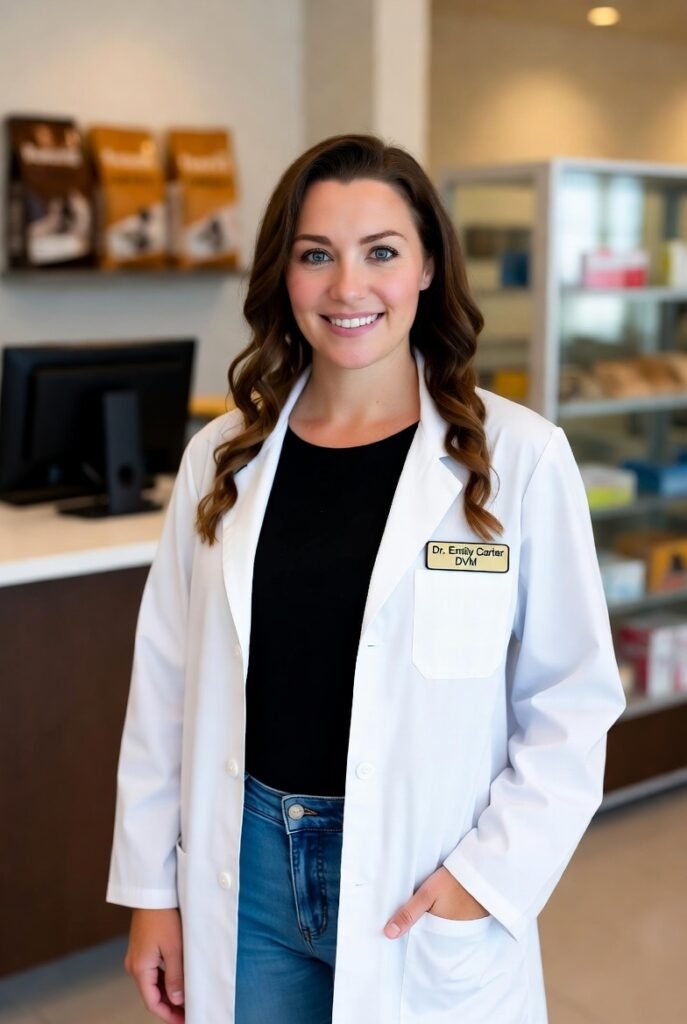
About the Author: Dr. Emily Carter is a veterinarian who spends her days explaining to owners that “he looks sad” is not a medical reason to give him a second dinner. When not at the clinic, she is hiking with Max, who is currently maintaining a perfect weight (much to his dismay).
Disclaimer: This guide is for educational purposes. Always consult your veterinarian for specific dietary advice, especially if your dog has diabetes, kidney disease, or allergies.