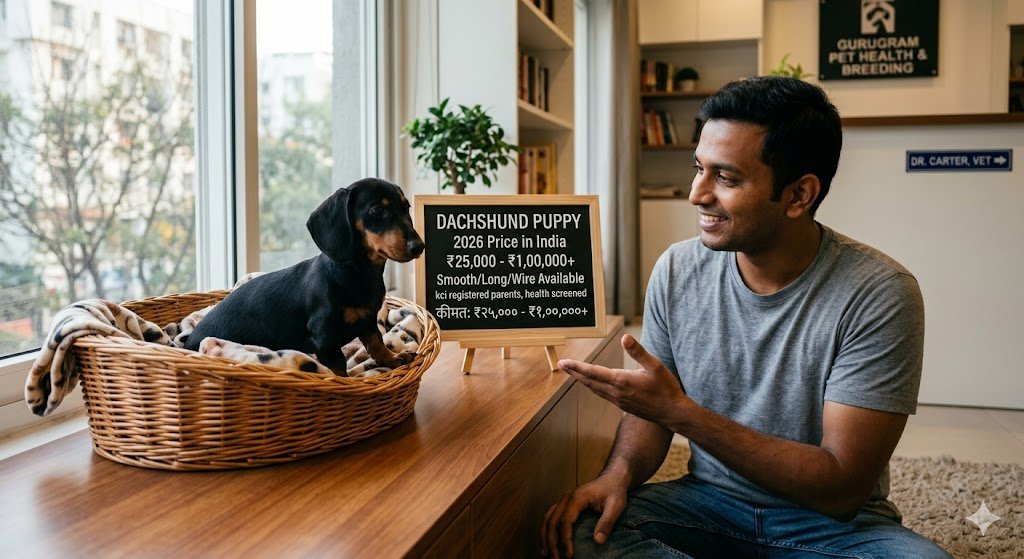
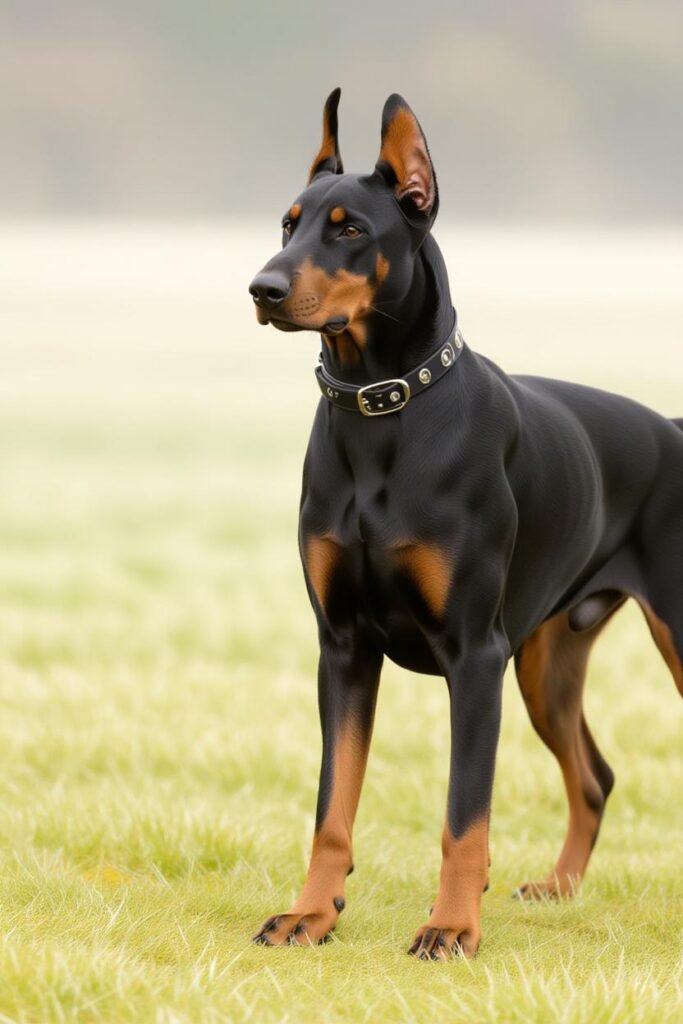
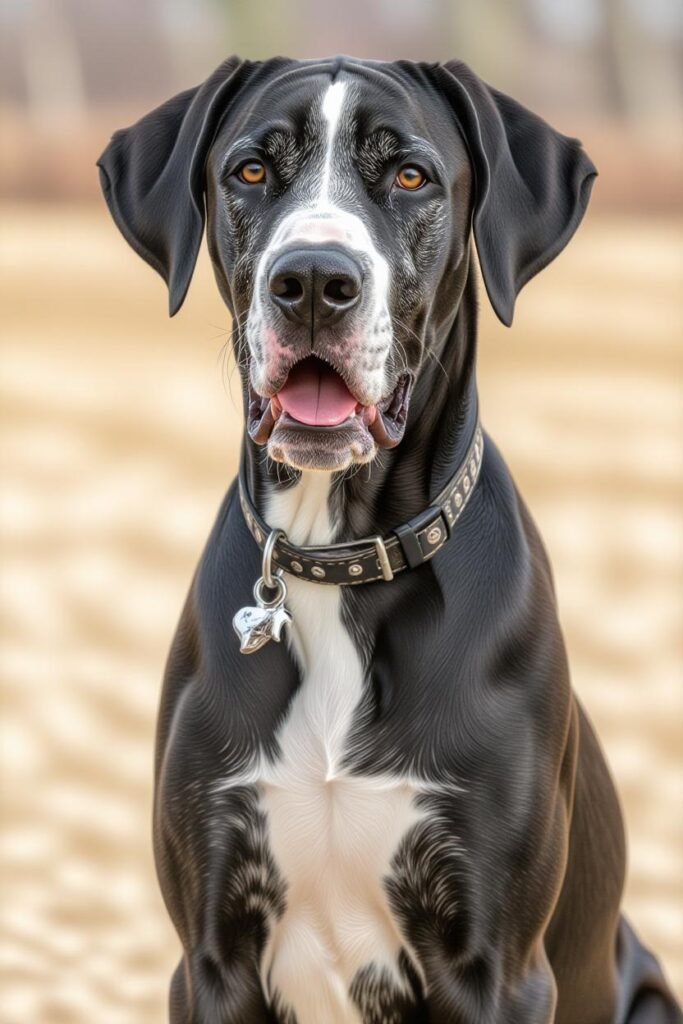
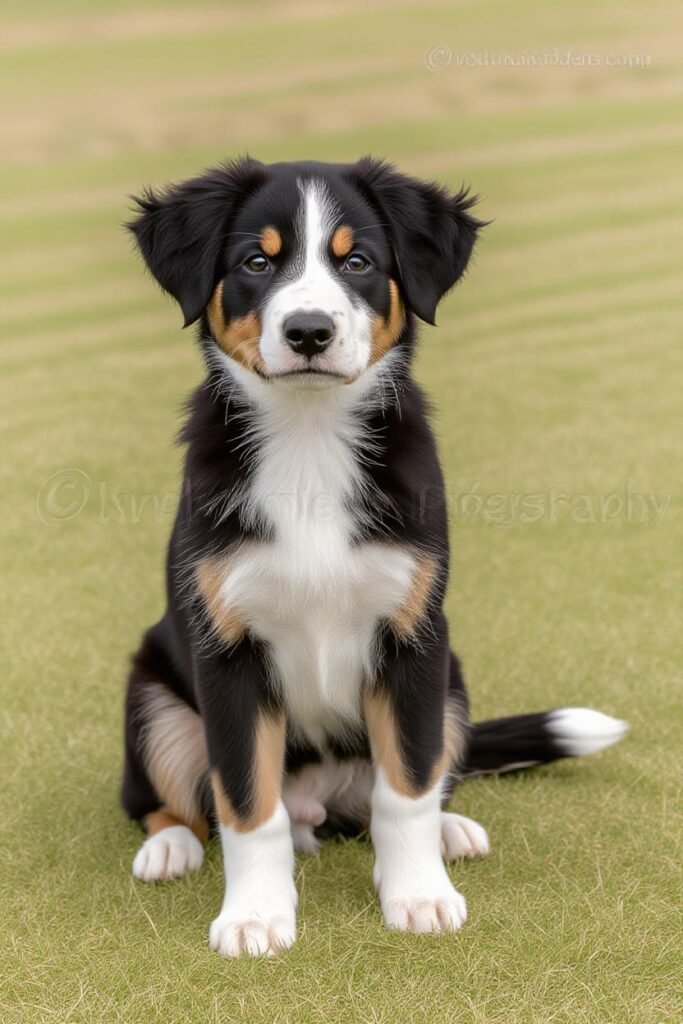
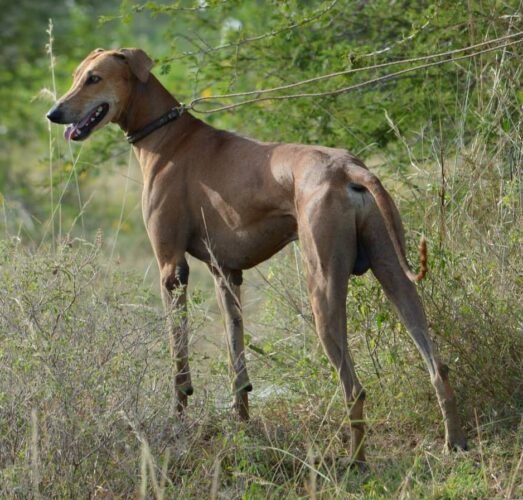
As a Dachshund dad to my spirited Bruno in our Hyderabad apartment, I’ve embraced the charm of this sausage-shaped breed. These long-bodied, short-legged dogs pack a huge personality into a compact 5–9 kg frame, making them ideal for apartment living in India.
But as a first-time owner, the full financial picture — from upfront purchase to lifelong care — quickly became clear, especially with their unique back issues and high curiosity in our hot, humid climate.
After consulting my vet, Dr. Carter, I gained a complete understanding of what actually drives Dachshund prices and ongoing expenses in 2026. This guide blends my real-life experience with Bruno,
Dr. Carter’s expert medical advice, and the latest verified market data from India’s top breeder platforms. Whether you’re in Hyderabad, Mumbai, Delhi, Bangalore, or a smaller city, you’ll discover the true cost of owning a Dachshund — upfront, monthly, and over their 12–15 year lifespan.
Factors Affecting Dachshund Price in India
Several key factors determine how much you’ll pay for a Dachshund puppy in 2026.
Age
Puppies (8–12 weeks) are priciest due to high demand and early care needs. Older Dachshunds (6+ months) are more affordable.
Bloodline
Champion-line Dachshunds with superior genetics for alertness and structure cost more. Standard purebreds are more accessible, while mixed breeds sit at the lowest end.
Gender
Males may carry a slight premium in some litters, though this varies.
Pedigree
KCI-registered puppies with verified lineage command higher prices because they include health guarantees and papers.
Coat Type and Color
Wire-haired Dachshunds often cost more due to low shedding. Long-haired varieties add grooming value. Rare colors (chocolate, dapple, merle) push prices higher, while standard black-and-tan or red are more common.
Location
Metros like Mumbai and Delhi see premium pricing due to demand. Smaller cities offer lower prices, though transport can add ₹2,000–₹6,000.
Bruno, a smooth black-and-tan male from a KCI-registered Hyderabad breeder, cost me ₹32,000. Dr. Carter emphasized that paying a bit more for verified health testing was worth every rupee to avoid the breed’s common back and joint issues.
Dachshund Price Range in India (2026)
In March 2026, Dachshund prices in India reflect their popularity as a compact, lively breed. Verified platforms show a realistic range of ₹25,000 to ₹1,00,000+, depending on quality and certification.
Quality / Lineage
2026 Price Range (INR)
Ideal For
Basic / Pet Quality
₹25,000 – ₹50,000
First-time apartment families
KCI Registered
₹50,000 – ₹75,000
Owners wanting pedigree papers
Show Quality / Champion Line
₹75,000 – ₹1,00,000+
Shows, breeding, or premium pets
City-Wise Price Variations (2026)
City / Region
Typical Price Range (INR)
Notes
Mumbai / Delhi
₹30,000 – ₹1,00,000+
Highest demand, premium breeders
Hyderabad / Bangalore
₹25,000 – ₹85,000
Good availability, moderate prices
Smaller Cities / Tier-2
₹20,000 – ₹60,000
Transport fees may apply
Adoption through shelters like CUPA or Friendicoes offers a compassionate alternative at just ₹5,000–₹15,000, often with initial vaccinations and neutering already done.
Bruno’s price reflected his Hyderabad location, strong lineage, and complete health checks. Dr. Carter always advises comparing multiple breeders and never rushing into the cheapest option.
Finding a Reputable Breeder
Choosing the right breeder is critical for a healthy Dachshund. Dr. Carter recommends focusing on specialists in the breed rather than general puppy sellers.
Look for lively puppies with shiny coats and no signs of lethargy. Reputable breeders provide full transparency — health records, vaccination details, KCI papers, and even allow you to meet the parents.
They will openly discuss the breed’s long back and potential for IVDD (intervertebral disc disease). Avoid puppy mills at all costs — these skip genetic tests and lead to puppies with chronic spinal or dental problems.
When I found Bruno’s breeder, I visited in person, met both parents, and reviewed all documentation. That hands-on approach gave me confidence. Dr. Carter’s rule of thumb: if a breeder cannot explain spine screenings or pressures you for quick cash payment, walk away.
Ongoing Monthly Costs for a Dachshund
Owning a Dachshund is an ongoing commitment that feels like caring for a curious, long-bodied family member. In 2026, the realistic monthly “Dachshund tax” in India typically ranges from ₹3,600 to ₹9,000, depending on lifestyle and location.
Category
Monthly Cost (INR)
Notes
Premium Small-Breed Food
₹1,500 – ₹3,000
Farmina / Royal Canin for sensitive digestion
Grooming (Coat Type)
₹300 – ₹1,000
Weekly brushing + baths; higher for long/wire-haired
Medical & Preventatives
₹800 – ₹2,000
Flea/tick, heartworm, routine check-ups
Training & Enrichment
₹1,000 – ₹3,000
Toys and mental stimulation for curious minds
Supplies (Toys, Treats, Bedding)
₹100 – ₹500
Durable chew toys essential
Total Monthly
₹3,600 – ₹9,000
Average ₹5,500 in metros
Dr. Carter notes that many owners underestimate back support and dental care. Bruno’s monthly total stays around ₹4,500 with careful budgeting, but it can climb toward ₹8,000+ if you choose premium everything or long-haired grooming.
Dachshund Vaccination Costs
Vaccinations are essential for protecting Bruno from deadly diseases. The table below shows a clear 2026 cost breakdown:
Vaccine Type
Cost Per Dose (INR)
Frequency (First Year)
Core DHPP
₹200 – ₹400
2–3 doses
Rabies
₹100 – ₹300
1–2 doses
Non-Core (Leptospirosis)
₹250 – ₹500
2 doses
Non-Core (Kennel Cough)
₹350 – ₹600
1–2 doses
First-Year Total
₹6,000 – ₹15,000
Includes vet consultation fees
Many clinics offer puppy packages for ₹1,000–₹1,500 per series. Bruno’s initial shots totaled around ₹3,500 in his first year. Dr. Carter strongly recommends keeping boosters current, especially in urban areas.
Dachshund Deworming Costs
Deworming prevents parasites and is especially important for diggers like Dachshunds.
Frequency
Cost Per Dose (INR)
First-Year Total (INR)
Puppies (every 2–4 weeks until 6 months)
₹50 – ₹200
₹600 – ₹1,600
Adults (every 3–6 months)
₹100 – ₹200
₹400 – ₹800
Vet-prescribed options are safer. I hide Bruno’s tablets in peanut butter, and he barely notices. Dr. Carter advises pairing deworming with fecal tests.
Dachshund Spaying/Neutering Costs
Spaying or neutering is essential for health and behavior management. Costs vary by location:
Procedure
Cost Range (INR)
Additional Costs (INR)
Spaying (Females)
₹10,000 – ₹30,000
Pre-op tests ₹500–₹1,000
Neutering (Males)
₹8,000 – ₹25,000
Pain meds ₹200–₹500
Metro clinics charge more, while government facilities can reduce the total. Bruno’s neutering in Hyderabad came to ₹10,000 and helped with his energy levels. Dr. Carter recommends scheduling between 6–9 months.
Common Health Conditions and Costs
Dachshunds are prone to several breed-specific issues that owners must budget for.
Condition
Typical Treatment Cost (INR)
Notes
Intervertebral Disc Disease (IVDD)
₹5,000 – ₹50,000+
Surgery possible in severe cases
Dental Issues
₹1,000 – ₹5,000
Annual cleanings common
Obesity
₹2,000 – ₹10,000
Diet management essential
Allergies
₹3,000 – ₹10,000
Skin and ear issues frequent
Bruno’s spine is healthy so far, but regular checkups are key. Dr. Carter stresses early monitoring: avoid high jumps, maintain ideal weight, and use ramps to prevent most major expenses.
Preventative Care Costs
Smart preventative care keeps bills low. Routine check-ups every 3–5 months cost ₹500–₹1,000 each. Adult vaccinations and deworming add ₹1,000–₹1,500 yearly. Parasite prevention (₹600–₹850 monthly) and a quality diet form the foundation. Dental care and grooming round out the annual preventative total at ₹8,000–₹15,000.
Bruno’s yearly preventative expenses sit around ₹10,000 — a small price for his vibrant health. Dr. Carter’s advice is simple: invest early in quality food, dental chews, and back-friendly exercise.
Total Cost of Owning a Dachshund
Initial costs include the puppy (₹25,000–₹1,00,000+), basic supplies (₹1,500–₹3,000), and first-year vet work (₹8,000–₹15,000). Monthly expenses average ₹3,600–₹9,000, translating to ₹43,200–₹108,000 annually. Over a 12–15 year lifespan, expect a lifetime investment of ₹6–14 Lakh or more, depending on health and grooming choices.
Adoption as an Alternative
Adoption remains one of the most rewarding and affordable paths. Shelters charge ₹5,000–₹15,000, often including initial vaccinations, deworming, and spaying/neutering. I considered adoption before finding Bruno and still recommend it as a compassionate choice that reduces demand on breeders.
Why Get a Dachshund?
Dachshunds bring big personality to small spaces. Their loyal, playful nature and curious “zoomies” brighten any home. They are highly trainable (though stubbornness requires patience), apartment-friendly, and low-shedding with smooth coats. Their long lifespan (12–15 years) is a bonus.
Of course, there are drawbacks. High IVDD risks, potential yappiness if not socialized, and strong digging instincts require commitment. Bruno’s mischief keeps me laughing every day, making the investment feel priceless. Dr. Carter always says to match the breed’s traits to your lifestyle — if you can commit to regular vet visits, weight management, and gentle handling, a Dachshund will reward you with years of companionship and laughter.
Final Thoughts
Bringing Bruno home at ₹32,000 with monthly costs of ₹3,600–₹9,000 has been one of the most joyful decisions I’ve made. While the numbers may seem significant for a small dog, the endless entertainment and unconditional love from this long-bodied character far outweigh the expenses. Research reputable breeders thoroughly, budget realistically for grooming and health care (especially back support), and consider adoption if it fits your situation. Consult your own veterinarian for personalized advice tailored to your Dachshund’s needs.
With proper planning and care, your Dachshund can thrive and bring endless happiness to your home in India.
As a Dachshund dad to my spirited Bruno in our Hyderabad apartment, I’ve embraced the charm of this sausage-shaped breed. As a vet, Dr. Carter suggests, “Budget wisely for Bruno’s purchase and care.” His advice, paired with expert insights [,,], helped me navigate Dachshund costs in India. This guide blends my experience with Bruno, Dr. Carter’s perspective, and reliable information [,,] to help US pet owners understand Dachshund prices and ongoing expenses in India for 2025.
Factors Affecting Dachshund Price in India
Several factors drive Dachshund prices in India []:
Age: Puppies (8–12 weeks) cost INR 20,000–40,000 due to demand and care needs. Older Dachshunds (6+ months) range from INR 15,000–30,000. Puppies under 8 weeks should stay with their mother [].
Bloodline: Champion-line Dachshunds cost INR 30,000–50,000 for premium genetics and traits like alertness. Standard purebreds are INR 15,000–35,000; mixed breeds are INR 10,000–25,000 [].
Gender: Males may cost slightly more (INR 1,000–5,000) due to no pregnancy risks, though this varies with litter size [].
Coat Type and Color: Wire-haired Dachshunds cost INR 25,000–40,000 due to low shedding; long-haired ones are INR 20,000–35,000. Rare colors (e.g., chocolate, dapple, merle) reach INR 30,000–50,000; standard black-and-tan or red are INR 15,000–35,000 [].
Location: Prices are higher in metros like Mumbai or Delhi (INR 20,000–45,000) than in smaller cities like Jaipur (INR 15,000–30,000) [].
Bruno’s smooth black-and-tan coat and KCI-registered breeder cost INR 32,000 in Hyderabad, I noted []. As a vet, Dr. Carter suggests, “Choose a reputable breeder for Bruno’s health.”
Dachshund Price Range in India (2025)
Based on current data [,,]:
Standard Quality: INR 15,000–35,000 (pet-quality, no KCI registration).
Show Quality/Champion Line: INR 30,000–50,000 (pedigree, competition-ready).
City-Specific:
Mumbai/Delhi: INR 20,000–45,000.
Hyderabad/Bangalore: INR 18,000–40,000.
Smaller Cities: INR 15,000–30,000.
Adoption: INR 5,000–15,000 through shelters like CUPA or Friendicoes [].
Bruno’s INR 32,000 price reflected his lineage and Hyderabad’s demand, I confirmed []. For pricing, Dr. Carter recommends, “Compare Bruno’s cost across trusted breeders.”
Finding a Reputable Breeder
A trustworthy breeder ensures a healthy Dachshund []:
Healthy Puppies: Look for lively pups with shiny coats and no lethargy [].
Transparency: Expect contracts, health guarantees, and parental health records (e.g., spine and eye screenings) [].
Ethical Practices: Limit litters (1 per year per female, 4–5 max lifetime) and focus on Dachshunds [].
Support: Offer ongoing help and take-back guarantees [].
KCI Registration: Verifies standards; confirm papers with the Kennel Club of India [].
Avoid Puppy Mills: These neglect health, leading to costly vet bills ($200–$1000) [].
I visited Bruno’s breeder, met his parents, and verified his KCI papers, I noted []. For breeders, Dr. Carter recommends, “Vet Bruno’s breeder thoroughly.”
Grooming: Smooth-coated Dachshunds need weekly brushing and baths every 4–6 weeks (INR 200–500/month). Long-haired or wire-haired ones require professional grooming (INR 500–1,000 every 6–8 weeks), averaging INR 300–600/month [].
Medical Care: Flea/tick prevention (INR 600–850/month), heartworm meds (INR 200–400/month), and checkups (INR 500–1,000 every 3–5 months) total INR 800–2,000/month [].
Training and Enrichment: Classes or toys for their curious minds cost INR 1,000–3,000/month. Bruno’s squeaky toy keeps him entertained [].
Supplies: Toys, treats, and bedding add INR 100–500/month [].
Pet Insurance (Optional): INR 500–1,500/month for coverage [].
Total Monthly Cost: INR 3,600–9,000, averaging INR 5,500 []. Bruno’s food and vet care cost INR 4,500/month, I confirmed []. For costs, Dr. Carter recommends, “Budget for Bruno’s specific needs.”
Location: Metro clinics charge more; government facilities are cheaper [].
Bruno’s neutering cost INR 10,000 in Hyderabad, I noted []. For spaying/neutering, Dr. Carter recommends, “Plan Bruno’s procedure for long-term health.”
Common Health Conditions and Costs
Dachshunds are prone to []:
Intervertebral Disc Disease (IVDD): INR 5,000–20,000 for treatment; surgery can reach INR 50,000 [].
Dental Issues: INR 1,000–5,000 for cleanings or extractions [].
Obesity: INR 2,000–10,000 for diet management [].
Allergies: INR 3,000–10,000 [].
Bruno’s spine is healthy, but regular checkups are key, I confirmed []. For health, Dr. Carter recommends, “Monitor Bruno for back issues.”
Preventative Care Costs
Preventative care saves on future bills []:
Checkups: INR 500–1,000 every 3–5 months.
Vaccinations: INR 1,000–1,500/year for adults.
Deworming: INR 600–1,200/year.
Parasite Prevention: INR 600–850/month.
Diet: INR 1,500–3,000/month.
Dental Care: INR 1,000–5,000/year.
Total Annual Cost: INR 8,000–15,000 [].
Bruno’s preventative care costs INR 10,000/year, I noted []. For prevention, Dr. Carter recommends, “Invest in Bruno’s routine care.”
Monthly Costs: INR 3,600–9,000 (food, grooming, vet care, training, supplies) [].
Annual Costs: INR 43,200–108,000, plus extras like insurance (INR 6,000–18,000/year) or training (INR 8,000–12,000/course) [].
Bruno’s total cost averages INR 5,500/month, I confirmed []. For budgeting, Dr. Carter recommends, “Prepare for Bruno’s lifelong expenses.”
Adoption as an Alternative
Adoption is cost-effective and ethical []:
Cost: INR 5,000–15,000 through shelters like Friendicoes (+91 11 2431 4751) or CUPA (+91 80 2294 7300) [].
Benefits: Includes initial vaccinations/spaying; supports rescue efforts [].
Where to Look: Local shelters or platforms like Tailsbuddy (+91 9555566321) [].
I considered adoption before finding Bruno, I noted []. For adoption, Dr. Carter recommends, “Explore rescues for Bruno’s future sibling.”
Why Get a Dachshund?
Loyal and Playful: Bruno’s devotion and zoomies brighten my day [].
Trainable: His smarts make training fun, though stubbornness requires patience [].
Apartment-Friendly: 5–9 kg size fits small spaces [].
Low Shedding: Smooth coats need minimal grooming [].
Drawbacks: High costs (INR 15,000–50,000) and IVDD risks [].
Bruno’s mischief keeps me laughing, I confirmed []. For choosing a Dachshund, Dr. Carter recommends, “Match Bruno’s traits to your lifestyle.”
FAQs
What is the average Dachshund price in India? INR 15,000–50,000, depending on breeder, lineage, and location [].
Are Dachshunds expensive to maintain? INR 3,600–9,000/month due to health and food needs [].
Is adoption cheaper? Yes, INR 5,000–15,000 through shelters [].
Final Thoughts
Bringing Bruno home to Hyderabad at INR 32,000 was a joyful investment, with monthly costs of INR 3,600–9,000. As a vet, Dr. Carter suggests, “Invest in Bruno’s health and training.” This guide applies across India, from Mumbai to smaller cities. Choose a KCI-registered breeder or adopt from shelters like Friendicoes, and consult reliable resources [,,] and a veterinarian for your Dachshund’s care.
References:
[1] Petindiaonline.com, “Dachshund Price in India”.
[2] Tailsbuddy.com, “Dachshund Price and Care Costs”.
[3] Dogell.com, “Dachshund Breed Information”.
Bernedoodle Price in India – As a Bernedoodle dad to my fluffy Max in our Delhi home, I’ve embraced the joy of this Poodle-Bernese Mountain Dog mix’s cuddly nature. These designer hybrids combine the Bernese Mountain Dog’s gentle giant temperament with the Poodle’s intelligence and hypoallergenic coat, making them a perfect family dog for Indian homes.
But as a first-time owner, the full financial picture — from upfront purchase to lifelong care — quickly became clear, especially with their curly coat maintenance and Bernese-inherited health risks in our hot, humid climate.
After consulting my vet, Dr. Carter, I gained a complete understanding of what actually drives Bernedoodle prices and ongoing expenses in 2026. This guide blends my real-life experience with Max,
Dr. Carter’s expert medical advice, and the latest verified market data from India’s top breeder platforms. Whether you’re in Delhi, Mumbai, Bangalore, or a smaller city, you’ll discover the true cost of owning a Bernedoodle — upfront, monthly, and over their 12–18 year lifespan.
Factors Affecting Bernedoodle Price in India
Several key factors determine how much you’ll pay for a Bernedoodle puppy in 2026.
Bloodline
Bernedoodles from health-screened Bernese Mountain Dog or Poodle parents with strong genetics command premium prices for traits like hypoallergenic coats, calm temperament, and reduced shedding. Standard Bernedoodles are more affordable, while less-tested lineage sits at the lower end.
Demand
Rising popularity in metros like Mumbai and Bangalore pushes prices higher due to limited ethical breeders.
Color
Rare tricolor or merle coats add significant value, while common black or black-and-white combinations are more budget-friendly.
Size
Micro mini (5–10 kg) Bernedoodles cost the most due to rarity, while standard sizes (30–45 kg) are more common and affordable.
Location
Urban areas like Delhi or Bangalore see premium pricing. Smaller cities offer lower prices, though shipping adds ₹5,000–₹15,000.
Breeder Reputation
KCI-registered breeders who invest in health testing and socialization charge more because they prioritize long-term health. Less reputable sources are cheaper but risk expensive future vet bills.
Max, a tricolor standard-size male from a KCI-registered Delhi breeder, cost me ₹75,000. Dr. Carter emphasized that paying a bit more for verified health testing was worth every rupee to avoid common Bernese-related issues.
Bernedoodle Price In India (2026)
In March 2026, Bernedoodle prices in India reflect their status as a premium designer hybrid. Verified platforms show a realistic range of ₹40,000 to ₹1,80,000+, depending on quality and certification.
Quality / Lineage
2026 Price Range (INR)
Ideal For
Basic / Pet Quality
₹40,000 – ₹80,000
First-time families
KCI Registered
₹50,000 – ₹1,20,000
Owners wanting health guarantees
Show Quality / Champion Line
₹70,000 – ₹1,80,000+
Premium pets or breeding
City-Wise Price Variations (2026)
City / Region
Typical Price Range (INR)
Notes
Delhi / Bangalore
₹50,000 – ₹1,80,000+
Highest demand, best lines
Mumbai / Chennai
₹45,000 – ₹1,60,000
Strong availability
Smaller Cities / Tier-2
₹35,000 – ₹90,000
Shipping fees extra
Adoption through shelters like Friendicoes or CUPA offers a compassionate alternative at just ₹10,000–₹30,000, often with initial vaccinations and neutering already done.
Max’s price reflected his Delhi location, striking tricolor coat, and complete health checks. Dr. Carter always advises comparing multiple breeders and never rushing into the cheapest option.
Finding a Reputable Breeder
Choosing the right breeder is critical for a healthy Bernedoodle. Dr. Carter recommends focusing on specialists in designer hybrids rather than general puppy sellers.
Look for playful puppies with glossy coats and no signs of lethargy. Reputable breeders provide full transparency — health records, vaccination details, hip/elbow screenings, and even allow you to meet the parents.
They will openly discuss the breed’s potential for hip dysplasia or bloat. Avoid puppy mills at all costs — these skip genetic tests and lead to puppies with chronic joint or skin issues.
When I found Max’s breeder, I visited in person, met both parents, and reviewed all documentation. That hands-on approach gave me confidence. Dr. Carter’s rule of thumb: if a breeder cannot explain health screenings or pressures you for quick cash payment, walk away.
Ongoing Monthly Costs for a Bernedoodle
Owning a Bernedoodle is an ongoing commitment that feels like caring for a fluffy, intelligent family member. In 2026, the realistic monthly “Bernedoodle tax” in India typically ranges from ₹6,000 to ₹13,000, driven heavily by grooming and high-quality nutrition.
Category
Monthly Cost (INR)
Notes
Premium Medium/Large-Breed Food
₹2,500 – ₹5,500
Farmina / Royal Canin for joint support
Grooming (Curly Coat)
₹1,000 – ₹3,000
Professional every 6–8 weeks + daily brushing
Medical & Preventatives
₹1,000 – ₹2,500
Flea/tick, heartworm, joint supplements
Training & Enrichment
₹1,000 – ₹3,000
Puzzle toys and obedience classes
Supplies (Toys, Treats, Bedding)
₹200 – ₹800
Durable chew toys essential
Total Monthly
₹6,000 – ₹13,000
Average ₹8,000 in metros
Dr. Carter notes that many owners underestimate grooming for the curly coat. Max’s monthly total stays around ₹7,500 with careful budgeting, but it can climb toward ₹12,000+ if you choose premium everything.
Bernedoodle Vaccination Costs
Vaccinations are essential for protecting Max from deadly diseases. The table below shows a clear 2026 cost breakdown:
Vaccine Type
Cost Per Dose (INR)
Frequency (First Year)
Core DA2PP
₹200 – ₹400
2–3 doses
Rabies
₹100 – ₹300
1–2 doses
Non-Core (Leptospirosis)
₹250 – ₹500
2 doses
Non-Core (Kennel Cough)
₹350 – ₹600
1–2 doses
First-Year Total
₹6,000 – ₹15,000
Includes vet consultation fees
Many clinics offer puppy packages for ₹1,000–₹1,500 per series. Max’s initial shots totaled around ₹3,500 in his first year. Dr. Carter strongly recommends keeping boosters current.
Bernedoodle Deworming Costs
Deworming prevents parasites and is especially important for active dogs.
Frequency
Cost Per Dose (INR)
First-Year Total (INR)
Puppies (every 2–4 weeks until 6 months)
₹100 – ₹300
₹800 – ₹2,000
Adults (every 3–6 months)
₹150 – ₹300
₹600 – ₹1,200
Vet-prescribed options are safer. I hide Max’s tablets in yogurt, and he barely notices. Dr. Carter advises pairing deworming with fecal tests.
Bernedoodle Spaying/Neutering Costs
Spaying or neutering is essential for health and behavior management. Costs vary by location:
Procedure
Cost Range (INR)
Additional Costs (INR)
Spaying (Females)
₹15,000 – ₹35,000
Pre-op tests ₹500–₹1,000
Neutering (Males)
₹10,000 – ₹30,000
Pain meds ₹200–₹500
Metro clinics charge more, while government facilities can reduce the total. Max’s neutering in Delhi came to ₹15,000 and helped with his energy levels. Dr. Carter recommends scheduling between 6–9 months.
Common Health Conditions and Costs
Bernedoodles are prone to several breed-specific issues that owners must budget for.
Condition
Typical Treatment Cost (INR)
Notes
Hip/Elbow Dysplasia
₹5,000 – ₹40,000+
Surgery possible in severe cases
Bloat (Gastric Torsion)
₹10,000 – ₹50,000
Emergency — prevent with slow feeding
Skin Allergies
₹3,000 – ₹12,000
Common due to Poodle coat
Addison’s Disease
₹5,000 – ₹15,000
Lifelong medication
Max’s joint checkups prevent issues. Dr. Carter stresses early monitoring: maintain ideal weight and avoid over-exercise to prevent most major expenses.
Preventative Care Costs
Smart preventative care keeps bills low. Routine check-ups every 3–5 months cost ₹500–₹1,000 each. Adult vaccinations and deworming add ₹1,000–₹1,500 yearly. Parasite prevention (₹600–₹850 monthly) and a quality diet form the foundation. Dental care and grooming round out the annual preventative total at ₹10,000–₹18,000.
Max’s yearly preventative expenses sit around ₹12,000 — a small price for his vibrant health. Dr. Carter’s advice is simple: invest early in quality food, joint supplements, and screenings.
Total Cost of Owning a Bernedoodle
Initial costs include the puppy (₹40,000–₹1,80,000+), basic supplies (₹2,000–₹4,000), and first-year vet work (₹10,000–₹20,000). Monthly expenses average ₹6,000–₹13,000, translating to ₹72,000–₹156,000 annually. Over a 12–18 year lifespan, expect a lifetime investment of ₹10–22 Lakh or more, depending on health and grooming choices.
Adoption as an Alternative
Adoption remains one of the most rewarding and affordable paths. Shelters charge ₹10,000–₹30,000, often including initial vaccinations, deworming, and spaying/neutering. I considered adoption before finding Max and still recommend it as a compassionate choice that reduces demand on breeders.
Why Get a Bernedoodle?
Bernedoodles bring big joy to any home. Their hypoallergenic curly coat sheds minimally, making them ideal for allergy sufferers. Versatile sizes (micro mini to standard) suit any living space. With a long lifespan (12–18 years) and gentle, playful nature, they are fantastic with kids and families.
Of course, there are drawbacks. High grooming demands, potential for Bernese-related joint issues, and strong food motivation require commitment. Max’s cuddly nature lights up our home every single day, making the investment feel priceless. Dr. Carter always says to match the breed’s traits to your lifestyle — if you can commit to regular grooming and vet visits, a Bernedoodle will reward you with years of companionship and laughter.
Final Thoughts
Bringing Max home at ₹75,000 with monthly costs of ₹6,000–₹13,000 has been one of the most joyful decisions I’ve made. While the numbers may seem significant, the endless cuddles, hypoallergenic coat, and loving personality from this fluffy hybrid far outweigh the expenses. Research reputable breeders thoroughly, budget realistically for grooming and joint health care, and consider adoption if it fits your situation. Consult your own veterinarian for personalized advice tailored to your Bernedoodle’s needs.
With proper planning and care, your Bernedoodle can thrive and bring endless happiness to your home in India.
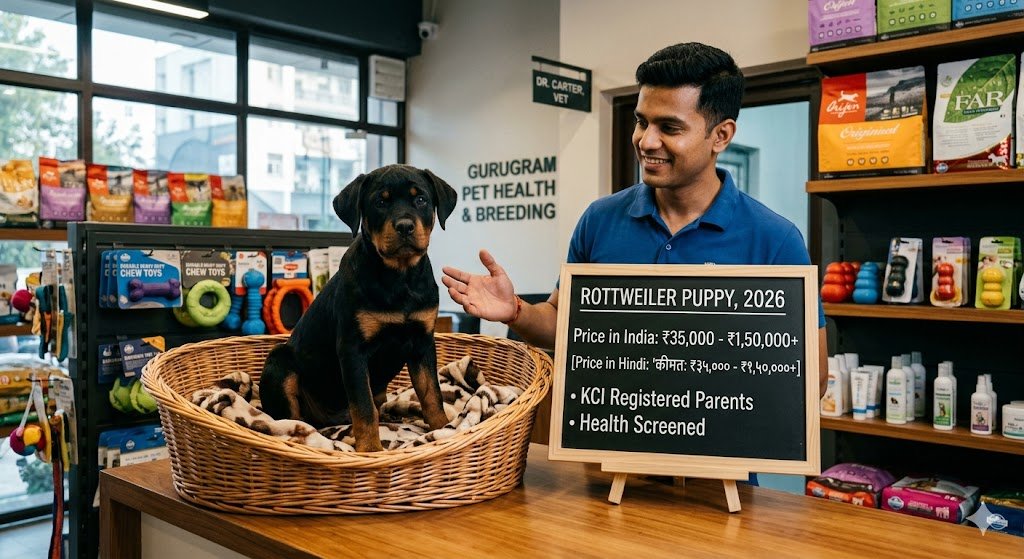
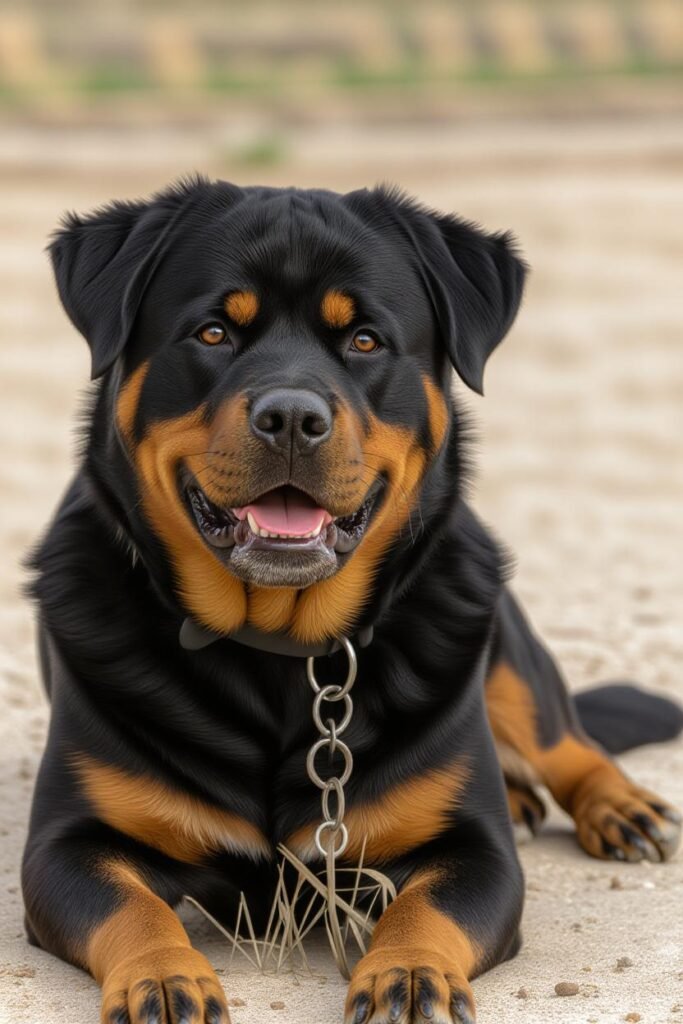
Rottweiler Price in India – As a Rottweiler dad to my loyal Zeus in our Mumbai home, I’ve embraced the strength and heart of this incredible breed. These powerful, intelligent dogs are natural guardians with a gentle side that makes them wonderful family companions — but they are not for everyone.
As a first-time owner, the full financial picture — from upfront purchase to lifelong care — quickly became clear, especially with their large size and need for consistent training in our urban Indian environment.
After consulting my vet, Dr. Carter, I gained a complete understanding of what actually drives Rottweiler prices and ongoing expenses in 2026. This guide blends my real-life experience with Zeus,
Dr. Carter’s expert medical advice, and the latest verified market data from India’s top breeder platforms. Whether you’re in Mumbai, Delhi, Bangalore, or a smaller city, you’ll discover the true cost of owning a Rottweiler — upfront, monthly, and over their 9–11 year lifespan.
Factors Affecting Rottweiler Price in India
Several key factors determine how much you’ll pay for a Rottweiler puppy in 2026.
Bloodline
Champion or working-line Rottweilers from show or guard-dog parents command premium prices for robust genetics, loyalty, and temperament. Standard purebreds are more affordable, while mixed breeds sit at the lower end.
Age
Puppies (8–12 weeks) are priciest due to high demand. Adults (1–3 years) with basic training are significantly cheaper and often already suited for security work.
Size & Health
Larger working-line dogs from health-screened parents (hip, elbow, heart tests) cost more upfront but save lakhs in future vet bills. Unscreened pups are cheaper but carry higher risk.
Location
Urban hubs like Mumbai and Delhi see premium pricing due to demand. Smaller cities offer lower prices, though shipping adds ₹5,000–₹10,000.
Breeder Reputation
KCI-registered breeders who invest in socialization and health testing charge more because they prioritize long-term stability. Less reputable sources are cheaper but often lead to expensive behavioural or health problems.
Zeus, a champion-line male from a KCI-registered Mumbai breeder, cost me ₹40,000. Dr. Carter emphasized that paying a bit more for verified health testing was worth every rupee to avoid the breed’s common joint and heart issues.
Rottweiler Price Range in India (2026)
In March 2026, Rottweiler prices in India reflect their status as a premium guard and family breed. Verified platforms show a realistic range of ₹35,000 to ₹1,50,000+, depending on quality and certification.
Quality / Lineage
2026 Price Range (INR)
Ideal For
Basic / Pet Quality
₹35,000 – ₹70,000
First-time families
KCI Registered
₹60,000 – ₹1,00,000
Owners wanting pedigree papers
Show / Champion / Working Line
₹80,000 – ₹1,50,000+
Security, shows, or advanced work
City-Wise Price Variations (2026)
City / Region
Typical Price Range (INR)
Notes
Mumbai / Delhi
₹45,000 – ₹1,50,000+
Highest demand, best working lines
Bangalore / Chennai
₹40,000 – ₹1,30,000
Good availability
Smaller Cities / Tier-2
₹30,000 – ₹80,000
Shipping fees extra
Adoption through shelters like Friendicoes or CUPA offers a compassionate alternative at just ₹5,000–₹15,000, often with adults already trained and neutered.
Zeus’s price reflected his Mumbai location, strong lineage, and complete health checks. Dr. Carter always advises comparing multiple breeders and never rushing into the cheapest option.
Finding a Reputable Breeder
Choosing the right breeder is critical for a stable Rottweiler. Dr. Carter recommends focusing on specialists in working breeds rather than general puppy sellers.
Look for alert puppies with shiny coats and no signs of lethargy. Reputable breeders provide full transparency — health records, vaccination details, hip/elbow/heart certificates, KCI papers, and allow you to meet the parents.
They will openly discuss the breed’s strong temperament and need for firm, consistent training. Avoid puppy mills at all costs — these produce dogs with poor nerves, health issues, and high aggression risk.
When I found Zeus’s breeder, I visited in person, met both parents, and reviewed all documentation. That hands-on approach gave me confidence. Dr. Carter’s rule of thumb: if a breeder cannot explain health screenings or pressures you for quick cash payment, walk away.
Ongoing Monthly Costs for a Rottweiler
Owning a Rottweiler is a serious commitment. In 2026, the realistic monthly “Rottweiler tax” in India typically ranges from ₹6,000 to ₹14,000, driven by large-breed food and ongoing training.
Category
Monthly Cost (INR)
Notes
Premium Large-Breed Food
₹3,000 – ₹6,500
Royal Canin / Farmina for joint & muscle support
Grooming (Short Coat)
₹300 – ₹800
Weekly brushing + occasional baths
Medical & Preventatives
₹1,000 – ₹3,000
Flea/tick, heartworm, joint supplements
Training & Enrichment
₹1,000 – ₹4,000
Obedience & protection work essential
Supplies (Toys, Treats, Bedding)
₹200 – ₹700
Heavy-duty chew toys required
Total Monthly
₹6,000 – ₹14,000
Average ₹8,000–₹10,000 in metros
Dr. Carter notes that many owners underestimate training and joint support. Zeus’s monthly total stays around ₹7,500 with careful budgeting, but it can climb toward ₹13,000+ if you choose premium everything.
Rottweiler Vaccination Costs
Vaccine Type
Cost Per Dose (INR)
Frequency (First Year)
Core DA2PP
₹300 – ₹500
2–3 doses
Rabies
₹150 – ₹350
1–2 doses
Non-Core (Leptospirosis)
₹300 – ₹600
2 doses
Non-Core (Kennel Cough)
₹400 – ₹700
1–2 doses
First-Year Total
₹6,000 – ₹15,000
Includes vet consultation fees
Many clinics offer puppy packages for ₹1,500–₹2,500 per series. Zeus’s initial shots totaled around ₹4,000 in his first year. Dr. Carter strongly recommends keeping boosters current.
Rottweiler Deworming Costs
Frequency
Cost Per Dose (INR)
First-Year Total (INR)
Puppies (every 2–4 weeks until 6 months)
₹150 – ₹400
₹800 – ₹2,000
Adults (every 3–6 months)
₹200 – ₹400
₹600 – ₹1,200
Vet-prescribed options are safer. I hide Zeus’s tablets in cheese, and he barely notices. Dr. Carter advises pairing deworming with fecal tests.
Rottweiler Spaying/Neutering Costs
Procedure
Cost Range (INR)
Additional Costs (INR)
Spaying (Females)
₹15,000 – ₹35,000
Pre-op tests ₹500–₹1,200
Neutering (Males)
₹10,000 – ₹30,000
Pain meds ₹200–₹600
Metro clinics charge more, while government facilities can reduce the total. Zeus’s neutering in Mumbai came to ₹15,000 and helped with his focus. Dr. Carter recommends scheduling between 6–9 months.
Common Health Conditions and Costs
Rottweilers are prone to several breed-specific issues that owners must budget for.
Condition
Typical Treatment Cost (INR)
Notes
Hip/Elbow Dysplasia
₹5,000 – ₹40,000+
Surgery possible in severe cases
Bloat (Gastric Torsion)
₹10,000 – ₹50,000
Emergency — prevent with slow feeding
Osteosarcoma (Bone Cancer)
₹15,000 – ₹50,000
Lifelong management possible
Aortic Stenosis (Heart)
₹5,000 – ₹20,000
Regular cardiac screening essential
Zeus’s joint checkups prevent issues. Dr. Carter stresses early monitoring: maintain ideal weight and avoid over-exercise to prevent most major expenses.
Preventative Care Costs
Smart preventative care keeps bills low. Routine check-ups every 3–5 months cost ₹500–₹1,200 each. Adult vaccinations and deworming add ₹1,000–₹2,000 yearly. Parasite prevention (₹600–₹900 monthly) and a quality diet form the foundation. Dental care and grooming round out the annual preventative total at ₹10,000–₹18,000.
Zeus’s yearly preventative expenses sit around ₹12,000 — a small price for his vibrant health. Dr. Carter’s advice is simple: invest early in quality food, joint supplements, and screenings.
Total Cost of Owning a Rottweiler
Initial costs include the puppy (₹35,000–₹1,50,000+), basic supplies (₹2,000–₹5,000), and first-year vet/training (₹15,000–₹30,000). Monthly expenses average ₹6,000–₹14,000, translating to ₹72,000–₹168,000 annually. Over a 9–11 year lifespan, expect a lifetime investment of ₹8–18 Lakh or more, depending on training intensity and health.
Adoption as an Alternative
Adoption remains one of the most rewarding and affordable paths. Shelters charge ₹5,000–₹15,000, often including initial vaccinations, deworming, and spaying/neutering. I considered adoption before finding Zeus and still recommend it as a compassionate choice that reduces demand on breeders.
Why Get a Rottweiler?
Rottweilers bring unmatched loyalty and protection. Their calm, confident nature makes them excellent guardians and gentle family dogs when properly trained. They are highly trainable, intelligent, and devoted to their people. With proper care they live 9–11 years and form incredibly strong bonds.
Of course, there are drawbacks. They need firm leadership, daily exercise, and early socialization. High food and training costs, plus potential joint and heart issues, require commitment.
Zeus’s loyalty lights up our home every single day, making the investment feel priceless. Dr. Carter always says to match the breed’s traits to your lifestyle — if you can commit to training and leadership, a Rottweiler will reward you with years of protection and companionship.
Final Thoughts
Bringing Zeus home at ₹40,000 with monthly costs of ₹6,000–₹14,000 has been one of the most rewarding decisions I’ve made.
While the numbers may seem significant, the unwavering loyalty, protective instincts, and gentle heart of this powerful breed far outweigh the expenses.
Research reputable breeders thoroughly, budget realistically for training and joint health care, and consider adoption if it fits your situation. Consult your own veterinarian for personalized advice tailored to your Rottweiler’s needs.
With proper planning and care, your Rottweiler can thrive and bring endless security and love to your home in India.
The Ultimate Guide to India’s Best Dog Breeds: Finding Your Perfect Companion
Dog Breeds In India- Imagine waking up every morning to the sound of joyful barks and a wagging tail that’s just for you — a loyal companion who’s always ready for a walk, a cuddle, or even a quiet moment by your side.
Bringing a dog into your life isn’t just about adding a pet; it’s about embarking on an incredible journey filled with unconditional love, unwavering loyalty, and endless joy.
But with hundreds of breeds out there, each with its own quirks and charms, how do you sift through the options to find the one that’s truly meant for you? It’s a question that has puzzled countless aspiring pet parents in India, and it’s one we’re here to answer.
The challenge is real: not all dogs are created equal when it comes to fitting into your daily routine. Some breeds thrive in bustling city apartments, while others need wide-open spaces to roam. Then there’s the Indian climate to consider — scorching summers, humid monsoons, and varying regional weather patterns that can make life tough for certain furry friends.
Add in factors like your family’s dynamics, your work schedule, and even your budget, and the decision can feel overwhelming. It’s easy to fall in love with a cute puppy face online, only to realize later that their needs don’t align with your lifestyle.
That’s where this guide comes in. We’re not just throwing a list of breeds at you; we’re creating the most comprehensive, trustworthy resource tailored specifically for dog lovers in India in 2026. We’ll dive deep into pre-adoption planning, climate realities, responsible ownership, and practical advice on adoption. By the end, you’ll feel empowered to make a choice that’s right for you, your family, and your future four-legged friend.
Let’s get started on finding that perfect companion who’s ready to make your life a whole lot brighter.
Pre-Adoption Checklist & Critical Considerations
Before you even start browsing breeds, pause and reflect. Adopting or buying a dog is a 10- to 15-year commitment. This checklist, drawn from veterinarians and experienced Indian pet parents, ensures you’re truly ready.
Question Area
Why It Matters
Example Considerations
Lifestyle & Space
Determines breed size and energy needs
Apartment in Delhi vs. bungalow with garden in Bangalore; stairs or elevators?
Time Commitment
Prevents boredom and destructive behaviour
10+ hour workdays? High-energy breeds may struggle
Family Dynamic
Ensures safety and harmony
Young children, elderly members, or other pets?
Grooming & Health
Avoids unexpected maintenance costs
Allergies in family? Brachycephalic breeds need extra care
Financial Readiness
Covers lifelong expenses
Annual costs ₹20,000–₹1,50,000+ depending on breed size
Pro Tip: Use this table as a quick self-audit before visiting any breeder or shelter.
Before You Choose: Questions to Ask Yourself
Honest self-reflection is the foundation of a happy pet-owner relationship. Here are some key areas to ponder:
Question Area
Why It Matters
Example Considerations
Lifestyle & Space
Determines breed size and energy needs
Apartment in Delhi vs. bungalow with garden in Bangalore; stairs or elevators?
Time Commitment
Prevents boredom and destructive behaviour
10+ hour workdays? High-energy breeds may struggle
Family Dynamic
Ensures safety and harmony
Young children, elderly members, or other pets?
Grooming & Health
Avoids unexpected maintenance costs
Allergies in family? Brachycephalic breeds need extra care
Financial Readiness
Covers lifelong expenses
Annual costs ₹20,000–₹1,50,000+ depending on breed size
Answering these questions honestly will narrow down your options and prevent common pitfalls. Remember, the goal is a harmonious match, not just a cute addition to your Instagram feed.
A Note on the Indian Climate
India’s weather is as diverse as its cultures, but one thing’s constant: it can be brutally hot and humid in many regions. This poses unique challenges for certain breeds.
Double-coated dogs can overheat easily, leading to heatstroke if not managed. Brachycephalic (flat-faced) breeds have shortened snouts that make breathing difficult in high temperatures, increasing risks during summer walks.
To keep your dog safe, prioritize breeds that adapt well. Provide air-conditioned spaces during peak heat, ensure constant access to fresh water, and schedule walks for early mornings or evenings — never midday when the sun is at its fiercest. Hydration is key; consider adding electrolytes to their water on hot days.
Native Indian breeds shine here — they’ve evolved over centuries to withstand our climates, with thinner coats, higher heat tolerance, and robust immune systems from local adaptations. Opting for an Indie or Rajapalayam isn’t just practical; it’s a nod to sustainability in pet ownership.
By considering these factors upfront, you’re setting the stage for a thriving relationship.
2026 Price & Monthly Cost Summary for Popular Breeds in India
Category
Example Breeds
Avg Puppy Price (INR)
Avg Monthly Cost (INR)
Key Notes
All-Time Favorites
Labrador, Golden Retriever
₹35,000 – ₹80,000
₹5,000 – ₹9,000
Family-friendly; higher grooming for Goldens
Noble Guardians
Rottweiler, Doberman
₹45,000 – ₹1,20,000
₹7,000 – ₹14,000
Training-heavy; large-breed food
Native & Resilient
Indie, Rajapalayam, Kanni
₹5,000 – ₹40,000
₹2,500 – ₹5,000
Low-cost, heat-tolerant
Cuddly & Compact (Apartments)
Pug, Shih Tzu, Chihuahua
₹40,000 – ₹90,000
₹3,000 – ₹7,000
High grooming for long coats
Energetic & Adventurous
Boxer, Australian Shepherd
₹40,000 – ₹1,00,000
₹6,000 – ₹12,000
High exercise needs
Product Recommendations (integrated naturally): For Labs and Goldens, a durable Kong Classic toy (₹800–1,200) stuffed with treats provides mental stimulation. For long-coated breeds like Shih Tzus, a Furminator slicker brush and detangling spray (₹600–1,000) prevents matting in humid monsoons.
Top 32 Dog Breeds in India
We’ve curated 32 of the most popular and suitable breeds for Indian homes in 2026. Each profile includes a quick summary, key traits, and practical India-specific tips to help you decide. Breeds are grouped for easy navigation.
The All-Time Favorites (Popular & Family-Friendly)
These breeds are beloved for their approachable natures and versatility in Indian households.
Labrador Retriever
The ultimate family dog, Labs are friendly, energetic, and eager to please, making them a staple in Indian homes from cities to suburbs.
Temperament: Outgoing, patient, sociable; excellent with children and other pets.
Exercise Needs: Moderate to high — daily walks, swims, and fetches.
Suitability for Indian Climate: Fair (double coat can overheat; AC essential in summers).
Pro Tip: Ideal for active families; they thrive on human interaction and can get depressed if left alone too long. In 2026, Labs remain one of the most affordable large breeds to maintain in metros. most affordable large breeds to maintain in metros.
Golden Retriever
Known for their golden hearts as much as their coats, these dogs are gentle giants who love being part of the family action.
Suitability for Indian Climate: Good (but monitor for heat exhaustion).
Pro Tip: Feed carefully to prevent bloat, common in large breeds.
The Best of India (Native & Resilient Breeds)
Celebrate India’s homegrown heroes — these breeds are hardy, low-maintenance, and perfectly attuned to our lands.
Indie (Indian Pariah Dog)
Why It’s a Top Choice: The Indie is a patriotic pick — street-smart, immune to local diseases, and incredibly adaptable. They’re low-cost and high-reward, embodying resilience.
Temperament: Independent, loyal, intelligent; wary but affectionate.
Exercise Needs: Moderate — loves exploring but content indoors.
Grooming: Low; short coat self-cleans.
Suitability for Indian Climate: Excellent (evolved for it).
Pro Tip: Adopt one; they’re often free and already vaccinated at shelters.
Rajapalayam
Elegant white hounds from Tamil Nadu, known for hunting prowess.
Temperament: Gentle, protective, reserved with strangers.
Exercise Needs: High — needs runs in open areas.
Grooming: Low; short coat.
Suitability for Indian Climate: Excellent (heat-resistant).
Pro Tip: Sensitive skin; use sunscreen on pink areas.
Kanni
Slim and swift, these South Indian sighthounds are agile hunters.
Temperament: Affectionate, alert, good with family.
Exercise Needs: High — sprinting sessions.
Grooming: Low.
Suitability for Indian Climate: Excellent.
Pro Tip: Provide a secure yard; they chase anything that moves.
Chippiparai
Graceful and fast, another Tamil treasure for speed and loyalty.
Temperament: Devoted, energetic, gentle.
Exercise Needs: High.
Grooming: Low.
Suitability for Indian Climate: Excellent.
Pro Tip: Bond through play; they’re sensitive to harsh training.
Jonangi
Rare herding dog from Andhra, with a unique bark like a yodel.
Temperament: Active, watchful, adaptable.
Exercise Needs: Moderate.
Grooming: Low.
Suitability for Indian Climate: Excellent.
Pro Tip: Rare breed; support preservation efforts.
Pandikona
Sturdy hunters from Andhra, fearless and robust.
Temperament: Brave, loyal, independent.
Exercise Needs: High.
Grooming: Low.
Suitability for Indian Climate: Excellent.
Pro Tip: Great for rural homes with space.
Gaddi Kutta (Himalayan Sheepdog)
Fluffy guardians from the North, built for mountains.
Temperament: Protective, calm, hardy.
Exercise Needs: High.
Grooming: Medium; thick coat.
Suitability for Indian Climate: Good (prefers cooler areas).
Pro Tip: Ideal for colder regions like Kashmir.
Banjara Hound
Nomadic herders’ companion, agile and enduring.
Temperament: Friendly, resilient, alert.
Exercise Needs: Moderate.
Grooming: Low.
Suitability for Indian Climate: Excellent.
Pro Tip: Thrives on a varied diet mimicking wild foraging.
Cuddly & Compact (Ideal for Apartments)
Perfect for city dwellers with limited space.
Pug
Wrinkly charmers with big personalities in small packages.
Temperament: Playful, affectionate, comical.
Exercise Needs: Low.
Grooming: Medium; clean folds.
Suitability for Indian Climate: Fair (heat-sensitive).
Pro Tip: Monitor breathing; avoid hot weather.
Shih Tzu
Lap dogs with luxurious locks, bred for royalty.
Temperament: Outgoing, stubborn, loving.
Exercise Needs: Low.
Grooming: High; daily brushing.
Suitability for Indian Climate: Fair.
Pro Tip: Keep hair trimmed for comfort.
Cocker Spaniel
Merry souls with wavy coats and endless energy.
Temperament: Gentle, eager, sociable.
Exercise Needs: Moderate.
Grooming: High.
Suitability for Indian Climate: Good.
Pro Tip: Prone to ear infections; clean regularly.
Dachshund
“Sausage dogs” with bold attitudes and hunting roots.
Temperament: Curious, brave, stubborn.
Exercise Needs: Moderate.
Grooming: Low to medium (varies by coat type).
Suitability for Indian Climate: Excellent.
Pro Tip: Watch back health; no jumping on furniture.
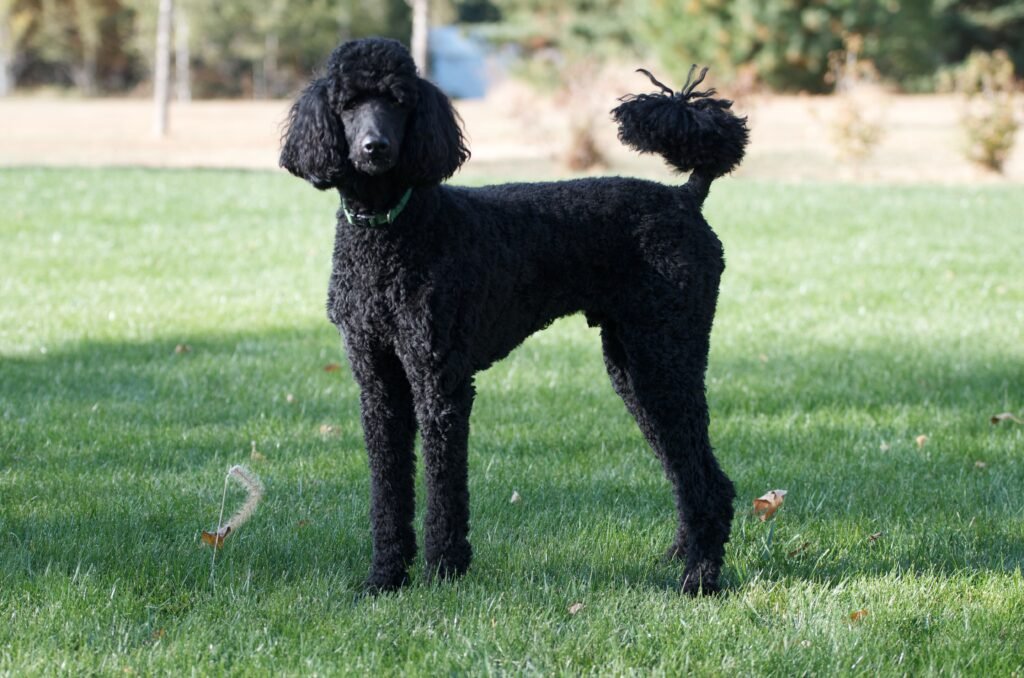
Poodle
Curly-coated geniuses in three sizes.
Temperament: Intelligent, active, hypoallergenic.
Exercise Needs: Moderate.
Grooming: High; professional clips.
Suitability for Indian Climate: Good.
Pro Tip: Great for allergy sufferers.
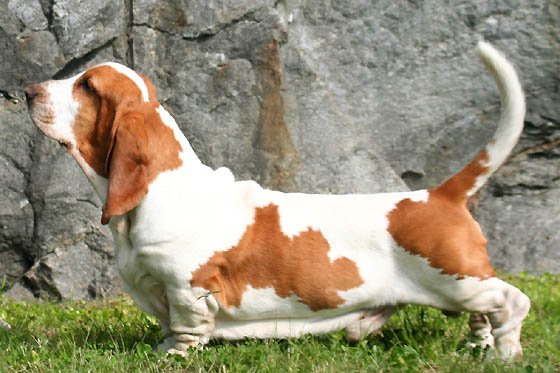
Basset Hound
Droopy-eared trackers with laid-back vibes.
Temperament: Placid, friendly, stubborn.
Exercise Needs: Low.
Grooming: Medium.
Suitability for Indian Climate: Good.
Pro Tip: Their scent drive means leashed walks only.
Energetic & Adventurous (For Active Lifestyles)
These breeds love outdoor fun.
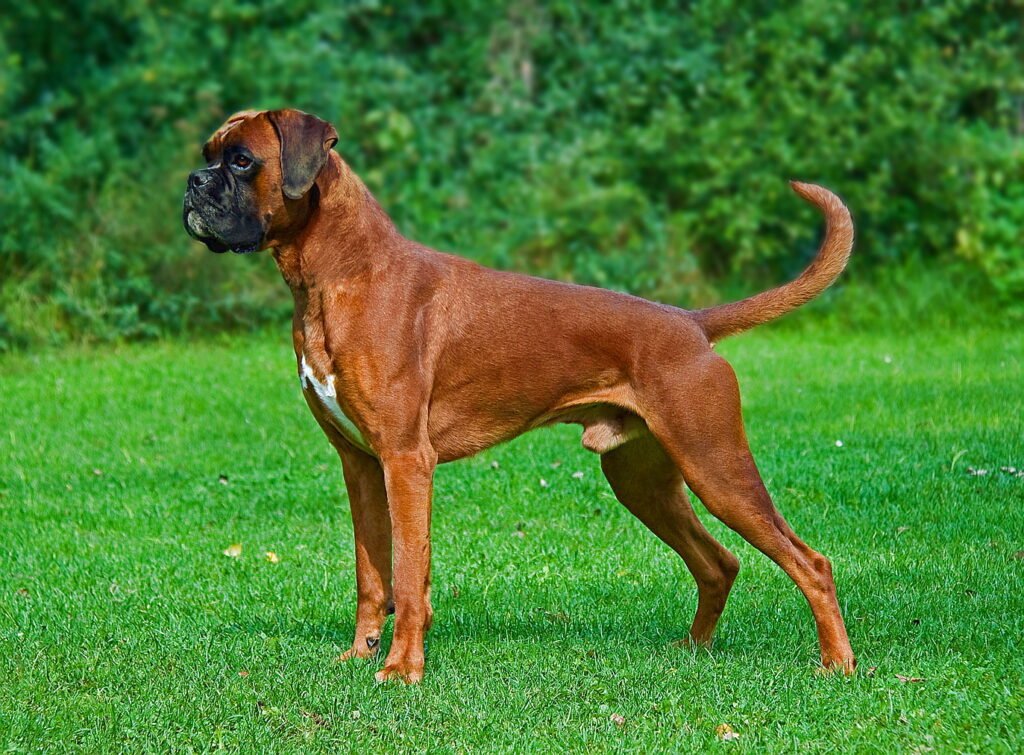
Boxer
Bouncy and muscular, full of zest.
Temperament: Fun-loving, protective, energetic.
Exercise Needs: High.
Grooming: Low.
Suitability for Indian Climate: Fair (brachycephalic).
Pro Tip: Playful with kids but needs training.
Siberian Husky
Wolf-like beauties with stamina.
Temperament: Independent, friendly, vocal.
Exercise Needs: Very high.
Grooming: Medium.
Suitability for Indian Climate: Poor (needs cool climates).
Pro Tip: Only for northern India or AC homes.
French Bulldog
Bat-eared clowns, compact and charming.
Temperament: Affectionate, adaptable, lazy.
Exercise Needs: Low.
Grooming: Low.
Suitability for Indian Climate: Fair.
Pro Tip: Snoring is part of the package.
Bulldog
Wrinkly, stocky sweethearts.
Temperament: Docile, courageous, loving.
Exercise Needs: Low.
Grooming: Medium.
Suitability for Indian Climate: Fair.
Pro Tip: Heat-sensitive; indoor life.
Chihuahua
Tiny dynamos with big egos.
Temperament: Bold, devoted, yappy.
Exercise Needs: Low.
Grooming: Low.
Suitability for Indian Climate: Excellent.
Pro Tip: Fragile; handle with care.
Maltese
Silky white companions, gentle and elegant.
Temperament: Playful, affectionate, alert.
Exercise Needs: Low.
Grooming: High.
Suitability for Indian Climate: Good.
Pro Tip: Tear staining common; wipe eyes daily.
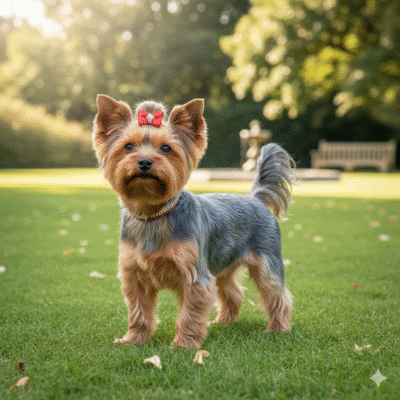
Yorkshire Terrier
Feisty toy dogs with glamorous coats.
Temperament: Spirited, confident, affectionate.
Exercise Needs: Low.
Grooming: High.
Suitability for Indian Climate: Good.
Pro Tip: Small but mighty; train to avoid small dog syndrome.
Border Collie
Herding geniuses, always on the go.
Temperament: Intelligent, energetic, obedient.
Exercise Needs: Very high.
Grooming: Medium.
Suitability for Indian Climate: Fair.
Pro Tip: Needs jobs; agility sports ideal.
Australian Shepherd
Versatile herders with striking eyes.
Temperament: Loyal, active, protective.
Exercise Needs: High.
Grooming: Medium.
Suitability for Indian Climate: Good.
Navigating the Legal Landscape: RWA Rules for Indian Pet Parents (2026)
Even if you find the perfect breed, your journey can be cut short by a “No Pets Allowed” sign in your apartment complex. In 2026, legal awareness is as vital as veterinary care. Here is your essential legal toolkit for co-existing in Indian urban societies.
1. Your Constitutional Right to Own a Pet
Under the Constitution of India (Article 51A), it is a fundamental duty of every citizen to show compassion to living creatures. Furthermore, the Animal Birth Control (Dog) Rules, 2023 and subsequent 2025 clarifications state that RWAs cannot ban pets from apartments.
The Reality: While they cannot ban pets, they can regulate them. Always request the “Society Bye-laws” in writing before signing a lease.
2. The “No-Ban” List (What RWAs CANNOT Do)
Size Restrictions: Societies cannot tell you that a Golden Retriever is “too big” for an apartment if you own/rent the space.
Lift Usage: RWAs cannot ban pets from using lifts, though they may designate a “service lift” or request you use a muzzle in crowded elevators.
Park Access: You cannot be banned from common areas, but you must adhere to “fixed timings” for walking.
3. Your Responsibilities: The “Good Neighbor” Protocol
To maintain your 10/10 standing as a pet parent, follow these 2026 community standards:
The Poop Scoop Law: In metros like Mumbai and Bangalore, failing to scoop poop in common areas can lead to fines ranging from ₹500 to ₹2,000 per instance.
Barking Etiquette: Persistent barking during “quiet hours” (10 PM – 6 AM) can be classified as a nuisance under local municipal laws.
Sterilization & Vaccination: Most premium societies now require a copy of the KCI registration or a Vet-certified vaccination record to be filed with the society office.
4. Handling Conflict: The 2026 Escalation Path
If you face harassment from a neighbor or the RWA committee:
Direct Dialogue: Share the AWBI (Animal Welfare Board of India) guidelines.
Police Intervention: Harassment of pet owners can be reported under Section 11 of the Prevention of Cruelty to Animals Act.
Legal Notice: In 2026, online legal platforms make it affordable to send a formal notice to an RWA for arbitrary bans.
Step-by-Step: The First 30 Days with Your New Companion
Once the legalities are cleared and the breed is chosen, the first month is critical for setting the tone of your life together.
Timeline
Action Item
2026 Cost Estimate (INR)
Day 1-3
The Wellness Check: Visit your vet (like Dr. Carter) for a full physical and the first round of DHPP/Rabies shots.
₹2,500 – ₹4,500
Week 1
The Gear Setup: Invest in a sturdy harness (not a collar), a cooling mat for the Indian heat, and high-protein puppy food.
₹5,000 – ₹12,000
Week 2
Microchipping: Ensure your dog is microchipped and registered with the KCI for lifelong identity protection.
₹1,500 – ₹3,000
Week 4
Socialization: Start “Puppy Playdates” or basic obedience. A well-behaved dog is the best defense against RWA complaints.
₹5,000 – ₹10,000
Final Pro-Tip for 2026: The “Digital Pet” Identity
In 2026, smart collars with GPS and health-tracking apps (like Sploot or Vetic) have become standard in India. They help you monitor your dog’s activity levels during the hot afternoon hours, ensuring they don’t overexert themselves when the AQI (Air Quality Index) is high.
Beyond the Breed: The Power of Adoption
Adopting a mixed-breed or Indie from a shelter brings countless benefits. These dogs are resilient survivors with fewer genetic issues. Many are already house-trained, vaccinated, and spayed/neutered.
Ready to act? Start with PETA India, Humane Society International/India, CUPA in Bangalore, or Friendicoes in Delhi. Adoption fees are minimal, and the joy is priceless.
Frequently Asked Questions (2026 Edition)
What is the best dog for a first-time owner in India?
Labrador Retriever or Indian Pariah (Indie) dogs are the top choices. Labs are forgiving, trainable, and family-oriented, while Indies are low-maintenance, heat-tolerant, and already adapted to Indian conditions with fewer health issues.
Which are the best dog breeds for apartments in India?
Pug, Chihuahua, Shih Tzu, French Bulldog, and Indian Pariah (Indie) are ideal. They have low-to-moderate exercise needs, compact size, and adapt well to limited space and Indian apartment living.
What are the best dog breeds for the Indian hot climate and humid monsoons?
Native breeds like Indie, Rajapalayam, Kanni, and Chippiparai are excellent because they have evolved for India’s heat. Short-coated foreign breeds like Beagle, Dachshund, and Doberman also perform well. Avoid double-coated or brachycephalic breeds (Pug, Bulldog) without strong AC support.
Are native Indian dog breeds better than foreign breeds?
Often yes for climate adaptation, disease resistance, and lower maintenance costs. Native breeds like Indie and Rajapalayam are hardy, low-shedding in summer, and cheaper to own, while still being loyal and trainable. Foreign breeds can work well but usually need more grooming and cooling support.
How much does it cost to own a dog in India in 2026?
Expect ₹20,000–₹1,50,000 per year depending on size. Small breeds average ₹3,000–₹7,000/month; large breeds ₹6,000–₹14,000/month (food + grooming + vet). Initial puppy cost ranges from ₹5,000 (adopted Indie) to ₹1,50,000+ for premium purebreds.
What are the best hypoallergenic dog breeds available in India?
Poodle, Maltese, Shih Tzu, and some curly-coated designer mixes (like Labradoodle or Bernedoodle) shed minimally. Regular grooming is still required to keep the coat healthy in humid weather.
Which dog breeds are best for families with children in India?
Labrador Retriever, Golden Retriever, Beagle, and Indie dogs are the most patient and playful with kids. Always supervise interactions and choose breeds with proven gentle temperaments.
What are the best guard or protective dog breeds in India?
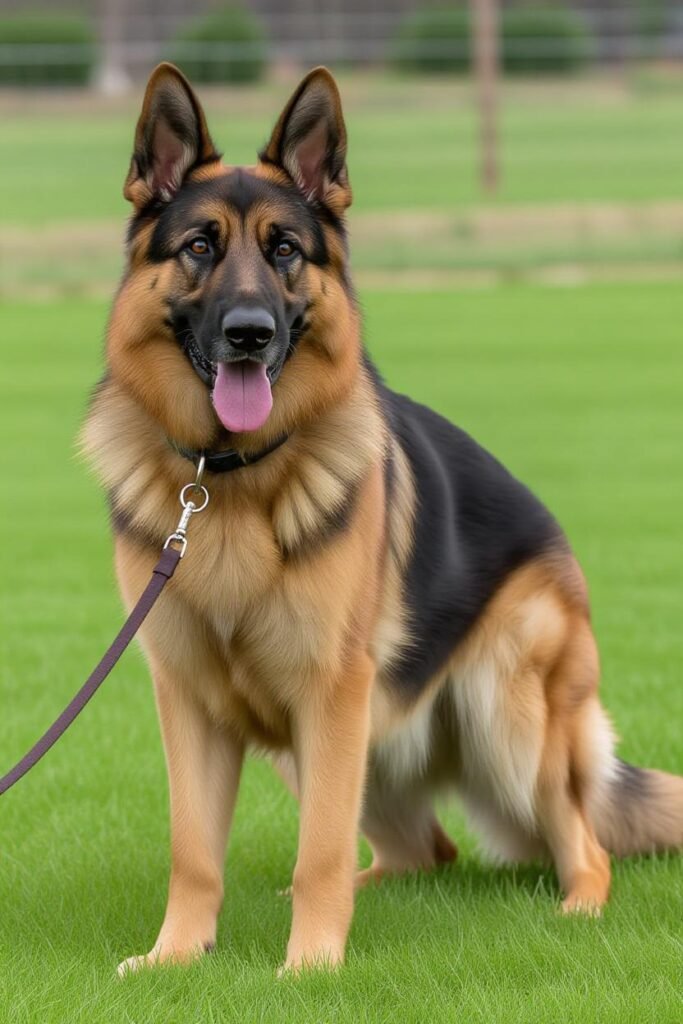
Rottweiler, Doberman, German Shepherd, and Rajapalayam are excellent natural guardians. They are loyal, alert, and trainable for protection while still being affectionate with family.
Is adoption cheaper and better than buying a purebred in India?
Yes — adoption from shelters like Friendicoes, CUPA, or Blue Cross usually costs ₹5,000–₹15,000 (often with vaccines and neutering included). Adopted dogs (especially Indies) are resilient, climate-adapted, and form incredibly strong bonds. It’s also more ethical and helps reduce stray populations.
How do I handle shedding and grooming in India’s hot, humid climate?
Choose low-shed breeds like Poodle or short-coated natives. For double-coated dogs, brush daily during shedding seasons and use omega-3 supplements. Professional grooming every 4–8 weeks is essential in monsoon months to prevent skin infections.
What is the easiest dog breed to train in India?
Golden Retriever, Labrador Retriever, and Border Collie are among the easiest due to high intelligence and eagerness to please. Native Indies are also surprisingly quick learners with positive reinforcement.
Which breeds are good for seniors or low-energy households in India?
Pug, French Bulldog, Basset Hound, and Maltese require minimal exercise and are happy with short walks and plenty of cuddles.
Conclusion
Choosing a dog is about more than breed — it’s about aligning with your life, space, and heart. We’ve covered everything from pre-adoption prep to climate realities, adoption benefits, and practical tips for India’s unique challenges. Whether you go for a bouncy Labrador, a resilient Indie, or any other wonderful companion, research and responsibility are key.
Make that informed decision today — visit a breeder ethically or head to a shelter. Your perfect companion is out there, ready to fill your days with wags and wet noses.
Here’s to the incredible bond awaiting you; may it bring years of happiness and tail-wagging adventures.
When I welcomed Luna, my Siberian Husky, into our Chennai home, her piercing blue eyes and wolfish charm turned heads. But Dr. Gupta, our family veterinarian, sat me down for a reality check: “Huskies are a joy, but in India’s heat, they’re a big responsibility—financially and otherwise” [1]. This comprehensive guide, blending my journey with Luna, Dr. Gupta’s wisdom, and insights from trusted sources [1,2,3], breaks down the costs of buying and maintaining a Siberian Husky in India in 2025. From puppy prices to lifelong care, here’s everything you need to know to decide if a Husky is your perfect companion.
Introduction to the Siberian Husky
Siberian Huskies, bred by Siberia’s Chukchi people for sled-pulling in Arctic conditions, are medium-sized (35–60 pounds) working dogs with boundless energy, sharp intelligence, and a friendly streak. Their thick double coats and striking features—blue or bi-colored eyes, bushy tails—make them a hit in India, despite the climate mismatch. Dr. Gupta notes, “Their stamina and charisma are captivating, but India’s warm weather demands extra care” [1]. Owning a Husky here means planning for their high-energy needs and temperature sensitivity, from Mumbai’s humidity to Delhi’s scorching summers.
Siberian Husky Puppy Price in India (2025 Update)
The cost of a Siberian Husky puppy in India varies based on breed quality, location, and breeder reputation. Below is a detailed 2025 price breakdown, reflecting current market trends:
Pet-Quality Siberian Husky: ₹40,000–₹60,000 These puppies may not meet strict Kennel Club of India (KCI) standards or have champion lineage, ideal for families seeking a companion without show aspirations [1,2,3].
KCI-Registered Siberian Husky: ₹55,000–₹80,000 KCI certification guarantees documented lineage and adherence to breed standards, appealing to those wanting a purebred with verified health [1,2,3]. Dr. Gupta says, “KCI papers ensure Luna’s pedigree and reduce health risks” [1].
Champion Bloodline Husky: ₹80,000–₹1,60,000 Puppies from show-winning or champion parents fetch higher prices due to superior genetics and potential for competitions. Rare coat colors (e.g., white, sable) or heterochromatic eyes can push costs toward the upper end [1,2,3].
Imported Huskies: ₹1,00,000–₹2,00,000+ Imported puppies, often from Russia or Europe, include shipping, import taxes, and health certifications, making them the most expensive option. Locally bred Huskies are better adapted to India’s climate [2,3].
City-Wise Price Variations
Prices differ across India due to demand, breeder availability, and urban purchasing power [1,2,3]:
Dr. Gupta explains, “Metro cities like Mumbai charge more due to demand, but smaller towns may offer healthier puppies from less commercialized kennels” [1]. When I bought Luna in Chennai, her KCI-registered price of ₹70,000 felt steep but ensured her quality.
Factors Influencing Siberian Husky Prices
Several factors drive puppy costs, and understanding them helps you make an informed choice:
Breed Quality and Lineage: Pet-quality Huskies are budget-friendly, while KCI-registered or champion bloodline puppies cost more due to verified genetics, health screenings, and show potential [1,2,3]. Champion lineage ensures traits like temperament and coat quality align with breed standards.
Geographical Location: Urban hubs like Delhi and Bangalore have higher prices due to demand and access to reputable breeders. Smaller cities offer lower rates but may lack certified kennels [1,2,3]. Dr. Gupta advises, “Visit breeders in person, even if it means traveling” [1].
Gender and Age: Female Huskies cost 10–20% more due to breeding potential. Puppies (8–12 weeks) are pricier than older dogs, as they adapt better and require initial vaccinations [1,2].
Coat Color and Eye Features: Rare colors (white, agouti, sable) or bi-colored eyes increase prices by 20–30% due to aesthetic appeal [1,2,3]. Luna’s blue eyes made her a bit pricier, but her charm was worth it.
Breeder Reputation: Ethical breeders with KCI registration, health guarantees, and clean facilities charge more, ensuring healthier puppies with fewer genetic issues [1,2,3]. Dr. Gupta warns, “Low-cost puppies from puppy mills often lead to health headaches” [1].
Health and Vaccinations: Puppies with up-to-date vaccinations, deworming, and health certificates cost more, reflecting the breeder’s investment in early care [1,2].
Ownership Costs Beyond the Purchase Price
Owning a Siberian Husky involves significant ongoing expenses to keep them healthy and happy. Below is a comprehensive breakdown of costs in India for 2025, based on my experience with Luna and Dr. Gupta’s guidance.
Initial Setup Costs: ₹12,000–₹20,000 (One-Time)
Vaccinations: Core vaccines (distemper, parvovirus, hepatitis: ₹200–₹400 per dose; rabies: ₹150–₹300) and non-core vaccines (leptospirosis: ₹250–₹500; kennel cough: ₹300–₹600) total ₹2,000–₹5,000 for the first year. Puppy packages from vets may reduce costs [1,2,3].
Deworming: ₹200–₹500 per treatment, with puppies needing multiple doses (₹1,000–₹2,000 total in the first year) [1,2].
Spaying/Neutering: Spaying costs ₹3,000–₹10,000; neutering costs ₹2,000–₹8,000. Pre-operative tests (₹1,000–₹2,000), pain medication (₹500–₹1,000), and an Elizabethan collar (₹200–₹500) add up [1,2,3]. Luna’s neutering in Chennai was ₹6,000, including tests.
Diet: Huskies need high-protein food (30–40% protein) to fuel their energy. Premium kibble (e.g., Royal Canin, Hills) or home-cooked meals with chicken/fish cost ₹3,000–₹7,000 monthly [1,2,3]. Dr. Gupta advises, “Watch Luna’s portions—she’s a foodie!” [1]. I mix kibble with boiled chicken for Luna, costing ₹4,000 monthly.
Grooming: Huskies shed heavily twice yearly (spring, autumn), needing daily brushing during these periods and weekly otherwise. Professional grooming (1–2 sessions monthly) costs ₹1,500–₹3,000 per session. Home grooming tools (undercoat rake, brush, shampoo) cost ₹1,000–₹4,000 initially, with nail trimming and ear cleaning adding ₹500–₹1,000 monthly [1,2,3].
Training: Huskies’ stubborn streak requires early training. Professional sessions cost ₹4,000–₹15,000 monthly, especially for first-time owners. Obedience courses in cities like Bangalore run ₹15,000–₹30,000 for a month-long program [2,3]. Luna’s socialization classes cost ₹5,000, curbing her escape-artist antics.
Veterinary Care: Annual checkups (₹1,000–₹2,000 per visit, 1–2 times yearly), vaccinations (₹4,000–₹8,000 annually after the first year), and deworming (₹500–₹2,000 yearly) total ₹5,500–₹12,000 annually. Flea/tick prevention (₹500–₹2,000 yearly) and heartworm medication (₹1,000–₹3,000 yearly) are crucial [1,2,3].
Miscellaneous: Toys (₹500–₹1,000 monthly), treats (₹500–₹1,500 monthly), and pet insurance (₹1,000–₹2,500 monthly, optional for emergencies) add up [2,3]. Luna loves her chew toys, which I replace monthly.
Health Issue Costs
Huskies are prone to specific conditions, with treatment costs varying [1,2,3]:
Hip Dysplasia: Pain management, medication, or physiotherapy: ₹5,000–₹20,000 annually. Surgery for severe cases: ₹30,000–₹50,000 [1].
Dr. Gupta stresses, “Regular checkups catch issues early, saving you from hefty bills” [1]. Emergency surgeries (e.g., injuries) can cost ₹5,000–₹20,000 [2].
Total Annual Preventative Care Costs: ₹10,000–₹20,000
This covers annual checkups, vaccinations, deworming, parasite prevention, and basic dental care (₹1,000–₹2,000 yearly for cleanings) [1,2,3]. A balanced diet and consistent care reduce health risks.
Challenges of Owning a Siberian Husky in India
Huskies face unique challenges in India’s climate:
Climate: Built for Arctic cold, Huskies struggle in India’s 35–40°C summers. In cities like Delhi or Chennai, air-conditioned spaces, constant water, and early morning/evening walks prevent heatstroke [1,2,3]. Luna lounges in our AC-cooled living room, but midday outings are a no-go.
Exercise Needs: Huskies require 1–2 hours of daily exercise (walks, runs, play). Without it, they turn destructive—Luna once chewed my shoes when I skipped her run [1,2]. Parks or open spaces are ideal.
Training: Their independent nature makes training tough. Early socialization (8–12 weeks) and positive reinforcement are key [1,2,3]. Dr. Gupta says, “Luna’s ‘sit’ took weeks of treats and patience” [1].
Adoption vs. Buying a Siberian Husky
Adopting a Husky is ethical and budget-friendly, with shelters like Friendicoes or CUPA charging ₹10,000–₹20,000, covering vaccinations and neutering [1,3]. Adopted Huskies need temperament checks but are often healthier than puppy mill dogs. Dr. Gupta encourages, “Adoption aligns with India’s growing rescue ethos” [1]. Buying from reputable breeders ensures pedigree but raises costs.
Choosing a Reputable Breeder
To avoid puppy mills, follow these tips [1,2,3]:
KCI Registration: Verify KCI certification for purebred status.
Health Clearances: Request parental health tests (hip dysplasia, eye disorders).
Visit the Facility: Ensure clean, humane conditions. Avoid breeders who block visits.
Documentation: Demand vaccine records, pedigree papers, and health guarantees.
Breeder Engagement: Ethical breeders ask about your lifestyle and offer ongoing support.
Dr. Gupta warns, “Cheap puppies often come from unethical sources, costing more in vet bills” [1]. I visited Luna’s breeder in Chennai to confirm her health records.
Siberian Husky Care Tips for Indian Owners
Caring for a Husky in India demands attention:
Diet: High-protein food (meat-based kibble or home-cooked chicken/fish) supports their energy. Consult a vet for portion sizes [1,2,3].
Grooming: Brush daily during shedding seasons, weekly otherwise, with an undercoat rake. Bathe every 6–8 weeks with dog-specific shampoo [1,2,3].
Exercise: Provide 1–2 hours of activity (running, hiking, agility games). Puzzle toys keep them mentally engaged [2,3].
Training: Use positive reinforcement for obedience. Start early to curb prey drive and escape tendencies [1,2].
Climate Management: Ensure air-conditioned spaces, fresh water, and shade, especially in summer [1,2,3].
Conclusion
Siberian Huskies, with their stunning looks and vibrant energy, are a delight but require significant investment. Puppy prices range from ₹40,000–₹2,00,000, with annual maintenance costs of ₹90,000–₹2,04,000. India’s heat demands AC, early walks, and diligent care. Luna’s playful howls and cuddles make every rupee worthwhile, but Dr. Gupta reminds us, “Plan for their climate and energy needs for a happy Husky” [1]. Whether adopting from Friendicoes (+91 11 2431 4751) or buying from a KCI-registered breeder, thorough research ensures a rewarding bond.
References: [1] Dog Vet Expert.com, “Husky Price in India” (2024-10-24). [2] Doggywala.com, “Siberian Husky Price in India” (2025-03-12). [3] Supertails.com, “Husky Dog Price in India” (2024-11-19
Factors That Affects The Price Of Greyhound in America:
There are some factors that affect the price of Greyhound in America. These factors are…
Location:
The price of a Greyhound in America depends on your location. If you live in New York, then the Greyhound will cost more than in other states of America.
The Quality of the Puppy’s Exterior:
Depending on the degree of compliance with the standard, you can get. The first type is the most budget-friendly.
It suggests the presence of defects in appearance. Such animals cannot be used for breeding or exhibitions.
The second type has a few minor deviations, and the third is an example of the ideal. Both of them are suitable for breeding work and participation in exhibitions.
Breeder’s Reputation:
A well-known nursery has more opportunities to place puppies than an ordinary person. In addition, fame comes when the kennel’s dogs win and receive titles in competitions.
This means that they are raised correctly, fed, the right pair is selected, etc.
This is a promise of a quality puppy, but you have to pay for quality, especially since a lot of money and effort have been invested in making the kennel famous. Naturally, this should pay off.
Age of The Dog:
The sooner a puppy is purchased, the less the breeder will spend on it. However, while the puppy is small, it is not easy to see what he will be like.
Therefore, the younger the puppy, the cheaper it is. However, it also happens the other way around: a grown-up puppy is given away very cheaply or even for free.
The main thing is that they take it. The breeder, especially an inexperienced one, is afraid that the dog will remain with him.
In addition, those who buy a dog for themselves, and even for the first time in their lives, want to buy a complete baby to raise him in their way.
However, an experienced dog breeder, when buying a dog for a show, will choose a mature puppy. The experience of the breeder also plays a role here.
If it is the first litter, then the older puppy will be cheaper; if it is an already experienced breeder, then vice versa.
Breeder’s Integrity:
Vitamins, toys, quality food, veterinary care. All this costs money. The more a breeder spends on puppies, the more expensive they sell. You do not give your money to everyone so that the breeder will not give away puppies.
However, not all puppies are worth the money they ask for. If you are not satisfied with the price, then look for cheaper options or save up.
Please note that the purchase is the first expense for a puppy. If you do not have money for him, then you may not have it for good food or toys. To the vet, after all.
Price Of Greyhound In Different States Of America
[table id=16 /]
Is The Greyhound Popular In America?
Yes, Greyhound is one of the most popular dog breeds in America. The Greyhound makes a very great guard dog. In America, Greyhound racing is also a great celebrated sport.
Greyhound Availability In America:
Yes, Greyhounds are widely available in America. You will find Greyhound in Every state of America.
Monthly Maintenance Cost:
In certain aspects, greyhounds require little upkeep; nonetheless, their size, susceptibility to specific medical issues, and requirement for a secure running area can raise monthly costs.
You may prepare your finances for the wonderful experience of owning one of these calm and active dogs with the aid of this thorough breakdown.
Food:
A premium diet is crucial for the general health and well-being of a Greyhound. Feeding a Greyhound can cost anything from $60 to $100 per month.
This estimate meets their needs for high-quality, high-protein dog food that maintains their energy levels and lean muscle mass.
A balanced diet that satisfies their dietary requirements and encourages an active lifestyle is crucial.
Vet:
Maintaining your Greyhound’s health and well-being requires routine veterinarian treatment.
Preventive care, including annual physicals, immunizations, and prescription drugs, can run from $300 to $600 annually.
Greyhound owners should budget between $50 and $100 per month for veterinarian care, which includes preventive measures and routine checkups.
This amount does not account for unanticipated medical expenses or the possible need to treat problems unique to a particular breed.
To avoid and identify any possible health issues at an early stage, it is critical to budget for routine veterinary appointments and preventative treatments.
Grooming:
Because they have short coats, Greyhounds typically require about $20 to $40 in monthly grooming. They do, however, shed, so it is crucial to provide them with regular dental and nail care.
Accessories:
You should budget between $30 and $50 a month for bedding, collars, and leashes, among other things.
Owing to their stature, greyhounds demand larger objects, and because of their low body fat, they frequently need extra considerations, like coats for cold weather.
Vaccination:
A series of immunizations is necessary to protect greyhound puppies against common diseases that affect dogs.
A puppy’s vaccines typically cost between $100 and $200, and they involve several shots spaced out over a specified amount of time.
Why Get A Puppy From Greyhound Breeders in America:
When getting a dog, breeder is one of the most important things you need to choose wisely.
A good breeder always raises a dog with a great pedigree. If you want a healthy and well-trained dog, then a great breeder is important.
Why Choose Best For Pets To Purchase Greyhound Puppies In America:
It is important to choose the best breeder as a good breeder provides the best nutrients to a dog.
A good breeder also trains the dog well and takes the dog for regular check-ups. This is the reason you need to choose dogs from the best breeders.
Benefits Of Purchasing A Greyhound In America:
Greyhounds are amiable, kind, and compassionate by nature. Therefore, most people are more than happy to adopt them. See the advantages of a greyhound below.
They Make Fantastic Family Pets:
Being among the kindest canines, greyhounds are wonderful family companions. These animals are tidy, cuddly, affectionate, and perceptive; they settle into homes with ease.
Their Interaction With Other Dogs Is Excellent:
Being well-mannered allows greyhounds to coexist peacefully with other canines. Greyhounds are frequently good with pocket pets like cats and Guinea pigs, while some ex-racers may be too much for little pets. Rescue groups for greyhounds can temper these dogs so they can coexist happily with other animals.
They are Ideal For People Getting Their First Dog:
It is not easy being a first-time dog parent. You must take certain actions to ensure its health and safety.
Additionally, make sure it gets adequate activity and groomed.
Choose to adopt a Greyhound if you want to ease into dog ownership for the first time. This breed is easygoing and needs little comfort.
As a result, they’ll improve your experience even while you get ready to welcome more dogs into your house.
They Do not Need a Lot of Maintenance:
Due to their low maintenance needs, greyhounds do not only require a little grooming. For them, regular bathing and brushing at home suffice.
Their coat can be kept tidy and clean by wearing a hand glove with flexible rubber bristles.
They also need warm apparel for winter months since they are linear, have short hair, and are more likely to be harmed by cold temperatures.
They Have Longer, Healthier Lives:
In contrast to other breeds of comparable size, greyhounds have a life expectancy of roughly 13 years.
However, if you adopt one, you will keep it for a longer amount of time, eliminating the possibility of heartache and having to locate a new pet due to passing away.
In addition, greyhounds are thought to be a healthier breed than other canines, meaning that illness is less common among them.
Greyhound Vaccination Cost In America
Here is a breakdown of the typical costs associated with vaccinating a Greyhound in America:
Adults: Booster every 1-3 years (depending on state laws)
Optional Vaccines (Based on Lifestyle & Risk)
Bordetella (Kennel Cough): $30-$50 (may be required for boarding or doggy daycare)
Lyme Disease: $20 – $40 initially, then annually if recommended by your vet
Leptospirosis: $20 – $30 initially, then annually if recommended
Canine Influenza: $45 – $65 initially, then annually if recommended
Cost Factors:
Location: Vet prices can differ across the US.
Clinic: Costs vary between private clinics and low-cost vaccination clinics.
Puppy Packages: Some clinics offer packages for initial puppy vaccinations at a slightly reduced cost.
Typical Cost Ranges
First-Year Vaccinations: Anticipate spending around $100 – $350 for a puppy’s first year, including both core and optional vaccines.
Annual Booster Costs: After the first year, annual costs for core boosters range from approximately $80 – $250.
Saving on Vaccination Costs:
Low-cost Vaccination Clinics: Check for options offered by shelters or humane societies in your area.
Pet Insurance: Some pet insurance plans provide coverage for preventative care, which may include vaccinations.
Wellness Plans: Veterinary clinics often offer wellness plans that allow you to spread out the cost of preventive care throughout the year.
Important Things to Note
Vet Recommendations: Consult your veterinarian to create the best vaccination schedule for your Greyhound based on their individual needs and your area’s disease risks.
Breed Considerations: Greyhounds might be more sensitive to certain vaccinations. Discuss potential reactions and the recommended vaccination protocol with your vet.
Greyhound Deworming Cost In America
The cost of deworming a Greyhound in America depends on a few factors:
Type of Dewormer: Different deworming medications target specific types of worms (roundworms, hookworms, tapeworms, etc.). Your veterinarian will recommend the best option based on your dog’s needs.
Dosage: Dewormer cost is often calculated by your dog’s weight.
Veterinary Clinic: Vet clinic fees can vary across the US.
Puppy vs. Adult: Puppies usually require more frequent deworming.
Typical Cost Ranges
Single Deworming Treatment: Expect to pay around $15 – $50 per treatment.
Puppy Deworming Protocol: Puppies will need a series of deworming treatments over the first few months of life. The overall cost might be higher initially.
Preventative Heartworm Medication: Many heartworm medications also contain deworming agents, providing convenient and cost-effective prevention. These generally range from $5 – $25 per month.
How Often Should You Deworm a Greyhound?
Your veterinarian is the best source for determining the ideal deworming schedule for your Greyhound. Here is a general guideline:
Puppies: Deworm every 2-3 weeks until 12 weeks of age, then monthly until six months old.
Adult Dogs: At least twice a year. More frequent treatments may be needed based on risk factors and fecal exams.
Where to Get Deworming Medication:
Vet prescription: The safest and most accurate way to ensure the correct medication and dosage is through your veterinarian.
Over-the-counter options: These are available at pet stores but might not be as effective or target the correct worm types. Consulting your vet first is best.
Important Considerations:
Fecal Exams: Regular fecal exams help your vet determine if parasites are present and choose the most appropriate treatment.
Prevention: Good hygiene practices (picking up feces, washing hands, etc.) significantly reduce reinfection risk.
Greyhound Spaying Or Neutering Cost In America
Here is a breakdown of the typical costs associated with spaying (female) or neutering (male) a Greyhound in America:
Factors Affecting Cost:
Location: Veterinary costs tend to be higher in major cities compared to smaller towns.
Clinic Type: Prices can differ between private vet clinics, low-cost spay/neuter clinics, and animal shelter services.
Dog’s Age: Older dogs may have slightly higher prices due to potential health factors.
Dog’s Size: Greyhounds are considered large dogs, and prices might be slightly higher than for smaller breeds due to increased anesthesia needs.
Medical Conditions: Any underlying health issues could affect surgical complexity and cost.
Additional Procedures: Combining spaying/neutering with other procedures (e.g., microchipping) may be slightly more expensive.
Typical Cost Ranges
Neutering (Male):
Traditional Clinic: $200 – $500
Low-cost Clinic: $100 – $250
Spaying (Female):
Traditional Clinic: $300 – $700
Low-cost Clinic: $150 – $350
Financial Assistance
If cost is a major concern, here are some resources to look into:
Low-cost Spay/Neuter Clinics: Many communities offer these subsidized clinics.
Shelters: Some shelters offer spay/neuter services at reduced rates or include them in adoption fees, especially for retired racing Greyhounds.
Financial Aid Programs: Humane societies or rescue groups may provide financial assistance.
Benefits of Spaying/Neutering
Beyond preventing unwanted pregnancies, there are significant health and behavioral benefits:
Health
Eliminates the risk of uterine infections (pyometra) in females.
Reduces the risk of certain cancers (mammary, ovarian, testicular).
It may help prevent prostate problems in males.
Behavior:
It can reduce roaming tendencies and marking behaviors in males.
Eliminates heat cycles in females.
It may help curb some aggression issues.
Common Health Conditions cost
The cost of treating common health conditions in Greyhounds can vary significantly. Here is an overview of potential expenses, keeping in mind that specific costs will always depend on the severity, treatment type, location, and your veterinarian’s pricing:
Immunotherapy (allergy shots): Initial cost plus ongoing shots for months/years
Dental Disease
Routine cleanings under anesthesia: $200-$600 or more depending on if extractions are needed.
Advanced dental procedures (extractions, root canals): These can be expensive and can reach hundreds per tooth.
Other Conditions
Osteosarcoma (Bone Cancer): Sadly, it is common in greyhounds. Diagnosis (X-rays, biopsies) plus treatment (amputation, radiation, chemotherapy) can easily reach several thousand dollars.
Heart Conditions: Diagnostics can be costly, and treatment depends on type, ranging from medication to specialized procedures.
Injuries (Torn ligaments, fractures): Surgical repair is often well over $1,000 depending on the injury.
Important Considerations
Pet Insurance Is Vital: It can significantly offset these costs, especially for unexpected conditions in a breed prone to some expensive issues.
Early Diagnosis: Catching health problems early often leads to better outcomes and potentially lower treatment expenses.
Preventive Care: Good nutrition, exercise, dental care, and regular checkups can help prevent or manage some health issues.
Greyhound-Specific Knowledge: Make sure your vet is familiar with breed-specific conditions and sensitivities.
Always consult your veterinarian for personalized diagnosis, the best treatment options for your specific dog, and accurate pricing based on your situation.
Preventative Care Costs
Here is a breakdown of typical preventative care costs for Greyhounds in America. Remember, prices vary depending on your location, the specific veterinary clinic, and your pet’s individual needs.
Core Preventative Costs
Annual Checkups:
$50-$100 per visit: Includes a physical exam, listening to the heart and lungs, adental exam, and discussing overall health.
Vaccinations:
$20-$60 annually for core vaccines (Rabies, DHPP)
$20-$50 annually for optional but recommended vaccines (Bordetella et al.)
Fecal Exams:
$25-$50 annually: Used to screen for intestinal parasites.
Heartworm Prevention:
$24-$132 annually: Includes testing and monthly medication.
Flea/Tick Prevention:
$40-$200 annually: Can be topical, oral, or collar treatments.
Additional Preventative Care Costs
Dental Cleaning:
$200 – $600+ annually: Cost varies depending on if X-rays or extractions are necessary. Greyhounds are prone to dental problems so that cleanings may be needed more frequently.
Blood Tests:
$80-$200 annually: Checks for diseases like Lyme and heartworm and can screen for organ function in senior pets.
Professional Grooming:
$30 – $80+ per session: Price depends on your dog’s coat needs and whether you do any grooming yourself. Greyhounds are relatively low maintenance.
Microchipping:
$50 or less: A one-time procedure for permanent identification.
Overall Cost Estimates
Puppy Preventative Care (First Year): Expect higher costs due to the initial vaccination series, puppy wellness exams, and more frequent deworming. Estimate: $300 – $800+
Adult Dog Preventative Care: Annual costs typically range from $250 to $900+, depending on your dog’s specific needs and optional services like professional grooming.
Ways to Save on Preventative Care
Pet Insurance: Many plans cover a portion of routine care, making costs more predictable.
Wellness Plans: Some vet clinics offer plans that spread out the cost of routine care, including exams, vaccines, and even dental.
Low-cost Vaccination/Wellness Clinics: Offered by shelters, humane societies, or during events in some communities.
Shop Around: Compare prices between veterinary clinics for routine care like vaccines and exams.
Factors That Affects The Price Of Cane Corso in America:
Cane Corso is often found and is expensive. On the outskirts of the city and in sparsely populated regions you can buy a puppy cheaper. The better the health of the animal, the more expensive it is.
The presence of veterinary documents and pedigree increases the price of the puppy. If an animal has titled parents, it will be sold at a higher price. See below the factors that affect the price of Cane Corso in America.
Health:
To make sure they are generating healthy puppies, reputable breeders frequently test their dogs for a variety of health problems. The buyer is often responsible for covering the expense of these potentially costly health exams.
Demand:
In recent years, Cane Corsos have gained popularity, which has increased demand for them and raised their price.
Quality:
It takes more breeding and training to produce Cane Corsos that are bred for competition or show. These dogs’ show-quality qualities can make them more pricey.
Breeding Costs:
Cane Corsos can be challenging to breed, and respectable breeders will frequently spend a large sum of money, time, and effort on breeding and raising their offspring. The price of the puppies may go up as a result.
Breeder Standing:
Puppies from reputable breeders who are well-known for producing healthy and superior Cane Corsos may fetch a higher price.
Age:
In general, puppies cost more than adult dogs do.
Bloodline and Pedigree:
Impressive pedigrees and bloodlines can fetch greater prices for Cane Corsos.
Gender:
Price ranges for male and female Cane Corsos may differ.
Geographic Location:
The cost of Cane Corsos may also differ based on the area or nation in which you find yourself.
Price Of Cane Corso In Different States Of America
[table id=15 /]
Is The Cane Corso Popular In America:
Yes, the Cane Corso is one of the popular dog breeds in America. The Cane Corso has long served people: guarding property, protecting it, helping in the field, and hunting. This is a fairly large dog, with a menacing and impressive appearance.
In the 21st century, it has become a popular pet. This is explained by the unusual good nature and devotion of the representatives of the breed, as well as unpretentiousness and ease of care.
Such dogs have served man for a long time. In addition to participating in gladiatorial battles, they guarded houses, went hunting, and even took part in war.
They were highly valued and expensive. In the Middle Ages, these large Italian dogs were used to herd wild animals, herd livestock, and protect homes.
Cane Corso Availability In America:
Cane Corsos are widely available in America. Cane Corsos remained popular for many centuries, but their numbers declined greatly in the mid-20th century.
In a familiar and “non-working” environment, these dogs are not averse to frolicking carelessly: they love active games, run after the ball with pleasure, and play various sports.
Price Of A Cane Corso In America:
From $1,500 to $4,000 is how much a breeder will charge for a purebred Cane Corso. Prices for rarer coat colors may range from $2,000 to $5,000 or more.
The lifespan cost of a Cane Corso can vary greatly depending on various factors including as general lifestyle, grooming requirements, and health.
Monthly Maintenance Cost:
Food: $80–$100
These are large canines, with adult males and females weighing up to 100 pounds each.
These dogs require roughly five cups of premium, veterinarian-recommended kibble each day to maintain a healthy weight; the cost of this food will vary according to the breed of dog you have.
Together with fruits and vegetables, some pet parents also decide to include supplements in their pet’s diet.
Just a reminder that while these supplements might be highly nutrient-dense, they are not required and can raise the expense of feeding your cat.
Costs of Medical Care: $500–$700
It is advised that your Cane Corso visit the veterinarian three to four times in the first year.
In addition to other advised preventative care procedures, yearly wellness checkups and blood tests are frequently included in veterinarian expenses, which can range from $100 to $300.
An additional $300 to $400 may be needed for additional exams and tests.
Cane Corsos are susceptible to specific health issues throughout their lives, just like dogs of any breed. Owing to their high levels of activity, this breed frequently develops elbow and hip dysplasia.
They are also prone to bloating because of their huge, deep chest, which in severe circumstances can be fatal. Other general illnesses that should be routinely checked out include skin conditions and ear infections.
Grooming: $40–$50
The double-layered coat of Corso dogs sheds all year round. Frequent brushing can contribute to a hair-free, tidy home. A hairbrush might cost about $20 if you decide to groom your dog at home.
It is also strongly advised to bathe once a month, cut nails twice a month, and have your teeth and ears cleaned.
To further pamper your dog, consider investing in nail trimmers and dental cleaning equipment. These goods might cost between $20 and $30 total.
Why Get A Puppy From Cane Corso Breeders in America [Breeder Reputation]:
Cane Corso’s personalities are exact replicas of their breeders’ personalities. They know how to adjust to their master and have a deep love for him.
The dog will also be aggressive and imbalanced if he is.
The Cane Corso will not develop violent tendencies as it grows up if the owner is tranquil.
Genetics accounts for half of a dog’s personality, with the other half coming from socialization and human influence.
Why Choose Best For Pets To Purchase Cane Corso Puppies In America:
The Cane Corso is almost a direct descendant of those very ancient Roman gladiator dogs.
Molosser genetics have only been improved over the centuries, and as a result, modernity has received obedient, efficient, and intelligent dogs. There are several reasons to own a Cane Corso.
Benefits Of Purchasing A Cane Corso in America:
There are some benefits of purchasing a Cane Corso. These are…
Barks Very Little:
The Cane Corso is not a very barking dog, despite popular belief. Although they don’t always bark in their daily lives, they do not think twice to let their owners know when they see strangers.
The Cane Corso is a reasonably placid dog by temperament, provided they live in a stable, quiet environment and get frequent exercise.
Easy To Take Care:
One of the rare breeds that requires very little maintenance is the Cane Corso, despite their frightening build and big size. Its short coat sheds little to no hair and doesn’t get too dirty. One weekly brushing is more than sufficient.
Even if taking care of their coat is simple, it’s still necessary to periodically clean and monitor their eyes and ears.
The Cane Corso makes a Great Watchdog:
This breed is renowned for making excellent security dogs. Cane Corsos are not only devoted and faithful, but they will stop at nothing to keep people safe. The Cane Corso is the ideal dog if you want to feel safe and content.
They Belong to a Lovely Breed:
It could be their unique appearance that entices you to a dog. A beautiful dog with many amazing qualities, the Cane Corso has a robust physique and rough appearance.
This may be one of the most attractive pets you have ever owned if you have raised dogs your entire life and know how to care for the Cane Corso breed.
Just watch out that you never purchase a breed just because you enjoy its appearance!
Response Good In Training:
Compared to other mastiff breeds, the Cane Corso breed is known for its keen observation of its owner and its high level of training responsiveness.
The Cane Corso will listen to and appreciate a confident and steady owner despite their powerful and dominant stature and generally strong-willed attitude.
Here, it’s crucial to start training at a very young age and to be tough and consistent in your tactics. Puppies learn new behaviors quickly and effectively, and they stick with them.
The Cane Corso is an intelligent, laid-back, and eager-to-please breed when educated correctly.
They Make Great Companion:
They are known to go to great lengths to appease their owner’s family because they are an intensely devoted breed. Because of their innate protective nature, Cane Corsos also make excellent pets. They will protect your family and are regarded as the “guardian” dog.
Cane Corso Vaccination Cost In America
Here’s a breakdown of the typical costs associated with vaccinating a Cane Corso in America:
Adults: Booster every 1-3 years (depending on state laws)
Optional Vaccines (Based on Lifestyle & Risk)
Bordetella (Kennel Cough): $30-$50 (may be required for boarding or doggy daycare)
Lyme Disease: $20 – $40 initially, then annually if recommended by your vet
Leptospirosis: $20 – $30 initially, then annually if recommended
Canine Influenza: $45 – $65 initially, then annually if recommended
Cost Factors:
Location: Vet prices can differ across the US.
Clinic: Costs vary between private clinics and low-cost vaccination clinics.
Puppy Packages: Some clinics offer packages bundling initial puppy vaccinations at a slightly reduced cost.
Typical Cost Ranges
First Year Vaccinations: Anticipate spending around $100 – $350 for a puppy’s first year, including both core and optional vaccines.
Annual Booster Costs: After the first year, annual costs for core boosters range from approximately $80 – $250.
Saving on Vaccination Costs:
Low-cost Vaccination Clinics: Check for options offered by shelters or humane societies in your area.
Pet Insurance: Some pet insurance plans provide coverage for preventative care, which may include vaccinations.
Wellness Plans: Veterinary clinics often offer wellness plans that allow you to spread out the cost of preventive care throughout the year.
Important Things to Note
Vet Recommendations: Consult your veterinarian to create the best vaccination schedule for your Cane Corso based on their individual needs and your area’s disease risks.
Health Considerations: As a large breed, Cane Corsos might be more sensitive to vaccination reactions. Discuss this with your vet.
Cane Corso Deworming Cost In America
Here’s a breakdown of the costs associated with deworming a Cane Corso in America:
Factors Affecting Cost:
Type of Dewormer: Different deworming medications target specific worm types (roundworms, hookworms, tapeworms, etc.). Your veterinarian will recommend the best based on your dog’s needs.
Dosage: Dewormer cost is often calculated by your dog’s weight, so a large breed like the Cane Corso might require slightly higher doses.
Veterinary Clinic: Vet clinic fees can vary across the US.
Puppy vs. Adult: Puppies usually require more frequent deworming.
Typical Cost Ranges
Single Deworming Treatment: Expect to pay around $15 – $50 per treatment.
Puppy Deworming Protocol: Puppies will need a series of deworming treatments over the first few months of life. The overall cost might be higher initially.
Preventative Heartworm Medication: Many heartworm medications also contain deworming agents, providing convenient and cost-effective prevention. These generally range from $5 – $25 per month.
How Often Should You Deworm a Cane Corso?
Your veterinarian is the best source for determining the ideal deworming schedule for your Cane Corso. Here’s a general guideline:
Puppies: Deworm every 2-3 weeks until 12 weeks of age, then monthly until 6 months old.
Adult Dogs: At least twice a year. More frequent treatments may be needed based on risk factors and fecal exams.
Where to Get Deworming Medication:
Vet prescription: The safest and most accurate way to ensure the correct medication and dosage is through your veterinarian.
Over-the-counter options: Available at pet stores but might not be as effective or target the correct worm types. Consulting your vet first is best.
Important Considerations:
Fecal Exams: Regular fecal exams help your vet determine if parasites are present and choose the most appropriate treatment.
Prevention: Good hygiene practices (picking up feces, washing hands, etc.) significantly reduce reinfection risk.
Cane Corso Spraying Or Neutering Cost In America
Here’s a breakdown of the typical costs associated with spaying (female) or neutering (male) a Cane Corso in America:
Factors Affecting Cost:
Location: Veterinary costs tend to be higher in major cities compared to smaller towns.
Clinic Type: Prices can differ between private vet clinics, low-cost spay/neuter clinics, and animal shelter services.
Dog’s Age: Older dogs may have slightly higher prices due to potential health factors.
Dog’s Size: Larger dogs may cost a bit more due to increased anesthesia needs.
Medical Conditions: Any underlying health issues could affect surgical complexity and cost.
Additional Procedures: Combining spaying/neutering with other procedures (e.g., microchipping) may be slightly more expensive.
Typical Cost Ranges
Neutering (Male):
Traditional Clinic: $200 – $500
Low-cost Clinic: $100 – $250
Spaying (Female):
Traditional Clinic: $300 – $700
Low-cost Clinic: $150 – $350
Financial Assistance
If cost is a major concern, here are some resources to look into:
Low-cost Spay/Neuter Clinics: Many communities offer these subsidized clinics.
Shelters: Some shelters offer spay/neuter services at reduced rates or include them in adoption fees.
Financial Aid Programs: Humane societies or rescue groups may provide financial assistance.
Benefits of Spaying/Neutering
Beyond preventing unwanted pregnancies, there are significant health and behavioral benefits:
Health
Eliminates the risk of uterine infections (pyometra) in females.
Reduces the risk of certain cancers (mammary, ovarian, testicular).
May help prevent prostate problems in males.
Behavior:
Can reduce roaming tendencies and marking behaviors in males.
Eliminates heat cycles in females.
Additional Notes
Timing: Vets typically recommend spaying/neutering Cane Corsos around 6-9 months of age, but your vet will advise you on the best time for your individual dog. While large breeds can sometimes benefit from slightly later neutering, always consult your vet.
Consultation: Your veterinarian will discuss the procedure, risks, costs, and answer any questions you may have.
Common Health Conditions Treatment Cost
The costs of treating common health conditions in dogs can vary significantly depending on several factors:
Severity of Condition: Mild cases may be less expensive than severe, chronic conditions that require more intensive management.
Type of Treatment: Treatment options can range from medications to surgeries or specialized therapies, each with different cost implications.
Location: Veterinary costs vary across the country, as does specialist availability.
Veterinary Clinic: Fees can differ between clinics.
Individual Dog: Underlying health conditions, age, and size can affect treatment options and costs.
Here’s a general overview of potential treatment costs for some common dog health conditions. Keep in mind, this is not an exhaustive list, and specific prices will require consultation with your vet.
Treatment could include: special food, medication, immunotherapy, etc. ($50 – $200 or more/month)
Important Considerations
Pet Insurance: Can help offset the costs of unexpected veterinary care, making treatment for serious conditions more accessible.
Early Diagnosis: Catching health problems early often leads to better outcomes and potentially lower treatment costs.
Preventive Care: Good nutrition, exercise, and regular checkups can help prevent or manage some health issues.
Always consult your veterinarian for personalized diagnosis, the best treatment options for your specific dog, and accurate pricing based on your situation.
Factors That Affect the Price Of Husky in America:
A Siberian husky’s purchasing price varies significantly based on several variables. This covers the puppy’s pedigree, the breeder’s repute, and the breeder’s location. Puppies bred to exhibit quality qualities or from prestigious bloodlines typically command a premium price. See below the factors that affect the price of husky in America.
Breeder Reputation:
Purchasing a Siberian Husky puppy from a respectable breeder should cost you, on average, between $600 and $1,500. The cost of the puppy may increase significantly, reaching $2,000 or more, if it has a unique pedigree or unusual coat colors.
Ancestry:
The bloodline of a Siberian Husky always has a significant impact on the cost of a dog. Puppies from Champion Bloodline are significantly more expensive than puppies from other common breeds of husky. In addition, mixed-breed huskies cost a lot less than purebred ones.
Age:
Another important factor that influences Siberian Husky prices is age. Younger puppies generally cost more than senior dogs. For instance, a 4-week-old puppy will probably cost you more than a 6-month-old Siberian Husky.
Younger puppies tend to be healthier than their older counterparts, who may be more prone to age-related illnesses, which is one of the reasons why they are more expensive.
Health:
Health is another factor that affects Husky’s price in America. A healthier puppy costs more than any other puppy.
Coat:
Coat color is another factor that affects Husky’s price in America. The rarer the coat color costs more. A healthy coat also affects Husky’s price.
Is The Husky Popular In America:
Yes, Husky is one of the most popular dog breeds in America. This is one of the reasons for their high demand and cost.
Husky Availability In America:
Husky is widely available in America. In the city region, Huskies are more available.
Price Of A Husky In America:
After closely researching their pricing, we have concluded that most Siberian Husky puppies under the age of six months cost between $400 and $1,200.
Furthermore, if you want to purchase a Siberian Husky puppy from a champion bloodline, you need to budget at least $1,500. Adopting a purebred Siberian husky from reputable breeders will fall within this pricing range.
Monthly Maintenance Cost:
The monthly maintenance cost of Huskies is…
Diet:
Because Siberian Huskies have much energy, feeding them is an essential aspect of their care. Depending on your dog’s unique dietary needs and the quality of the food you select, a well-balanced, nourishing meal can run anywhere from $40 to $60 a month.
Grooming:
Siberian Huskies typically have two shedding seasons a year, during which time their thick double coats are heavily shed. Regular grooming is required. The average cost of a professional grooming session ranges from $50 to $100, depending on the services rendered and where you live.
Medical Costs:
The cost of routine medical care can range from $100 to $300 per month and includes immunizations, flea, tick, and heartworm prevention medications, as well as routine vet checkups. If your Siberian Husky has particular health problems or requires specialized medical care, these expenses may go up.
Training:
Although huskies are highly clever dogs, training them to obey can be challenging. Since huskies are not as food-motivated as other breeds, it can be not easy to come up with useful training rewards.
Early socialization and training are essential for a well-mannered and well-behaved husky, but many husky parents find that their dog requires reinforcement to reach the necessary training level.
Vaccinations:
The first immunizations given to a puppy are essential to its health and welfare. This price often ranges from $75 to $100 for each set, shielding them from a variety of illnesses and infections.
Why Get A Puppy From Husky Breeders in America:
In comparison to Siberian Husky puppies from backyard breeders, you need to budget more money if you decide to buy a puppy from a respectable breeder. Additionally, some dog breeders might belong to a well-known kennel club, such as the American Kennel Club (AKC), which might have a favorable effect on the dog’s pricing.
Why Choose Best For Pets To Purchase Husky Puppies In America:
Some pet breeders actively invest in the assessment and testing of various medical disorders because they are concerned about the health of their pets. They arrange for routine veterinary examinations and screening for a range of medical issues, which raises the cost but greatly improves the chances of receiving a healthy dog.
Additionally, some breeders offer socialized and trained pets for sale. Investing more money in a Siberian husky now could result in higher training costs down the road.
Benefits Of Purchasing A Husky In America:
This dog’s striking features, such as its multicolored or blue eyes and gorgeous, thick coat with a variety of odd colors, add to its enticing appeal. So, here, let us know the benefits of purchasing a husky in America.
Playful Dog:
Huskies are also incredibly energetic, playful, and nimble animals. They make terrific running, hiking, camping, and riding partners because they love being in nature. This breed, which was developed to pull sleighs over very long distances, enjoys hard exercise, particularly in the winter. Investing in carts and sleds to pull is a terrific way to give this energetic breed a purpose in life. An energetic person who appreciates the great outdoors would make the perfect owner.
Outstanding Lifespan:
If well-maintained and free of major health issues, the average lifespan of a Siberian Husky is 12 to 15 years.
Low Requirements:
The husky breed is initially developed to function on a small amount of food. It is not out of the ordinary for this breed to periodically refuse to eat. Even though a husky may need less food per pound than a dog of a different breed, they still require a well-balanced diet high in fat and protein. To choose the best diet, speak with a breeder.
Simple to Maintain:
A Siberian Husky requires very simple grooming. Huskies do not smell; thus, they don’t need much maintenance.
These dogs maintain their cleanliness and parasite-free coats through self-cleaning. It is advised, therefore, that you give your dog a bath at least twice a year.
Wolfish Look:
Of course, it is impossible to overlook this breed’s appearance. Many find this breed beautiful because of its brilliant coat, upright ears, and brush tail, which give it a wolflike look. The ice blue eyes enhance the allure, though some Huskies can also have brown or bi-colored eyes.
Husky Vaccination Cost In America
Here is a breakdown of the typical costs associated with vaccinating a Husky in America:
Adults: Booster every 1-3 years (depending on state laws)
Optional Vaccines (Based on Lifestyle & Risk)
Bordetella (Kennel Cough): $30-$50 (may be required for boarding or doggy daycare)
Lyme Disease: $20 – $40 initially, then annually if recommended by your vet
Leptospirosis: $20 – $30 initially, then annually if recommended
Canine Influenza: $45 – $65 initially, then annually if recommended
Cost Factors:
Location: Vet prices vary across the US.
Clinic: Costs may differ between traditional veterinary clinics and low-cost vaccination clinics.
Puppy Packages: Some clinics offer packages that bundle initial puppy vaccinations at a slightly reduced cost.
Typical Cost Ranges
First-Year Vaccinations: Expect to pay around $100 – $350 for a puppy’s first year of vaccinations, including core and optional vaccines.
Annual Booster Costs: After the first year, annual costs for core booster vaccinations typically range from $80 – $250.
Saving on Vaccination Costs:
Low-cost vaccination clinics: Many communities have these, which are offered by shelters or humane societies.
Pet Insurance: Some pet insurance plans cover preventative care, including vaccinations.
Wellness Plans: Veterinary clinics may offer wellness plans that spread the cost of preventative care throughout the year.
Important Notes
Vet Recommendations: Always consult your veterinarian for the best vaccination schedule and recommendations based on your Husky’s individual needs and the disease risks in your area.
Heartworm & Parasite Prevention: These are separate from vaccinations but vital for your dog’s health. They typically cost $24 – $132 annually for heartworm and $40 – $200 for flea/tick prevention.
Husky Deworming Cost In America
The cost of deworming a Husky in America varies depending on a few factors:
Type of Dewormer: Different deworming medications target specific types of worms (roundworms, hookworms, tapeworms, etc.). Your vet will choose the right medication based on your dog’s needs.
Dosage: Dewormer cost is often calculated by your dog’s weight.
Veterinary Clinic: Vet clinic fees can vary across the US.
Puppy vs. Adult: Puppies often need more frequent deworming than adult dogs.
Typical Cost Ranges
Single Deworming Treatment: Expect to pay around $15 – $50 per treatment.
Puppy Deworming Protocol: Puppies typically need a series of deworming treatments over the first few months of life, so that the total cost might be higher initially.
Preventative Heartworm Medication: Many heartworm medications also contain deworming agents, providing convenient and cost-effective prevention. These generally range from $5 – $25 per month.
How Often Should You Deworm a Husky?
Your veterinarian is the best source for a deworming schedule tailored to your Husky. Here is a general guideline:
Puppies: Deworming every 2-3 weeks until 12 weeks of age, then monthly until six months old.
Adult Dogs: At least twice a year, but more frequent treatments may be needed based on risk factors and fecal exams.
Where to Get Deworming Medication:
Vet prescription: The safest and most accurate way to ensure the correct medication is through your veterinarian.
Over-the-counter options: These are available at pet stores but might not be as effective or target the correct worm types. Consulting your vet first is best.
Important Considerations:
Fecal Exams: Regular fecal exams help your vet determine if parasites are present and choose the most appropriate treatment.
Prevention: Good hygiene practices (picking up feces, washing hands, etc.) significantly reduce reinfection risk.
Husky Spaying Or Neutering Cost In America
Here is a breakdown of the costs typically associated with spaying (female) or neutering (male) a Husky in America:
Factors Affecting Cost:
Location: Veterinary costs tend to be higher in urban centers compared to smaller towns.
Clinic: Prices can vary between traditional private clinics, low-cost spay/neuter clinics, and animal shelter services.
Dog Size: Larger breeds may be slightly more expensive due to needing more anesthesia.
Age: Surgery might be more costly with older dogs due to potential health factors.
Medical Conditions: Any underlying health issues could increase surgical complexity.
Additional Procedures: Combining spaying/neutering with other procedures (e.g., microchipping) may be slightly more expensive.
Typical Cost Ranges
Neutering (Male):
Traditional Clinic: $150 – $400
Low-cost Clinic: $75 – $200
Spaying (Female):
Traditional Clinic: $250 – $600
Low-cost Clinic: $100 – $300
Financial Assistance
If cost is a concern, here are some resources:
Low-cost Spay/Neuter Clinics: Many communities have these, often subsidized by animal welfare organizations.
Shelters: Some shelters offer spay/neuter services at reduced rates or include them in adoption fees.
Financial Aid Programs: Humane societies or rescue groups may offer financial assistance.
Benefits of Spaying/Neutering
Beyond preventing unwanted litters, spaying and neutering offer significant health and behavioral benefits:
Health
Reduces the risk of certain cancers (mammary, uterine, testicular)
Eliminates the risk of pyometra (a life-threatening uterine infection in females)
It may help prevent prostate problems in males
Behavior
Can reduce roaming tendencies in males
May lessen marking behaviors
Eliminates heat cycles in females
Additional Notes
Timing: Vets typically recommend spaying/neutering Huskies around 6-9 months of age, but your vet will advise the best time for your dog.
Consult your Veterinarian: They will discuss the procedure, risks, and costs and help you decide if it is the right choice for your Husky.
Common Health Conditions
Here is a breakdown of common health conditions found in Huskies, along with some additional information and images where relevant:
Joint Problems:
Hip Dysplasia: A malformation of the hip joint, causing pain, lameness, and arthritis. Common in large breeds.
Elbow Dysplasia: Similar to hip dysplasia, but affecting the elbow joint.
Eye Conditions:
Cataracts: Clouding of the eye lens, leading to impaired vision.
Progressive Retinal Atrophy (PRA): A group of inherited diseases that cause degeneration of the retina, leading to blindness.
Corneal Dystrophy: Clouding of the cornea, which can affect vision.
Other Conditions:
Hypothyroidism: Underactive thyroid gland, leading to lethargy, weight gain, and skin problems.
Zinc Deficiency: Huskies can be prone to zinc deficiency, causing skin issues and hair loss.
Follicular Dysplasia: A condition causing hair loss and skin problems.
Uveodermatologic Syndrome: An autoimmune disorder affecting the eyes, skin, and sometimes the nervous system.
Important Notes:
Responsible Breeding: Choosing a reputable breeder who screens for health conditions can significantly reduce the risk of these problems in your Husky.
Regular Vet Visits: Early detection of health problems is key for successful management and treatment.
Healthy Lifestyle: Maintain a healthy weight and provide regular exercise to support overall health and wellness.
Remember, not all Huskies will develop these conditions, and many live long, healthy lives. Being aware of potential issues will help you be a responsible Husky owner!
Factors That Affects The Price Of French Bulldogs in America:
The factors that affect the price of French Bulldogs are…
Breeder Reputation:
A respectable breeder will take the time to examine pedigrees thoroughly and will insist on genetic testing (costing $300 to $600) for diseases and color to guarantee the health of the stock they are buying before breeding a French Bulldog.
The cost of breeding exceptional dogs can vary from $6,000 to $20,000, contingent upon the specific requirements of the breeder.
French Bulldogs Are Highly Demanded:
The French Bulldog is known for its pricey breeding procedure, small litter sizes, and challenging post-pregnancy care.
However, there is more to the high cost of French Bulldogs that we want to discuss. The strong demand is the cause.
French Bulldogs are incredibly well-liked, and it makes sense. They are cute, entertaining, and excellent around people, after all.
Naturally, their price rises with popularity. Undoubtedly, these adorable and fuzzy faces are not inexpensive.
French Bulldogs Have Small Litters:
Typically, a French Bulldog will give birth to two to four puppies. The American Kennel Club states that litters with more than five puppies are extremely uncommon.
The breeder has to raise the price of each puppy because there are not a few available.
C-sections are Required for French Bulldogs:
The mother’s delivery canal is too narrow to accommodate the labor because of the large heads and shoulders of the puppies.
This is why a C-section, which can cost anywhere between $1,500 and $3,000, is planned for the anticipated delivery date.
Multiple ultrasounds (costing $300 to $600 apiece) must be done.
After Pregnancy Care Is Tough For French Bulldogs:
The mother has to recuperate from her surgical treatment following a C-section. For seven days, there may be bleeding during this painful healing process.
She needs special care and attention from the breeder during that period. To make sure the mother heals well and continues to feel comfortable, she must also be closely observed.
French Bulldogs Needs Artificially Inseminate:
The female’s vulva is located high up in the body, making it difficult for the male to reach, and the male has relatively short legs and narrow hips.
If the man lives far away, the stud fee can cost anywhere between $1,500 and $6,000.
Shipping the semen is not included in this amount. Transcervical insemination costs around twice as much as artificial insemination, which ranges from $200 to $300.
Progesterone tests, which can cost anywhere from $80 to $125, are necessary multiple times to guarantee the female’s ideal ovulation.
Price Of French Bulldog In Different States Of America
[table id=13 /]
Is The French Bulldog Popular In America:
In the United States, the most popular dog breed was the French bulldog, a costly and highly sought-after breed.
Despite the breed’s increasing popularity, there have been criticisms of it because many French bulldogs have lifelong health issues.
French Bulldog Availability In America:
French Bulldogs are widely available dogs in America. French Bulldogs are among the most popular dog breeds because of their unique appearance and lively, flexible, and kind disposition.
Their huge, upright bat ears and highly wrinkled, flat features make them easy to identify. They are quite cute.
Price Of A French Bulldog In America:
The price range for a purebred French Bulldog from a breeder is between $1,500 to $8,000. More uncommon coat colors might fetch up to $6,000 in price.
Monthly Maintenance Cost:
A French bulldog with a good pedigree can be within your reach with proper budgetary planning if you’re worried about being able to buy your ideal dog breed.
French Bulldog Health Care Costs:
Your pet’s health should always come first in your life. You might think about getting a dog with lower monthly costs and fewer health issues if you are unable to pay for the food, veterinary care, grooming, and other expenses. The health care of French bulldogs costs $165–$680 per month.
Grooming:
Although many dog owners like having their pets groomed, French Bulldogs have short, glossy coats by nature, so regular cutting or trimming is not necessary. However, you will have to keep their ears clean and their nails clipped.
Professional grooming services range in price from $10 for nail trims and ear cleanings to $40 to $60 for packages that include shampoo and bath. The location can affect these figures.
Vet Visits:
If your dog does not have any major health issues, the monthly vet bill should not be too high. Some flea and tick treatments will be necessary.
The majority of locations provide you with six months of tablets for about $60, which works out to about $10 per month. However, this could vary based on your veterinarian and the brand they recommend.
Dog Training:
While most French Bulldogs are calm, some may bark to attract attention. While you may teach your French bulldogs to quit barking, be sure to give them toys and activities to keep them occupied and prevent physical overexertion.
A typical dog training facility may bill between $200 and $600 a week, with courses costing between $30 and $80. Alternatively, a personal trainer who specializes in meeting your dog’s demands can assist you.
Dog Food:
Every two months, your French Bulldog is probably going to go through one 30-pound bag of food, which can cost anywhere from $35 to $55.
That means your annual average will be between $180 and $330. French bulldogs also enjoy delicious and healthy treats, which will raise your expenses.
Why Get A Puppy From French Bulldog Breeders in America:
These French Bulldogs are expensive but not unaffordable; they come from a highly respected breeder with an exceptional pedigree.
This is more than some people are willing to pay, but once more, you are saving money over time because dogs from unreliable breeders typically have more health problems down the road, which could cost you much money.
Why Choose Best For Pets To Purchase French Bulldog Puppies In America:
Breeders who practice ethics put in the time and money necessary to guarantee their dogs’ health, give them the care they need and keep their living quarters clean.
That is why you always need to purchase French Bulldogs from the best breeders.
Benefits Of Purchasing A French Bulldogs In America:
The benefits of purchasing French Bulldogs in America are…
Loving Companions:
The gregarious and loving attitude of French Bulldogs is one of its best features.
They are well known for developing strong relationships with their owners, which makes them excellent emotional support animals. Because of their propensity to stay close by, they are frequently referred to as “velcro dogs.”
Your Frenchie will be your devoted shadow whether you are on a walk, working from home, or just lounging on the couch.
Low Grooming Needs:
Because of their short, silky coat, French Bulldogs require little maintenance. Frenchies are low-maintenance in terms of grooming, in contrast to long-haired breeds that need regular brushing and grooming sessions.
Perfect for Living in an Apartment:
French Bulldogs are among the greatest dogs for apartments because of their small stature.
These compact yet robust canines do well in tight areas, even in an era when living in the city frequently means cramped confines.
They are a great option for people and families living in urban areas because they do not need a large lawn to burn off energy.
Minimal Exercise Needs:
French Bulldogs are renowned for having minimal exercise requirements, in contrast to several high-energy breeds that need hours of daily exercise.
Even while they like playing and taking short walks, they are not demanding long runs or rigorous exercise regimens. Because of this feature, they are a great option for people who lead more laid-back lives or who might not be as physically active.
A Funny and Entertaining Dog:
It seems that French Bulldogs always seem to be the life of the party. They have a gift for making you laugh in your daily life, and their personalities are full of entertainment and humor. These tiny clowns never fail to make you laugh out loud with their absurd antics!
French Bulldog Vaccination Cost In America
Here is a breakdown of the typical costs associated with vaccinating a French Bulldog in America:
Adults: Booster every 1-3 years (depending on state laws)
Optional Vaccines (Based on Lifestyle & Risk)
Bordetella (Kennel Cough): $30-$50 (may be required for boarding or doggy daycare)
Leptospirosis: $20 – $30 initially, then annually if recommended
Canine Influenza: $45 – $65 initially, then annually if recommended
Cost Factors:
Location: Vet prices can differ across the U.S.
Clinic: Costs vary between private clinics and low-cost vaccination clinics.
Puppy Packages: Some clinics offer packages for initial puppy vaccinations at a slightly reduced cost.
Typical Cost Ranges
First-Year Vaccinations: Anticipate spending around $100 – $350 for a puppy’s first year, including both core and optional vaccines.
Annual Booster Costs: After the first year, annual costs for core boosters range from approximately $80 – $250.
Saving on Vaccination Costs:
Low-cost Vaccination Clinics: Check for options offered by shelters or humane societies in your area.
Pet Insurance: Some pet insurance plans provide coverage for preventative care, which may include vaccinations.
Wellness Plans: Veterinary clinics often offer wellness plans that allow you to spread out the cost of preventive care throughout the year.
Important Things to Note
Vet Recommendations: Consult your veterinarian to create the best vaccination schedule for your French Bulldog based on their individual needs and your area’s disease risks.
Health Considerations: French Bulldogs, as a brachycephalic breed, might need extra care with scheduling vaccinations or if they experience any reactions. Talk to your vet about this.
French Bulldog Deworming Cost In America
The cost of deworming a French Bulldog in America depends on several factors:
Type of Dewormer: Different deworming medications target specific worm types (roundworms, hookworms, tapeworms, etc.). Your veterinarian will recommend the best based on your dog’s needs.
Dosage: Dewormer cost is often calculated by your dog’s weight.
Veterinary Clinic: Vet clinic fees can vary across the US.
Puppy vs. Adult: Puppies usually require more frequent deworming.
Typical Cost Ranges
Single Deworming Treatment: Expect to pay around $15 – $50 per treatment.
Puppy Deworming Protocol: Puppies will need a series of deworming treatments over the first few months of life. The overall cost might be higher initially.
Preventative Heartworm Medication: Many heartworm medications also contain deworming agents, providing convenient and cost-effective prevention. These generally range from $5 – $25 per month.
How Often Should You Deworm a French Bulldog?
Your veterinarian is the best source for determining the ideal deworming schedule for your Frenchie. Here is a general guideline:
Puppies: Deworm every 2-3 weeks until 12 weeks of age, then monthly until six months old.
Adult Dogs: At least twice a year. More frequent treatments may be needed based on risk factors and fecal exams.
Where to Get Deworming Medication:
Vet prescription: The safest and most accurate way to ensure the correct medication dosage and type is through your veterinarian.
Over-the-counter options: These are available at pet stores but might not be as effective or target the correct worm types. Consulting your vet first is best.
Important Considerations:
Fecal Exams: Regular fecal exams help your vet determine if parasites are present and choose the most appropriate treatment.
Prevention: Good hygiene practices (picking up feces, washing hands, etc.) significantly reduce reinfection risk.
French Bulldog Spaying Or Neutering Cost In America
The cost of spaying (female) or neutering (male) a French Bulldog in America can vary depending on several factors:
Factors Affecting Cost
Location: Veterinary costs tend to be higher in major cities compared to smaller towns.
Clinic Type: Prices can differ between private vet clinics, low-cost spay/neuter clinics, and animal shelter services.
Dog’s Age: Older dogs may have slightly higher prices due to potential health factors.
Dog’s Size: Larger dogs may cost a bit more due to increased anesthesia needs.
Medical Conditions: Any underlying health issues could affect surgical complexity.
Additional Procedures: Combining spaying/neutering with other procedures (e.g., microchipping) may be slightly more expensive.
Typical Cost Ranges
Neutering (Male):
Traditional Clinic: $150 – $400
Low-cost Clinic: $75 – $200
Spaying (Female):
Traditional Clinic: $250 – $600
Low-cost Clinic: $100 – $300
Financial Assistance
If cost is a major concern, here are some resources to look into:
Low-cost Spay/Neuter Clinics: Many communities offer these subsidized clinics.
Shelters: Some shelters offer spay/neuter services at reduced rates or include them in adoption fees.
Financial Aid Programs: Humane societies or rescue groups may provide financial assistance.
Benefits of Spaying/Neutering
Beyond preventing unwanted pregnancies, there are significant health and behavioral benefits:
Health
Eliminates the risk of uterine infections (pyometra) in females.
Reduces the risk of certain cancers (mammary, ovarian, testicular).
It may help prevent prostate problems in males.
Behavior:
It can reduce roaming tendencies and marking behaviors in males.
Eliminates heat cycles in females.
Additional Notes
Timing: Vets typically recommend spaying/neutering Frenchies around 6-9 months of age, but your vet will advise you on the best time for your dog.
Consultation: Your veterinarian will discuss the procedure, risks, andcosts, and answer any questions you may have.